 PlantFun
Plant Needs
Characteristics
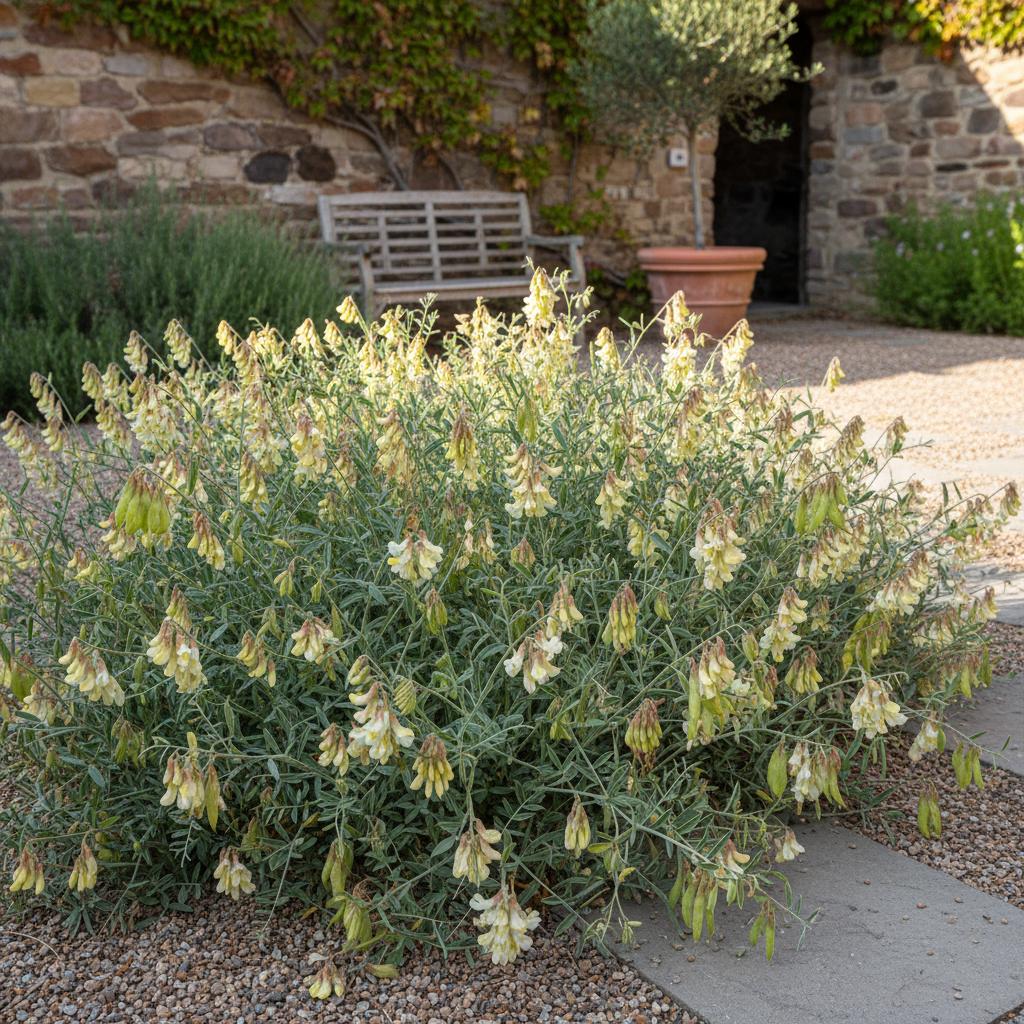
- Leaves: Odd-pinnately compound, leaflets small, elliptic to linear, often covered with fine, appressed hairs that give a grayish-green appearance;
- Flowers: Inflorescence is a raceme featuring pendulous (nodding) papilionaceous (pea-like) flowers, typically yellowish, pale, or tinged with purple;
- Stems: Erect or ascending, often branching from the base, slightly pubescent;
- Fruit: A pendulous legume (pod), often hairy, containing multiple small seeds.
Care Guide
Water deeply but infrequently, allowing the soil to dry out completely between waterings.
Apply a light, low-nitrogen top-dressing once as new growth appears, if soil is extremely poor.. Fertilization recommendations description
Eggshell Tea:Crush clean, dried eggshells and steep in water for 3-4 days. Use the strained water to provide calcium without adding excess nitrogen. Avoid using high-nitrogen household scraps like coffee grounds for this desert-adapted legume.- Cut back dead foliage and stems in late winter or early spring before new growth emerges;
- Deadhead spent flower stalks to maintain a tidy appearance, though leaving pods can provide winter interest;
- Avoid cutting into the woody crown of the plant to prevent rot and disease.
Toxicity
Warning: this plant may be toxic.
Pets: Toxic (per ASPCA for Locoweed/Astragalus species); contains swainsonine which can cause severe neurological damage.
Humans: Generally not recommended for consumption; some related species accumulate toxic compounds like swainsonine or selenium which can cause gastrointestinal or mild neurological issues if ingested in large amounts.
Garden Uses & Culture
Culture: In Western contexts, many plants in the Astragalus genus are known as "locoweeds" due to their profound neurological effects on livestock, a trait that heavily impacted early ranching and pioneer history in the American West.
Usage: Primarily grown in specialized alpine, xeriscape, or rock gardens for its unique nodding flowers, textured foliage, and extreme drought tolerance.