 PlantFun
Plant Needs
Characteristics
- Leaves: Small, spatulate to obovate, grayish-green, pubescent, with slightly toothed margins;
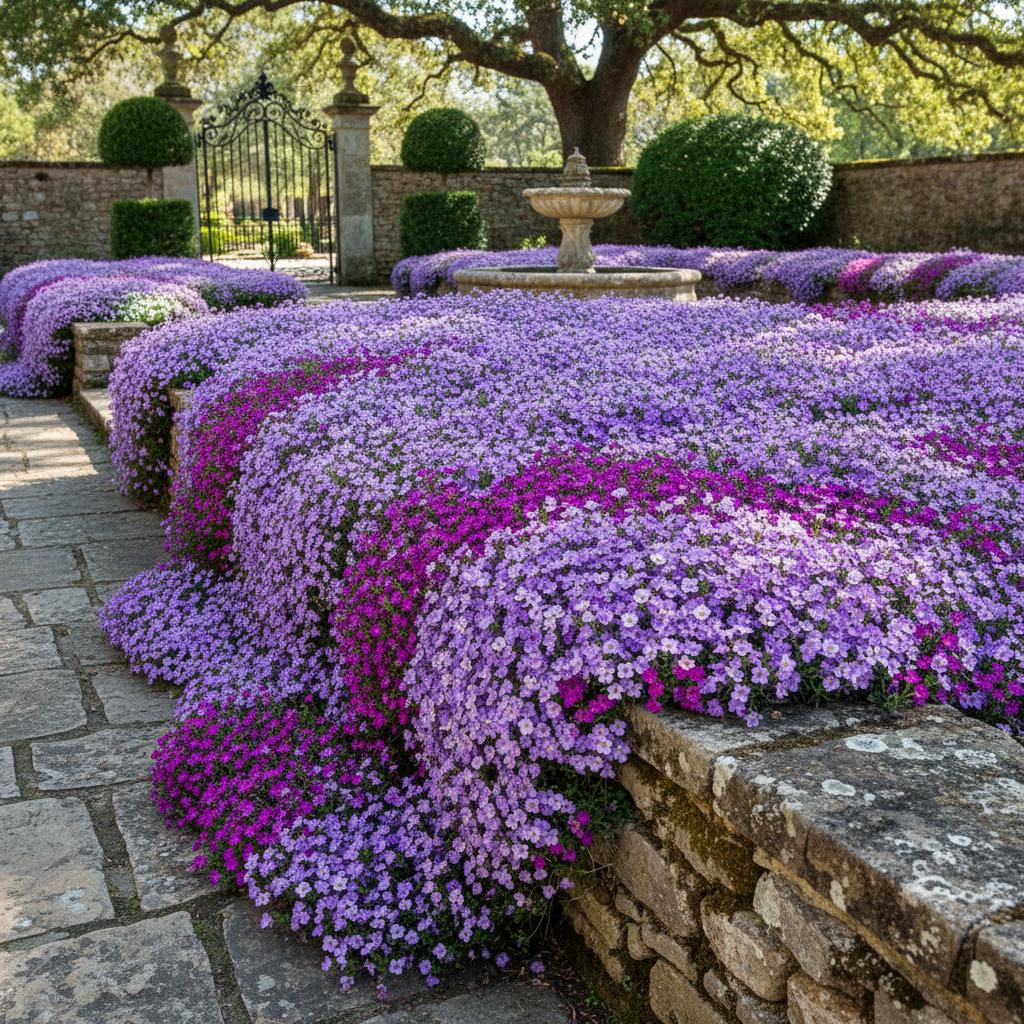
- Flowers: Cruciform (four-petaled), profuse, typically purple, magenta, pink, or white, forming dense clusters;
- Stems: Trailing, mat-forming, much-branched, becoming slightly woody at the base over time;
- Fruit: A small, elongated silique containing tiny seeds.
Care Guide
Water moderately during active spring growth; reduce watering in summer to prevent root rot.
Apply a light, balanced organic fertilizer or compost top-dressing in early spring before new growth begins.. Requires very little feeding; over-fertilization leads to excessive foliage at the expense of flowers.
Crushed Eggshell Powder:Wash, dry, and finely crush eggshells. Sprinkle around the base of the plant to provide slow-release calcium, which perfectly supports its preference for alkaline soil conditions. Avoid using high-nitrogen kitchen scraps.- Shear the plant back by half immediately after flowering finishes in early summer;
- This prevents the center from dying out and becoming woody;
- Encourages a tight, compact, mat-forming habit for the following year;
- Remove any dead or damaged foliage in early spring.
Toxicity
Warning: this plant may be toxic.
Pets: Non-toxic to cats (per ASPCA guidelines for Brassicaceae relatives).
Humans: Generally considered non-toxic to humans.
Garden Uses & Culture
Culture: Named in honor of Claude Aubriet, a 17th-century French botanical painter. It became a staple of Victorian rockeries and alpine troughs in Europe, symbolizing the vibrant awakening of spring.
Usage: Excellent as a ground cover, cascading over retaining walls, planted in rock gardens, or used as edging along pathways.