 PlantFun
Plant Needs
Characteristics
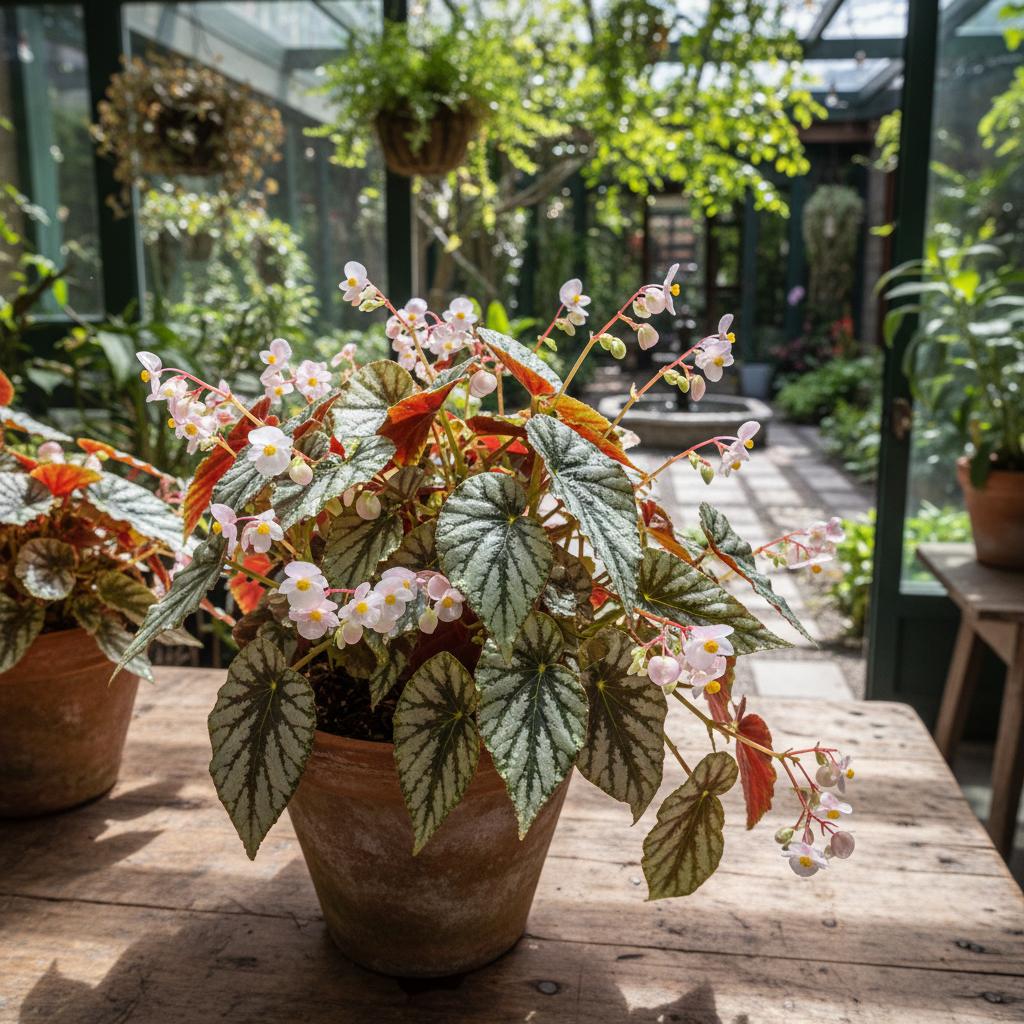
- Leaves: Asymmetrical, ovate to heart-shaped, featuring striking bands of silver, pink, burgundy, and dark green, often with a textured or slightly hairy surface;
- Flowers: Small, inconspicuous, pale pink to white, blooming sporadically on slender stalks above the foliage;
- Stems: Fleshy, rhizomatous stems that creep along the soil surface, often reddish and covered with fine hairs;
- Roots: Shallow, fibrous root system emerging from thick rhizomes.
Care Guide
Water thoroughly when the top inch of soil feels dry, ensuring good drainage.
Apply a balanced, water-soluble fertilizer diluted to half strength.. Do not fertilize during the winter dormancy period.
Banana Peel Tea:Steep chopped banana peels in water for 24 hours, strain, and use the diluted liquid to water the plant. Discard the peels in compost; do not leave raw chunks on the soil to avoid fungus gnats and mold.- Remove dead, yellowing, or damaged leaves at the base of the stem to maintain appearance and prevent rot;
- Pinch off flower stalks if you want the plant to direct all its energy into producing larger, more vibrant foliage;
- Ensure good air circulation around the base of the plant after pruning.
Toxicity
Warning: this plant may be toxic.
Pets: Toxic per ASPCA. Ingestion causes oral irritation, intense burning of the mouth, tongue, and lips, excessive drooling, vomiting, and difficulty swallowing. Tubers are the most toxic part.
Humans: Contains soluble calcium oxalates. Ingestion can cause irritation of the mouth, lips, and throat.
Garden Uses & Culture
Culture: In Victorian floriography, begonias were sometimes given as a warning or a symbol of dark thoughts, but in modern Western horticulture, they are celebrated as symbols of individuality, uniqueness, and artistic flair.
Usage: Highly valued as an indoor ornamental foliage plant, perfect for shaded windowsills, terrariums, and summer patio containers.