 PlantFun
Plant Needs
Characteristics
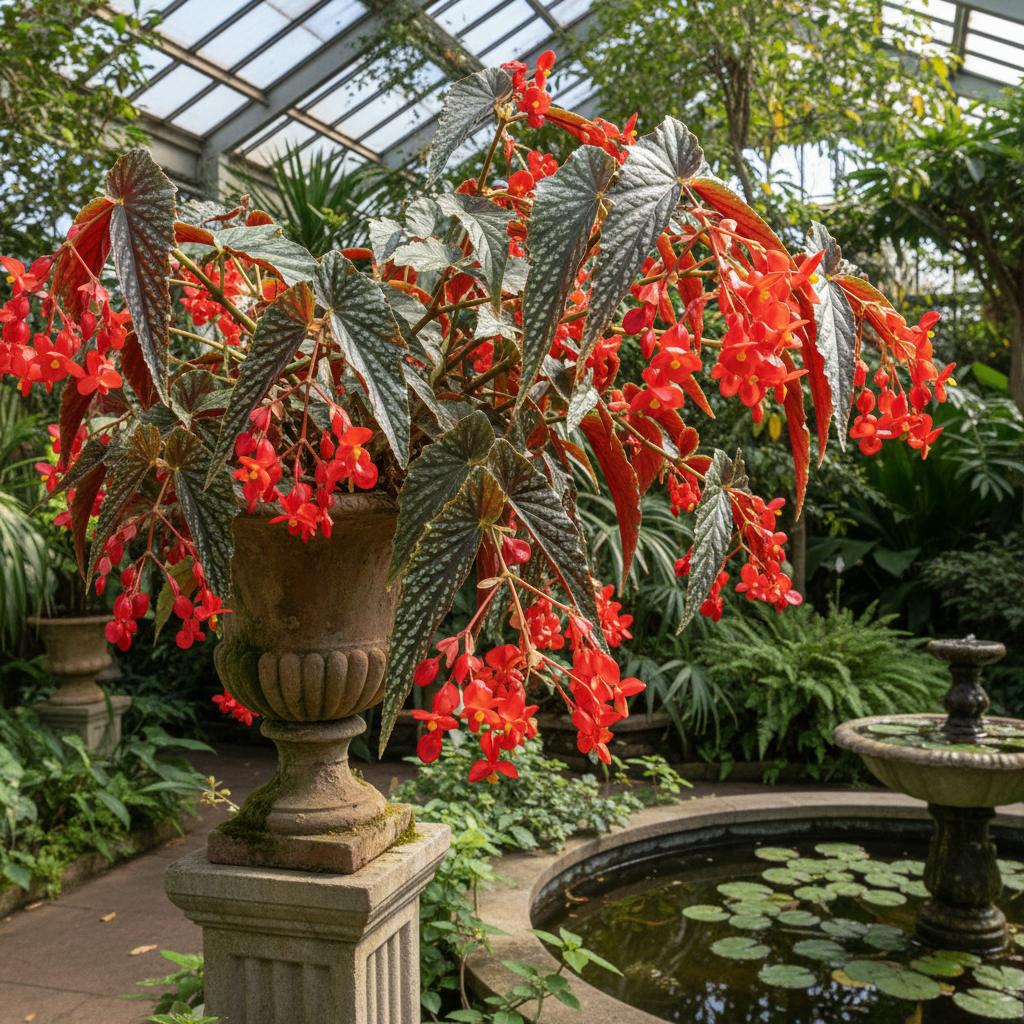
- Leaves: Asymmetrical, obliquely ovate to oblong, thick, glossy green with reddish margins or undersides, resembling angel wings;
- Flowers: Waxy, bright red to coral-pink, borne in large, pendulous axillary cymes; male flowers with 4 tepals, female flowers with 5 tepals and a prominently winged ovary;
- Stems: Cane-like, erect, bamboo-like with distinct swollen nodes, green turning woody with age.
Care Guide
Water thoroughly when the top inch of soil feels dry, ensuring good drainage.
Apply a balanced liquid fertilizer diluted to half strength.. Reduce or stop fertilization during the winter dormancy period.
Banana Peel Tea:Steep chopped banana peels in water for 24-48 hours, strain, and use the liquid to water the plant. This provides a gentle potassium boost to encourage vibrant scarlet blooms. Discard the peels in compost to avoid attracting gnats.- Pinch back young growing tips to encourage branching and a bushier shape;
- Prune tall, leggy canes in early spring down to a lower node to rejuvenate the plant;
- Remove spent flower clusters and any yellowing or damaged leaves to maintain hygiene.
Toxicity
Warning: this plant may be toxic.
Pets: Toxic per ASPCA. Contains soluble calcium oxalates causing oral irritation, hypersalivation, and vomiting. Tubers are the most toxic part.
Humans: Contains soluble calcium oxalates; chewing can cause intense burning and irritation of the mouth, lips, and throat.
Garden Uses & Culture
Culture: Introduced to Victorian England in the mid-19th century, cane begonias became highly prized glasshouse specimens. In the Victorian language of flowers, begonias sometimes symbolized caution or dark thoughts, though today they are primarily admired for their architectural elegance and vibrant color.
Usage: Cultivated widely as an ornamental houseplant, greenhouse specimen, and patio container plant in warm climates.