 PlantFun
Plant Needs
Sunlight
Prefers bright, indirect sunlight; avoid harsh direct afternoon sun which can scorch the leaves.
Watering
Keep the soil evenly moist but allow the top inch to dry out between waterings.
Temperature
Thrives in warm household temperatures; protect from drafts and temperatures below 10°C.
Characteristics
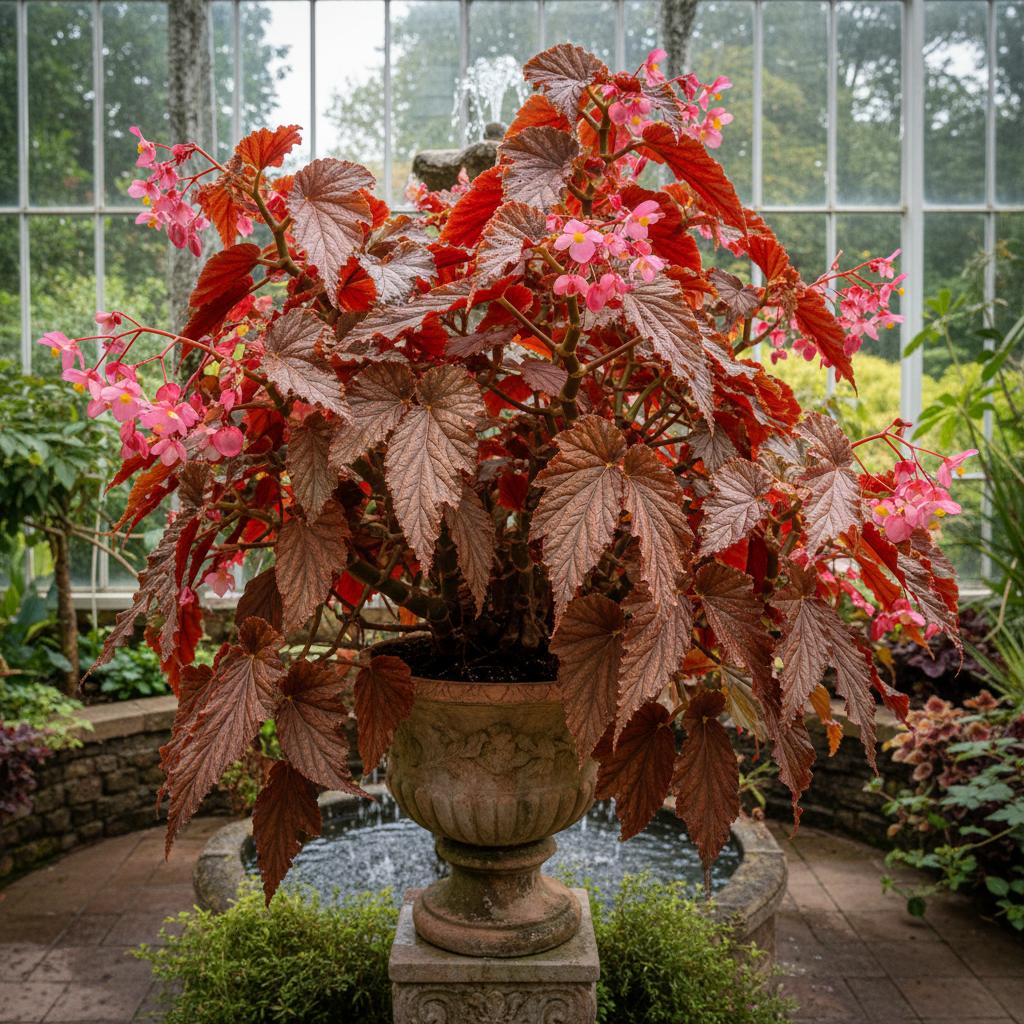
- Leaves: Asymmetrical, deeply colored in metallic dark burgundy to bronze, with striking red undersides and slightly serrated margins;
- Flowers: Drooping clusters of bright pink to coral-red flowers with prominent yellow stamens;
- Stems: Upright, cane-like, bamboo-like with swollen nodes, reddish-brown in color.
Care Guide
Watering
Water thoroughly when the top inch of soil feels dry.
Fertilization
Apply a balanced liquid fertilizer diluted to half strength.. Feed regularly during the active growing season.
Banana Peel Tea:Steep chopped banana peels in water for 24 hours, strain, and use the liquid to water the plant. This provides potassium to support blooming. Avoid leaving raw peels on the soil to prevent fungus gnats.Pruning
- Pinch back growing tips in spring to encourage a bushier, more compact shape;
- Remove dead or yellowing leaves promptly to maintain hygiene and prevent fungal issues;
- Cut back overly leggy canes to a lower node to stimulate new growth.
Toxicity
Warning: this plant may be toxic.
Pets & Humans
Pets: Toxic per ASPCA. Chewing leaves causes oral irritation, excessive drooling, and vomiting.
Humans: Contains soluble calcium oxalates which can cause oral irritation, burning sensations, and mild gastrointestinal upset if chewed or ingested.
Garden Uses & Culture
Culture: In Victorian flower language, begonias often symbolized caution or dark thoughts, though today they are celebrated for their unique, bold individuality in Western indoor gardening.
Usage: Popular as a striking indoor specimen plant or a shaded patio container plant in warmer climates.