 PlantFun
Plant Needs
Sunlight
Prefers bright, indirect light or dappled shade; direct sunlight can scorch the delicate leaves.
Watering
Requires evenly moist soil, but is highly susceptible to root rot if waterlogged. Allow the top inch of soil to dry before watering.
Temperature
Thrives in warm, humid environments and is not frost-tolerant.
Characteristics
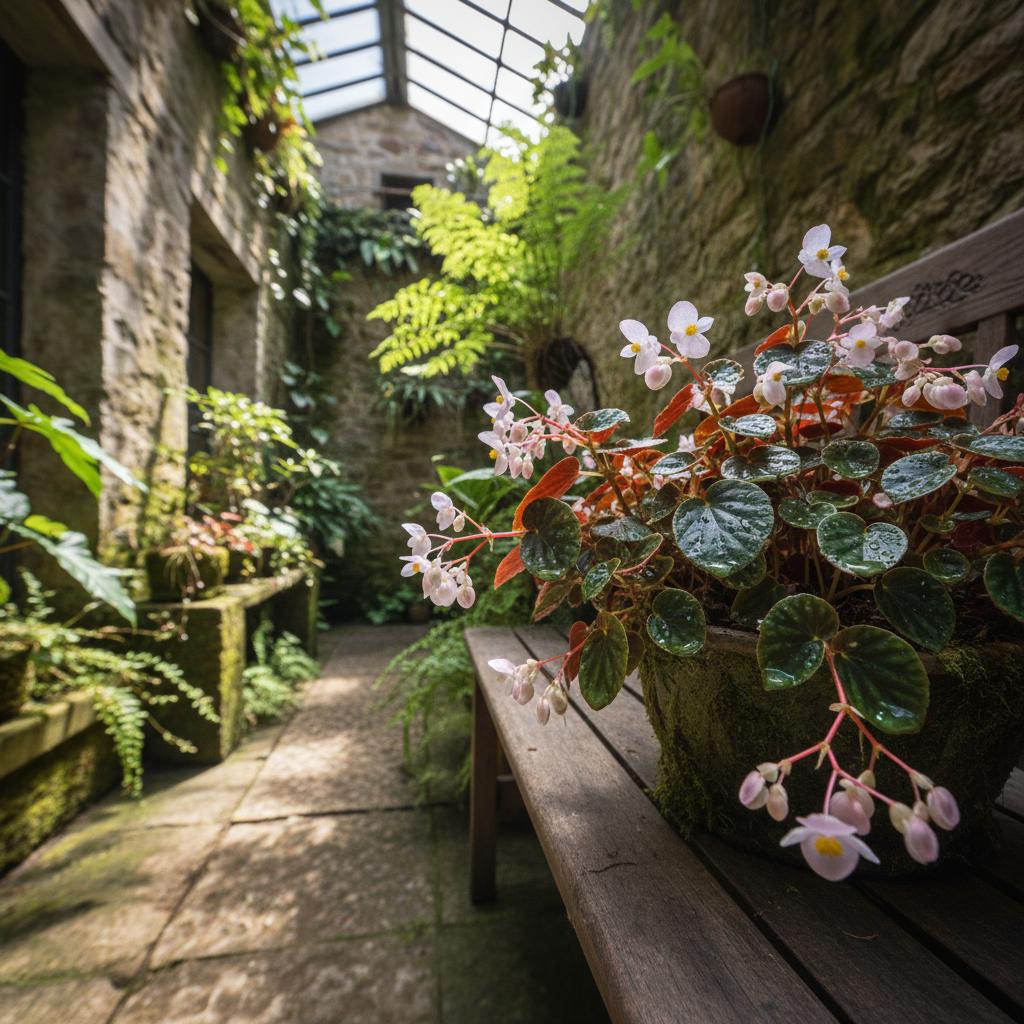
- Leaves: Asymmetrical, ovate to obliquely cordate, glossy green, with slightly serrated or undulate margins;
- Flowers: Monoecious, small, white to pale pink, borne on axillary cymes; female flowers feature a distinctively winged inferior ovary;
- Stems: Slender, succulent, branching, often with a reddish or brownish tint at the nodes.
Care Guide
Watering
Water thoroughly when the top inch of soil feels dry.
Fertilization
Apply a balanced, diluted liquid fertilizer to support new growth.. Do not fertilize during the winter dormancy period.
Banana Peel Tea:Steep chopped banana peels in water for 24 hours, strain, and dilute 1:1 with fresh water. Use as a soil drench to encourage blooming. Discard the solid peels in compost; do not leave raw peels on the soil surface to avoid attracting fungus gnats.Pruning
- Pinch back leggy stems in early spring to encourage a bushier, more compact growth habit;
- Promptly remove any yellowing, dead, or decaying leaves to prevent botrytis (gray mold);
- Remove spent flower stalks to redirect the plant's energy back into foliage production.
Toxicity
Warning: this plant may be toxic.
Pets & Humans
Pets: Toxic per ASPCA; chewing on leaves or stems releases oxalate crystals causing immediate tissue irritation.
Humans: Contains soluble calcium oxalates which can cause irritation to the mucous membranes if chewed or ingested.
Garden Uses & Culture
Culture: In Victorian floriography, begonias often symbolized caution or deep thoughts, reflecting their preference for shaded, quiet environments.
Usage: Cultivated primarily as an ornamental houseplant, terrarium specimen, or shaded patio plant in warm climates.