 PlantFun
Plant Needs
Characteristics
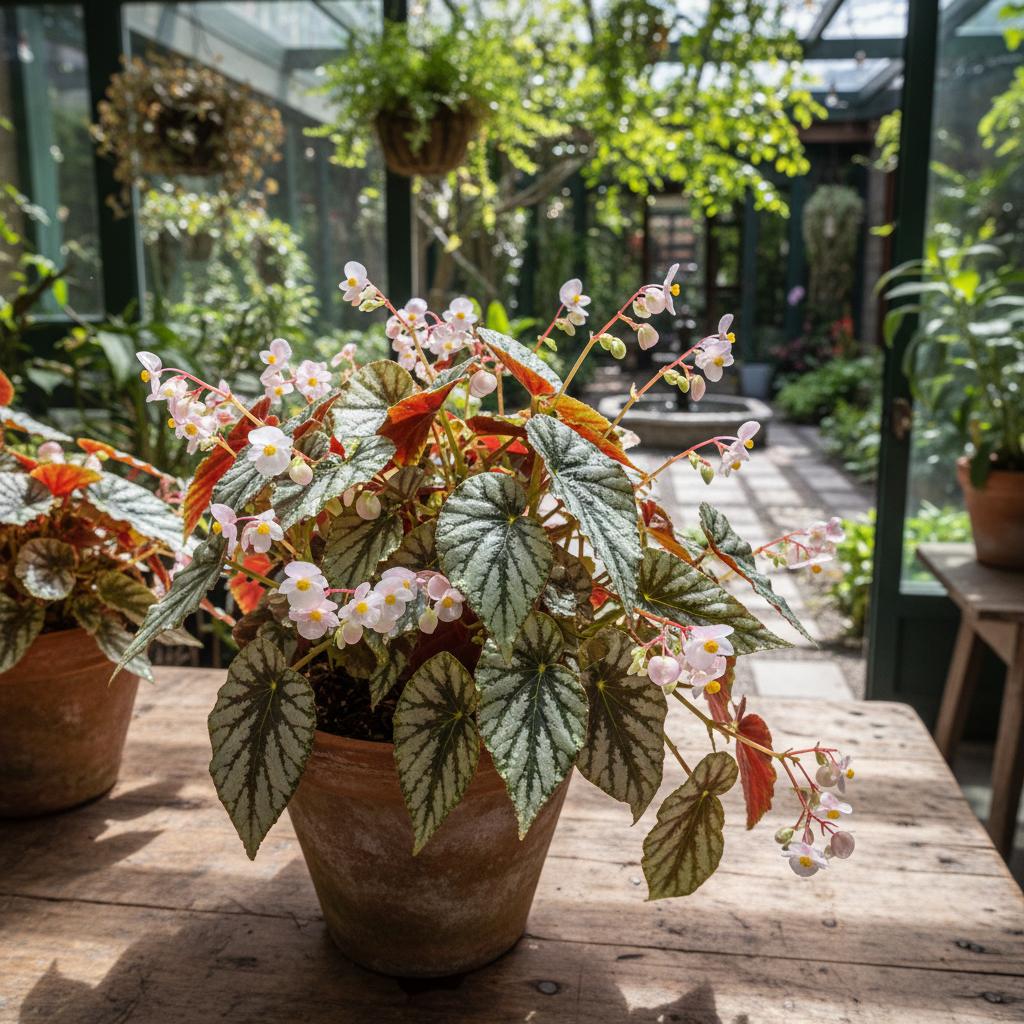
- Leaves: Asymmetrical, ovate to heart-shaped, featuring dramatic swirls, bands, and spots of silver, pink, purple, and green, often with a textured or hairy surface;
- Flowers: Small, inconspicuous, pink to white, borne on slender stalks above the foliage;
- Stem: Thick, fleshy rhizomes creeping along or just below the soil surface.
Care Guide
Water thoroughly when the top inch of soil feels dry.
Apply a balanced liquid fertilizer diluted to half strength.. Do not fertilize during the winter dormancy period.
Banana Peel Tea:Steep chopped banana peels in water for 24 hours, strain, and dilute 1:1 with water. Apply to the soil to support robust rhizome and leaf development. Avoid leaving raw peels on the soil to prevent fungus gnats.- Remove dead or decaying leaves promptly to prevent botrytis (gray mold);
- Pinch back leggy stems to encourage a bushier, more compact growth habit;
- Keep the soil surface clear of fallen plant debris.
Toxicity
Warning: this plant may be toxic.
Pets: Toxic per ASPCA; contains soluble calcium oxalates. Ingestion can cause vomiting and salivation, with rhizomes being the most toxic part.
Humans: Mildly toxic if ingested, causing oral irritation and stomach upset due to soluble oxalates.
Garden Uses & Culture
Culture: During the Victorian era, the introduction of exotic foliage plants like the Rex Begonia sparked a massive horticultural obsession in Europe, leading to the creation of thousands of named cultivars.
Usage: Primarily grown as an indoor foliage plant, in terrariums, or as a striking shade-garden container specimen during summer months.