 PlantFun
Plant Needs
Characteristics
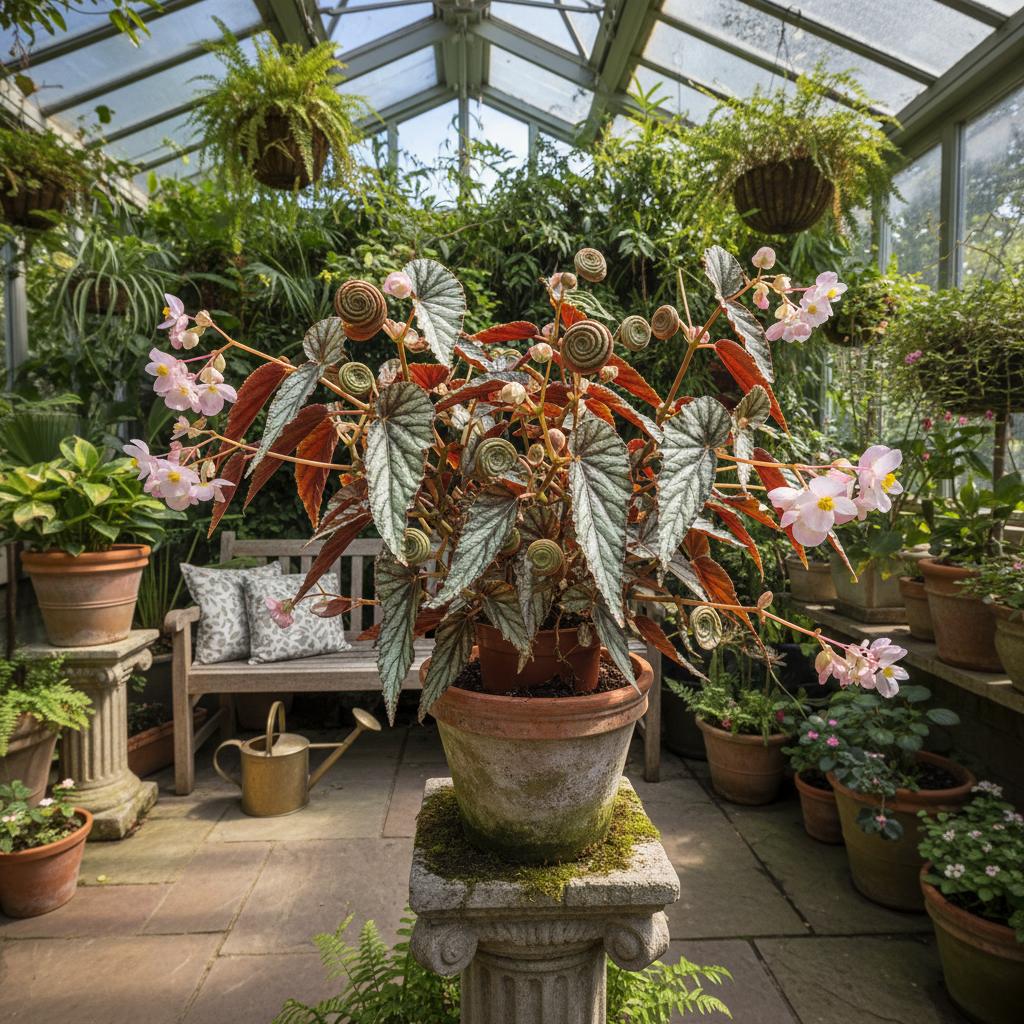
- Leaves: Distinctive spiraling base resembling a snail shell, featuring bands of silvery-green and dark olive green, covered in fine reddish hairs;
- Flowers: Small, inconspicuous, pale pink to white, blooming in loose clusters above the foliage;
- Stems: Fleshy, creeping rhizomes that root at the nodes, covered in fine pubescence.
Care Guide
Water thoroughly when the top inch of soil feels dry, avoiding getting water directly on the leaves.
Apply a diluted, balanced liquid fertilizer to support active foliage growth.. Feed only during the active growing season; halt fertilization in winter.
Banana Peel Tea:Steep chopped banana peels in water for 24 hours, strain, and dilute 1:1 with water. Apply to the soil base. Discard the solid peels in compost; do not leave raw peels on the soil surface to avoid attracting fungus gnats and mold.- Remove dead, yellowing, or damaged leaves at the base of the stem to maintain hygiene;
- Pinch off flower stalks as they appear if you wish to redirect the plant's energy entirely to foliage growth;
- Ensure good air circulation around the base after pruning to prevent fungal issues.
Toxicity
Warning: this plant may be toxic.
Pets: Toxic per ASPCA. Ingestion can cause oral irritation and gastrointestinal upset; tubers/rhizomes are the most toxic part.
Humans: Contains soluble calcium oxalates which can cause irritation if ingested.
Garden Uses & Culture
Culture: Highly prized in Western indoor gardening and Victorian-style conservatories for its mesmerizing, spiraling leaf structure, representing the height of exotic foliage collecting in the 19th and 20th centuries.
Usage: Cultivated primarily as an indoor ornamental potted plant, terrarium specimen, or shaded patio accent.