 PlantFun
Plant Needs
Sunlight
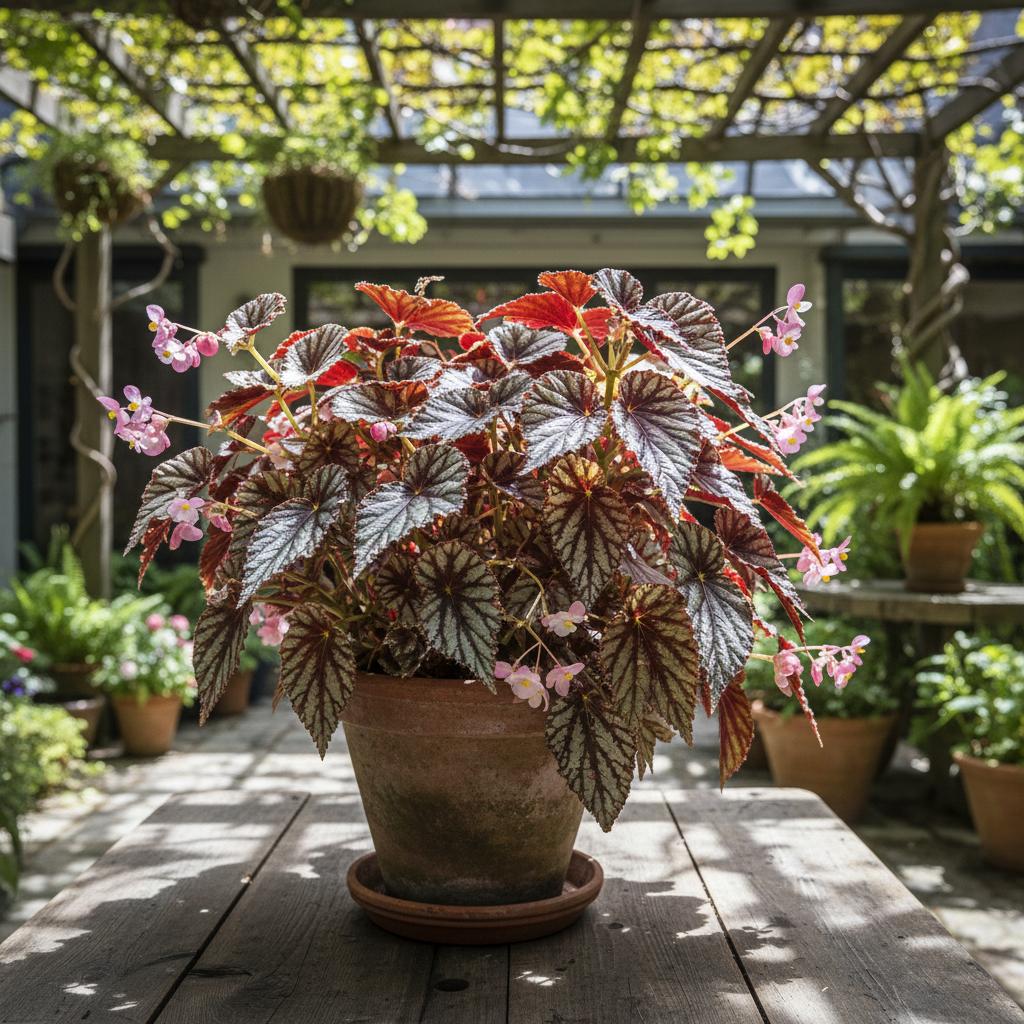
Prefers bright, indirect light; direct sunlight can scorch the leaves and fade the silver spots.
Watering
Requires evenly moist soil during the growing season, but topsoil should dry out between waterings.
Temperature
Thrives in warm, humid environments; intolerant of frost and cold drafts.
Characteristics
- Leaves: Asymmetrical, angel-wing shaped, dark olive green with distinctive silver polka dots on the upper surface and deep red underneath;
- Flowers: Pendulous clusters of small, white to pale pink flowers with prominent yellow stamens;
- Stem: Cane-like, resembling bamboo, with swollen nodes where leaves emerge.
Care Guide
Watering
Water thoroughly when the top inch of soil feels dry, ensuring excess water drains away.
Fertilization
Apply a balanced, water-soluble fertilizer diluted to half strength.. Do not fertilize during the winter dormancy period.
Banana Peel Tea:Steep chopped banana peels in water for 24 hours, strain, and use the liquid to water the plant. Avoid leaving raw peels on the soil surface to prevent fungus gnats and mold.Pruning
- Pinch back leggy stems in early spring to encourage bushier, more compact growth;
- Remove spent flower clusters to redirect the plant's energy into new foliage;
- Prune just above a leaf node to stimulate new branching.
Toxicity
Warning: this plant may be toxic.
Pets & Humans
Pets: Toxic per ASPCA. Ingestion causes oral irritation, excessive drooling, vomiting, and difficulty swallowing. Tubers are the most toxic part.
Humans: Ingestion can cause mild irritation of the mouth, lips, and throat due to insoluble calcium oxalates.
Garden Uses & Culture
Culture: In Victorian floriography, begonias were often associated with deep thoughts, dark fancies, or a warning to be cautious.
Usage: Widely cultivated as an ornamental houseplant prized for its highly decorative, patterned foliage.