 PlantFun
Plant Needs
Characteristics
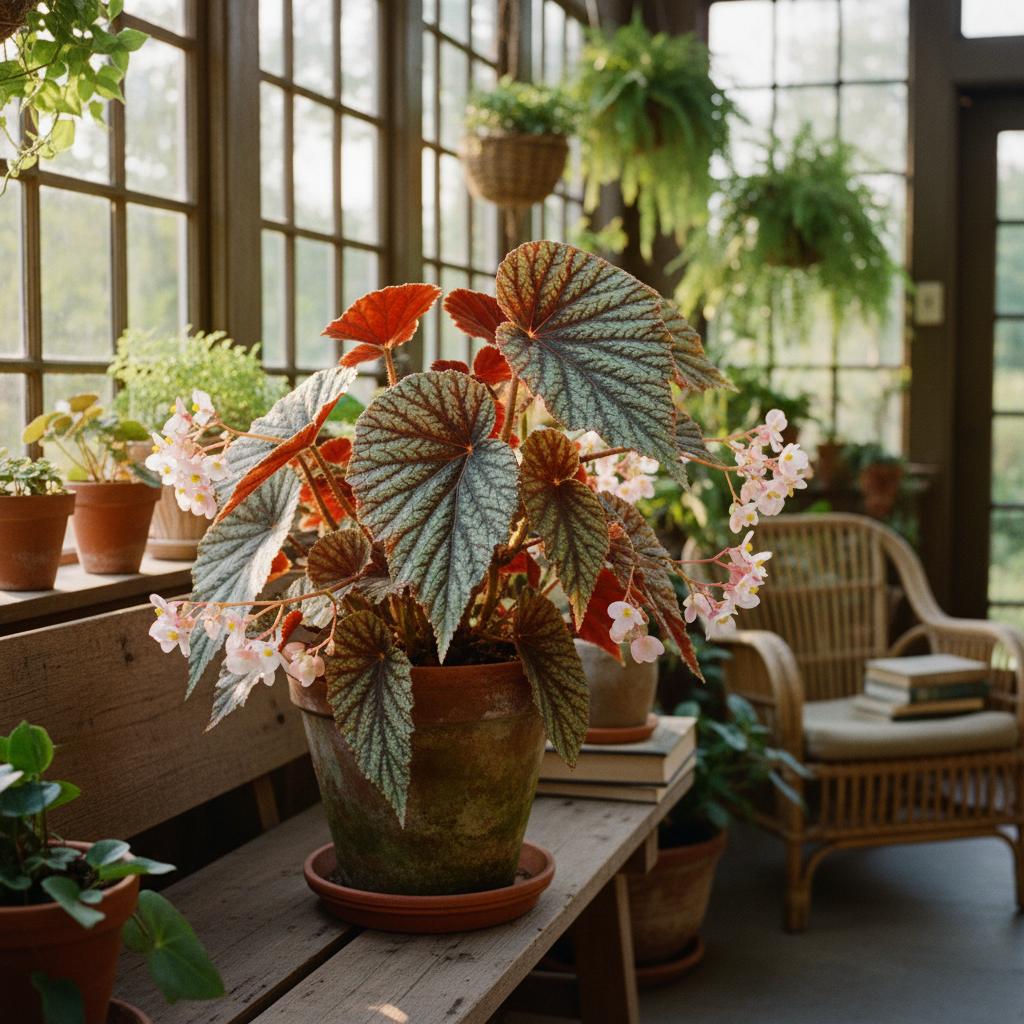
- Leaves: Thick, fleshy, kidney-shaped to asymmetrical, covered in dense white felt-like hairs (trichomes) that give a silvery-green appearance;
- Stems: Upright, thick and succulent-like, prominently featuring large, persistent, papery brown stipules at the nodes;
- Flowers: Small, white, fragrant, borne in clusters on tall inflorescences that rise above the foliage.
Care Guide
Water thoroughly when the top 2-3 inches of soil are completely dry.
Apply a diluted, balanced liquid fertilizer once a month.. Do not fertilize during the winter dormancy period.
Banana Peel Tea:Soak chopped banana peels in water for 24-48 hours, strain the liquid, and dilute 1:1 with fresh water. Pour directly onto the soil to support root strength and overall resilience. Discard the solid peels in the compost to avoid attracting fungus gnats indoors.- Pinch back the growing tips of young plants to encourage branching and a bushier form;
- Remove dead or damaged leaves at the base of the stem to maintain airflow;
- Cut back spent flower stalks to redirect the plant's energy into foliage growth.
Toxicity
Warning: this plant may be toxic.
Pets: Toxic per ASPCA. Contains soluble calcium oxalates causing oral irritation, intense burning, and gastrointestinal upset.
Humans: Contains soluble calcium oxalates; chewing or ingestion can cause irritation of the mouth, lips, and throat.
Garden Uses & Culture
Culture: In Victorian-era Europe, Begonias were highly prized greenhouse specimens. Begonia venosa stood out among collectors for its architectural, almost alien appearance and its unusual tolerance for dry air compared to its humidity-loving relatives.
Usage: Cultivated primarily as an ornamental houseplant or a striking specimen in succulent and conservatory collections.