 PlantFun
Plant Needs
Characteristics
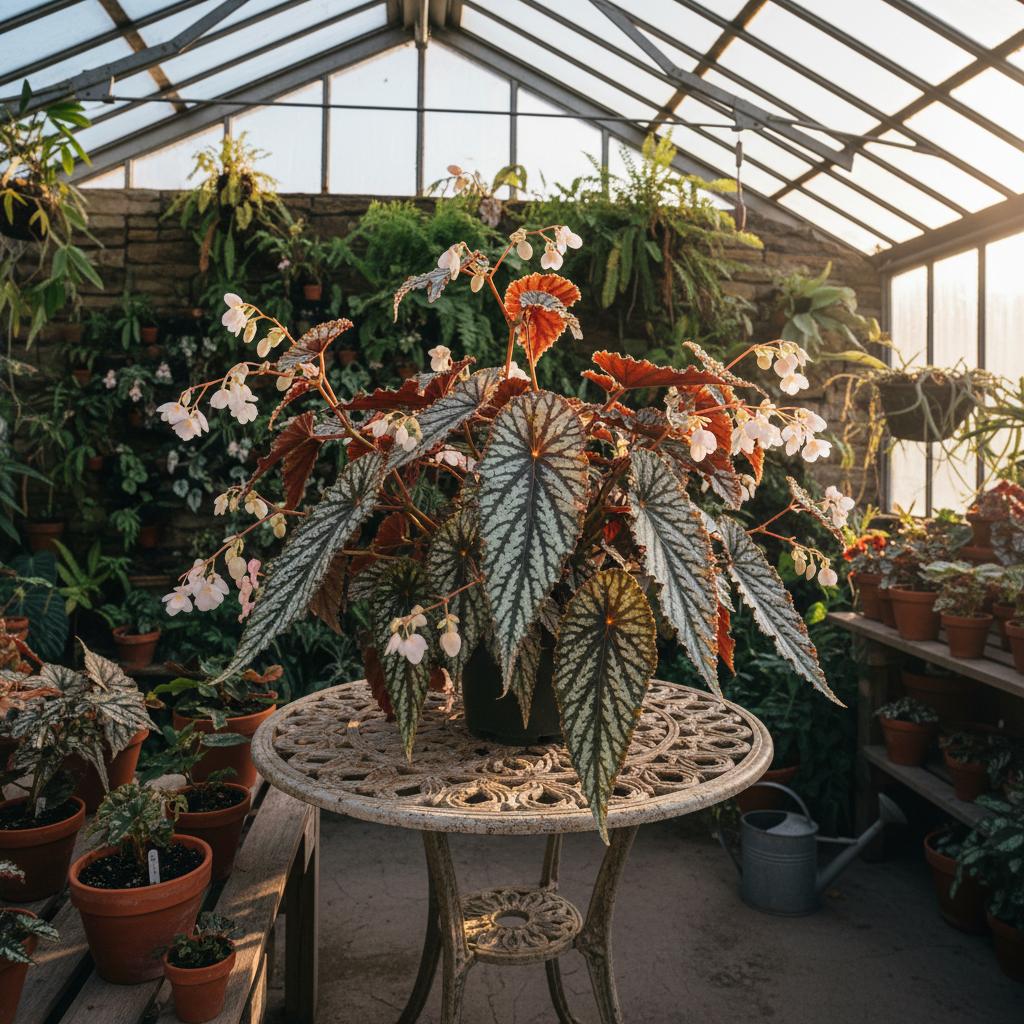
- Leaves: Ovate to elliptical, velvety dark green on the upper surface and deep burgundy-red underneath, covered in fine whitish hairs.
- Flowers: Small, delicate white flowers borne in loose clusters, typical monoecious begonia structure with yellow stamens/pistils.
- Stems: Trailing or creeping, reddish-brown, pubescent, rooting easily at the nodes when in contact with soil.
Care Guide
Water thoroughly when the top inch of soil feels dry, ensuring good drainage.
Apply a balanced liquid fertilizer diluted to half strength.. Do not fertilize during the winter dormancy period.
Banana Peel Tea:Soak chopped banana peels in water for 24-48 hours, strain the liquid, and dilute 1:1 with fresh water. Use as a soil drench to support root health and blooming. Discard solid peels in the compost to avoid attracting fungus gnats.- Pinch back the growing tips regularly to encourage a bushier, more compact growth habit.
- Remove any dead, yellowing, or damaged leaves promptly to maintain plant hygiene.
- Trim excessively long trailing stems to maintain the desired shape; cuttings can be easily propagated in water or soil.
Toxicity
Warning: this plant may be toxic.
Pets: Toxic to cats per ASPCA. Ingestion causes oral irritation, hypersalivation, vomiting, and difficulty swallowing. Tubers are the most toxic part.
Humans: Contains soluble calcium oxalates; ingestion can cause irritation of the mouth, lips, and throat.
Garden Uses & Culture
Culture: Created in the 1970s by Frances Michelko, this hybrid was named after the Withlacoochee River in Florida. It became highly popular during the late 20th-century Western craze for hanging baskets and terrariums due to its cascading habit and striking foliage.
Usage: Excellent for hanging baskets, elevated plant stands, or as a creeping ground cover in large indoor terrariums.