 PlantFun
Plant Needs
Characteristics
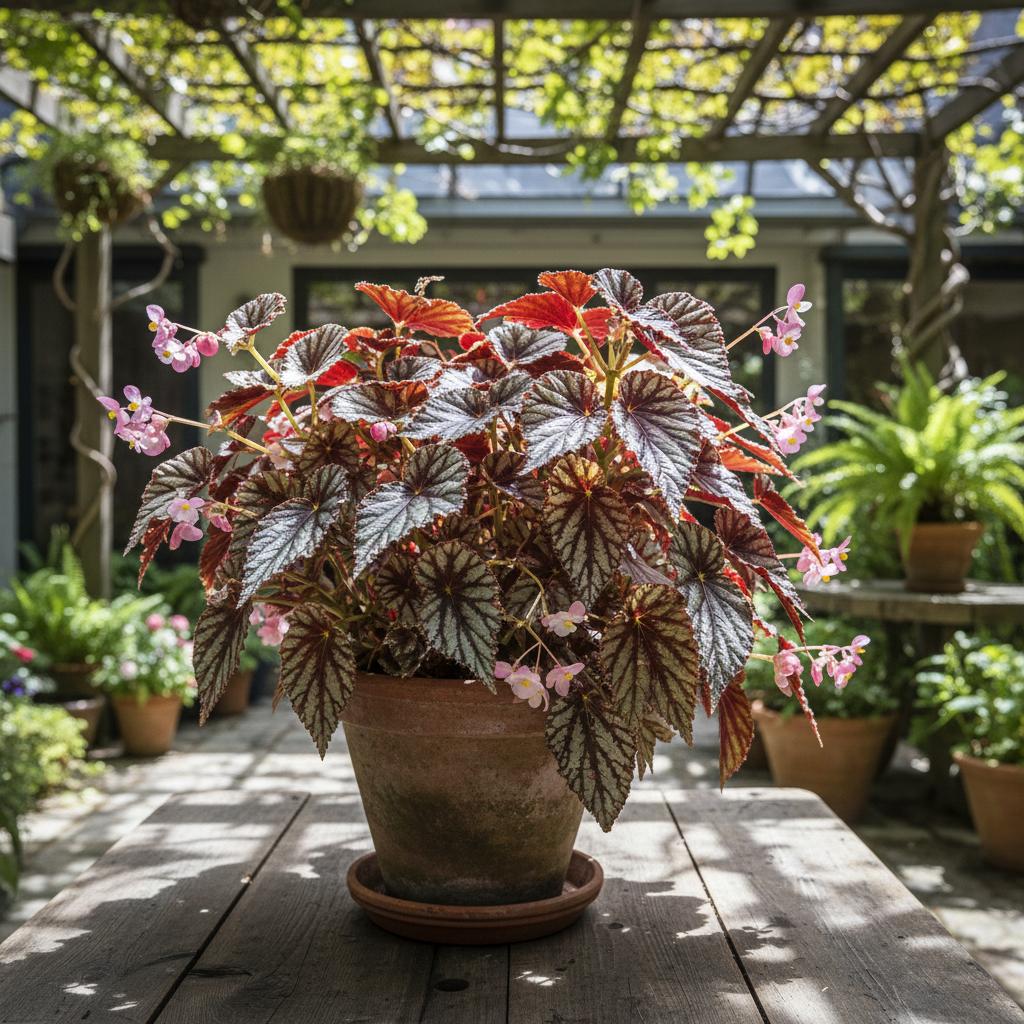
- Leaves: Asymmetrical, angel-wing shaped, dark olive green with distinct silvery-white spots on the upper surface and striking crimson red undersides;
- Flowers: Monoecious, borne in pendulous panicles, white to pale pink with prominent yellow stamens and pistils;
- Stems: Cane-like, green to reddish, with swollen nodes resembling bamboo.
Care Guide
Water thoroughly when the top inch of soil feels dry, ensuring good drainage.
Apply a balanced liquid fertilizer diluted to half strength.. Do not fertilize during the winter dormancy period.
Banana Peel Tea:Soak chopped banana peels in water for 24-48 hours, strain, and dilute 1:1 with fresh water. Use as a soil drench to promote blooming. Discard the solid peels in compost; do not leave raw peels on the soil surface to avoid attracting fungus gnats.- Pinch back the growing tips of young stems to encourage bushier growth and prevent leggy canes;
- Remove any dead, yellowing, or damaged leaves at the base of the petiole;
- Prune back excessively tall canes in early spring to maintain a compact shape;
- Snip off spent flower clusters to redirect the plant's energy into new foliage.
Toxicity
Warning: this plant may be toxic.
Pets: Toxic per ASPCA due to soluble calcium oxalates, causing severe oral irritation and GI upset.
Humans: Contains soluble calcium oxalates which can cause mild irritation if ingested.
Garden Uses & Culture
Culture: In Victorian floriography, begonias often symbolized deep thoughts, dark fancies, or a warning of caution. Today, in Western houseplant culture, the Polka Dot Begonia is celebrated as a symbol of individuality and quirky beauty.
Usage: Primarily cultivated as an ornamental houseplant for its striking foliage and delicate flowers; occasionally used in shaded summer containers in temperate climates.