 PlantFun
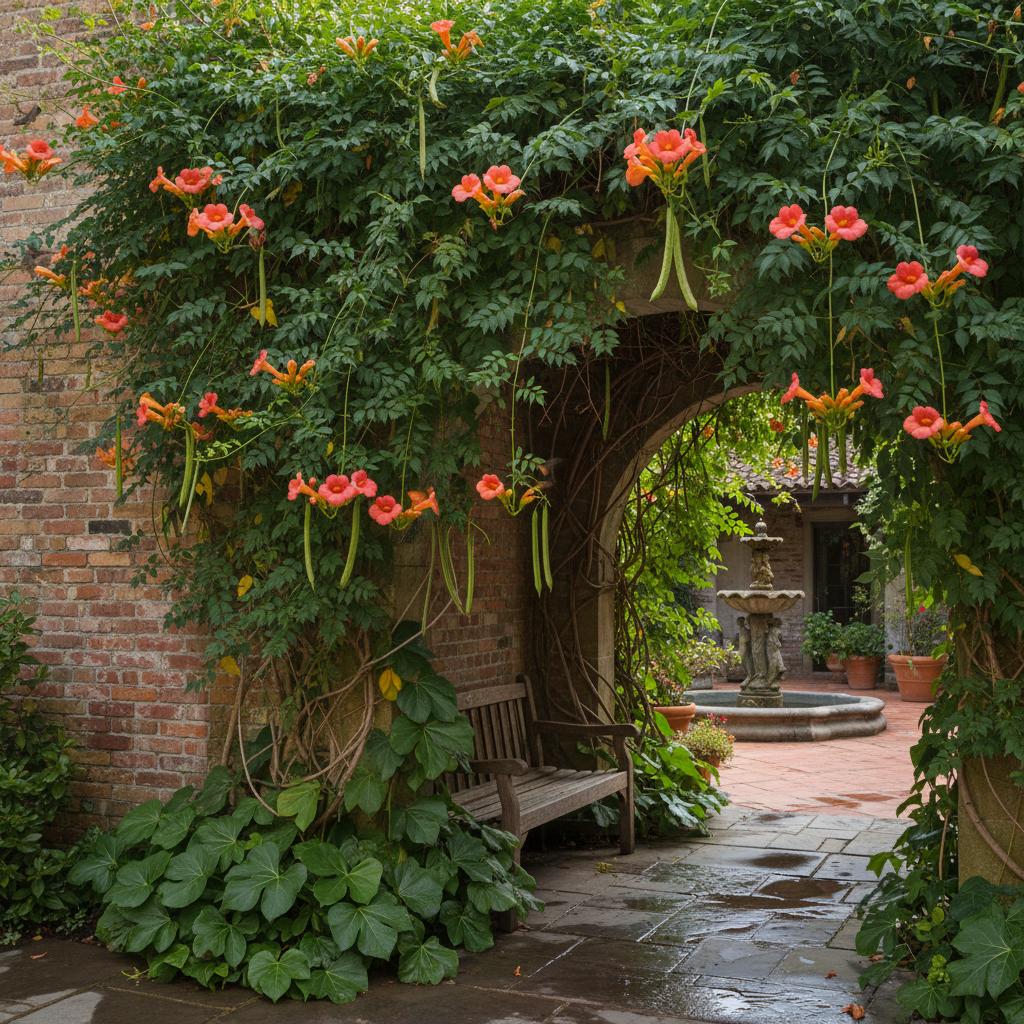
Plant Needs
Sunlight
Requires full sun for best blooming, but tolerates partial shade.
Watering
Keep soil evenly moist but not waterlogged during the active growing season.
Temperature
Thrives in warm, tropical to subtropical climates; frost tender.
Characteristics
- Leaves: Opposite, bifoliolate with obovate to elliptical glossy green leaflets, often featuring a terminal tendril for climbing;
- Flowers: Large, showy, tubular-bell-shaped, magenta to purple-pink with a pale yellow or whitish throat, arranged in loose panicles;
- Stems: Woody, twining, vigorous growth habit with distinct lenticels on older bark.
Care Guide
Watering
Water deeply when the top inch of soil feels dry.
Fertilization
Apply a balanced, slow-release fertilizer to encourage new growth.. Feed regularly during the active growing season.
Banana Peel Tea:Steep chopped banana peels in water for 2-3 days. Strain and use the liquid to water the vine to promote vibrant magenta blooms. Discard solids in compost to avoid attracting pests.Pruning
- Prune immediately after the flowering season to control size and shape;
- Remove dead, damaged, or weak stems to improve air circulation;
- Provide a sturdy trellis or support structure early to guide its vigorous growth.
Toxicity
Warning: this plant may be toxic.
Pets & Humans
Pets: Non-toxic to cats (per general Bignoniaceae safety profiles).
Humans: No known toxicity; generally considered safe for humans.
Garden Uses & Culture
Culture: In Victorian times, tropical vines were highly prized in European glasshouses as symbols of exotic beauty and botanical exploration.
Usage: Excellent for covering pergolas, fences, and trellises in warm climates, or as a striking conservatory specimen.