 PlantFun
Plant Needs
Sunlight
Bright, indirect light; avoid direct midday sun which can scorch the leaves and bleach the bracts.
Watering
Keep the central cup filled with fresh water; keep soil lightly moist but not soggy.
Temperature
Prefers warm tropical temperatures; highly intolerant of frost and cold drafts.
Characteristics
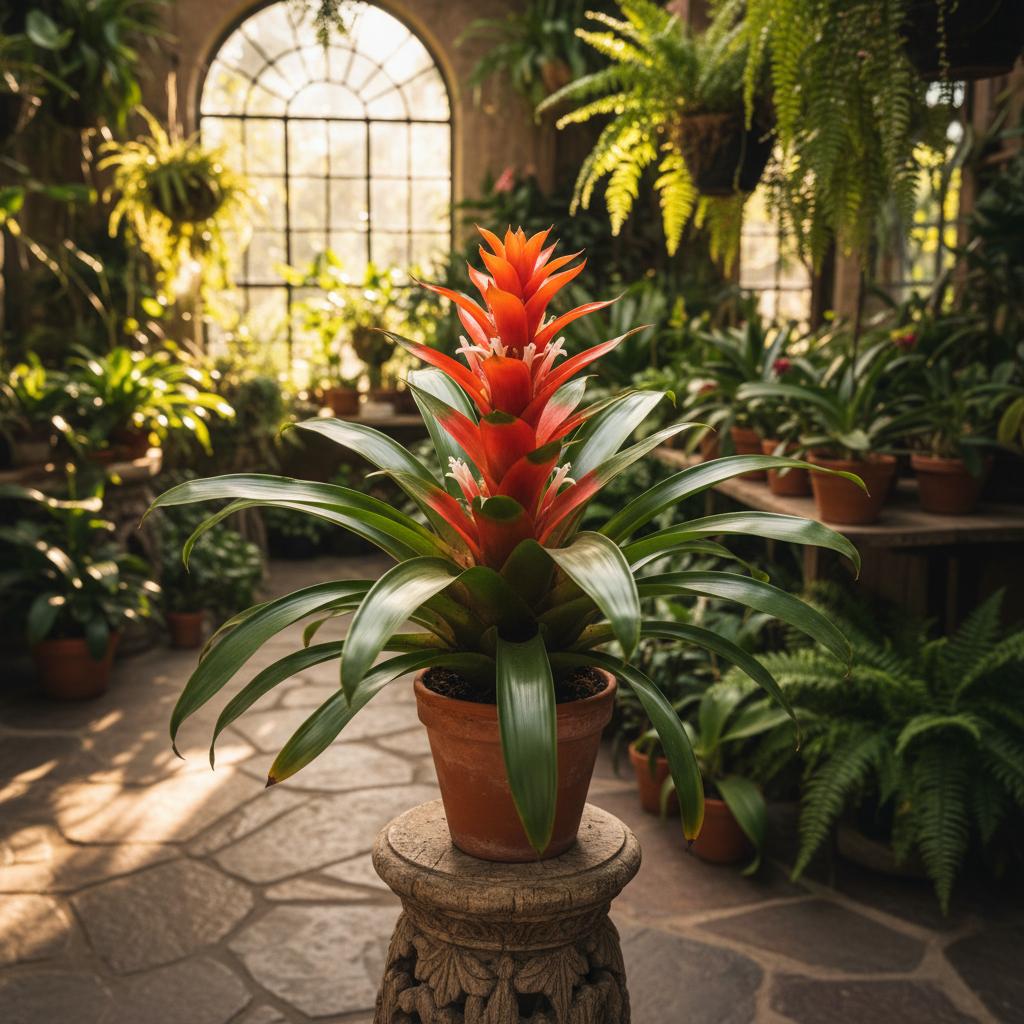
- Leaves: Glossy, smooth, strap-like green leaves forming a tight basal rosette (urn) designed to catch and hold water;
- Flowers: True flowers are small and white or yellow, emerging from a tall, striking, long-lasting bright red to orange-red bract assembly;
- Roots: Shallow and wiry, primarily functioning for anchorage on trees rather than water absorption, adapted to epiphytic growth.
Care Guide
Watering
Keep central cup 1/4 full, flush weekly to prevent rot; water soil lightly.
Fertilization
Apply a weak liquid fertilizer to the soil or as a foliar spray.. Bromeliads require very little fertilizer; avoid putting fertilizer directly in the central cup to prevent chemical burn.
Banana Peel Tea:Soak chopped banana peels in water for 24 hours, dilute 1:1, and apply lightly to the soil (never in the central cup). Avoid strong odors by not letting it ferment too long.Pruning
- Remove the flower stalk at the base once the colorful bracts fade and dry out;
- Trim away any dead or damaged outer leaves for aesthetics;
- Allow the mother plant to naturally die back while producing 'pups' (offsets) at the base, which can be separated when they reach one-third the parent's size.
Toxicity
Warning: this plant may be toxic.
Pets & Humans
Pets: Non-toxic to cats per ASPCA guidelines.
Humans: Non-toxic to humans; safe to handle and keep indoors.
Garden Uses & Culture
Culture: In Western interior design, bromeliads became a symbol of mid-century modern tropical aesthetics, bringing exotic architectural forms and vibrant splashes of color into the home.
Usage: Widely used as an indoor ornamental potted plant, in tropical greenhouse displays, and mounted on cork bark in terrariums or vivariums.