 PlantFun
Plant Needs
Characteristics
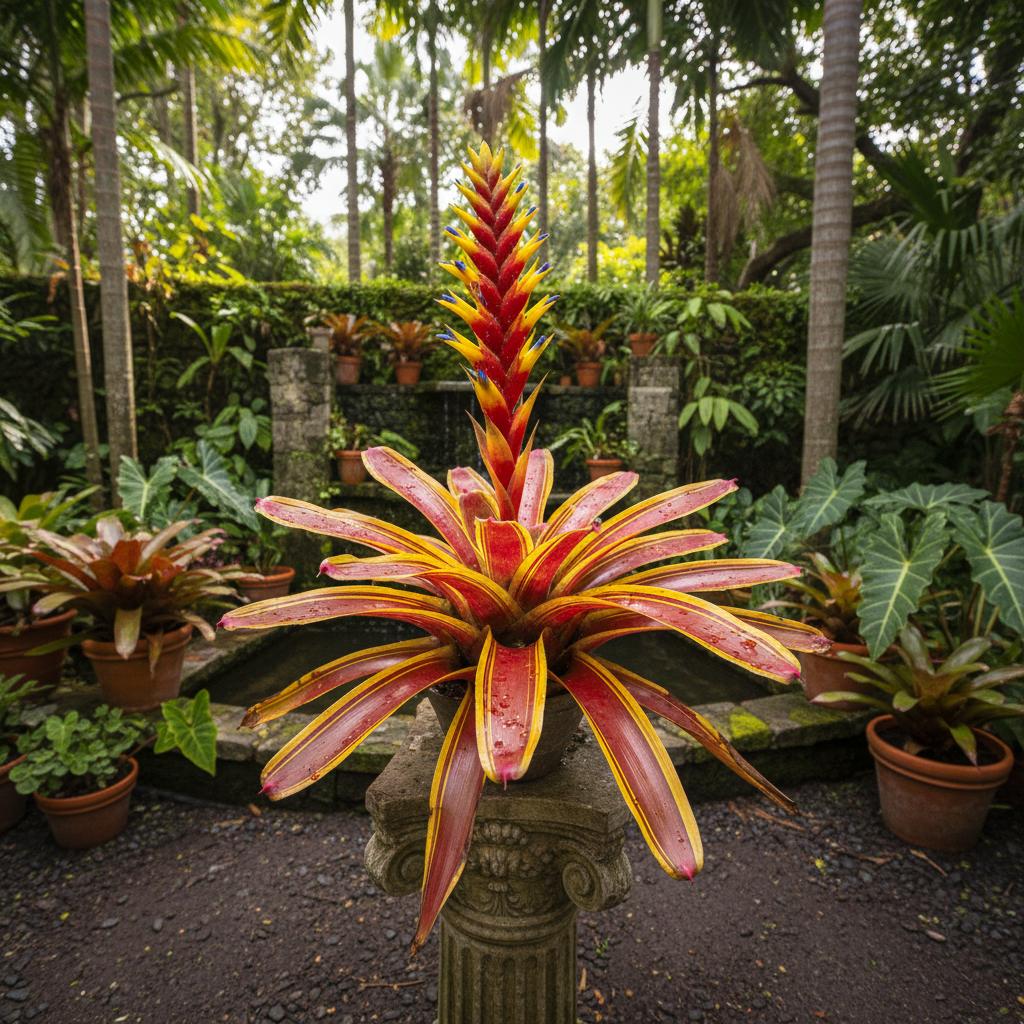
- Leaves: Rosette-forming, smooth, strap-like, spineless, bright green, overlapping at the base to form a central water-holding cup (tank);
- Flowers: Tall, flattened, sword-shaped inflorescence with brightly colored (red, orange, or yellow) overlapping bracts; true flowers are small, tubular, and yellow or white, emerging from the bracts;
- Roots: Shallow and wiry, functioning primarily as an anchor for this epiphytic plant rather than for primary water absorption.
Care Guide
Keep the central tank filled with clean water and flush it out weekly; water the soil lightly when the top inch dries out.
Apply a highly diluted liquid fertilizer directly to the soil or as a foliar spray.. Bromeliads are light feeders; over-fertilizing can cause the plant to lose its vibrant color.
Aquarium water:Use room-temperature aquarium change water applied directly to the soil. Avoid pouring it into the central tank to prevent bacterial rot and foul odors.- Cut the flower spike off at the base using sterilized shears once it turns brown and dries up;
- Remove any dead or dying lower leaves by gently peeling them away from the base;
- Do not discard the mother plant immediately after blooming; allow it to produce "pups" (offsets) at the base, which can be separated when they reach one-third the size of the parent.
Toxicity
Warning: this plant may be toxic.
Pets: Non-toxic to cats per ASPCA guidelines.
Humans: Non-toxic to humans; safe to handle and keep indoors.
Garden Uses & Culture
Culture: Popularized in European conservatories during the 19th century, bromeliads became a symbol of exotic tropical beauty and botanical curiosity among Victorian collectors.
Usage: Widely used as an indoor ornamental houseplant, in tropical greenhouse displays, and as a focal point in large terrariums or vivariums.