 PlantFun
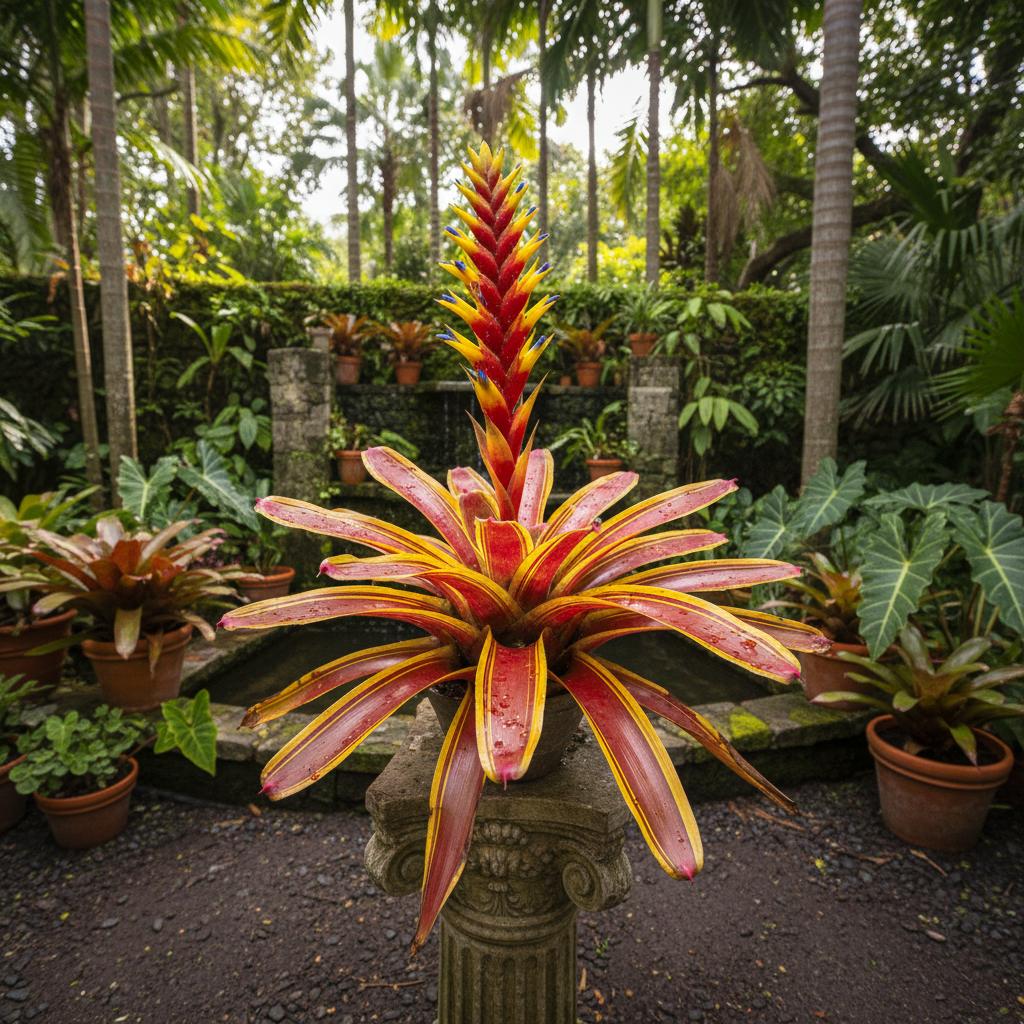
Plant Needs
Sunlight
Requires bright, indirect light to maintain vibrant bract color; avoid harsh direct afternoon sun which can scorch leaves.
Watering
Keep the central rosette (tank) filled with fresh water, flushing it weekly to prevent bacterial growth. Keep the potting medium only lightly moist.
Temperature
Prefers warm, tropical temperatures and suffers if exposed to drafts or temperatures below 15°C (59°F).
Characteristics
- Leaves: Smooth, glossy, strap-like green leaves forming a tight basal rosette with a central water-holding tank;
- Flowers: Erect, branched inflorescence featuring brilliant red and yellow overlapping bracts, from which small, short-lived true tubular flowers emerge;
- Roots: Shallow and wiry, functioning primarily as holdfasts rather than for primary water and nutrient absorption.
Care Guide
Watering
Keep the central cup filled with fresh water and lightly mist the foliage; water the soil sparingly.
Fertilization
Apply a highly diluted liquid fertilizer to the soil or as a foliar spray.. Bromeliads are light feeders; over-fertilizing can cause the plant to lose its vibrant color and turn green.
Aquarium Water Fertilizer:Use room-temperature aquarium change water applied directly to the soil medium. Avoid pouring it into the central tank to prevent foul odors and bacterial rot. Do not use if the aquarium water contains added salts or medications.Pruning
- Cut the flower spike off at the base once it turns completely brown and dries up;
- Remove any dead or damaged lower leaves by gently peeling them away from the base;
- After flowering, the mother plant will slowly die back while producing "pups" (offsets) at the base; leave pups attached until they are one-third the size of the mother plant before separating.
Toxicity
Warning: this plant may be toxic.
Pets & Humans
Pets: Non-toxic to cats per ASPCA.
Humans: Non-toxic to humans.
Garden Uses & Culture
Culture: Widely embraced in Western contemporary interior design, bromeliads like Vriesea are valued for bringing architectural, long-lasting tropical color into modern homes and conservatories.
Usage: Excellent as a long-lasting indoor flowering houseplant, office desk plant, or as part of a tropical greenhouse display.