 PlantFun
Plant Needs
Sunlight
Prefers low to medium indirect light to prevent algae growth on its slow-growing leaves.
Watering
Requires fully aquatic conditions or a high-humidity (90%+) terrarium environment.
Temperature
Thrives in warm tropical temperatures.
Characteristics
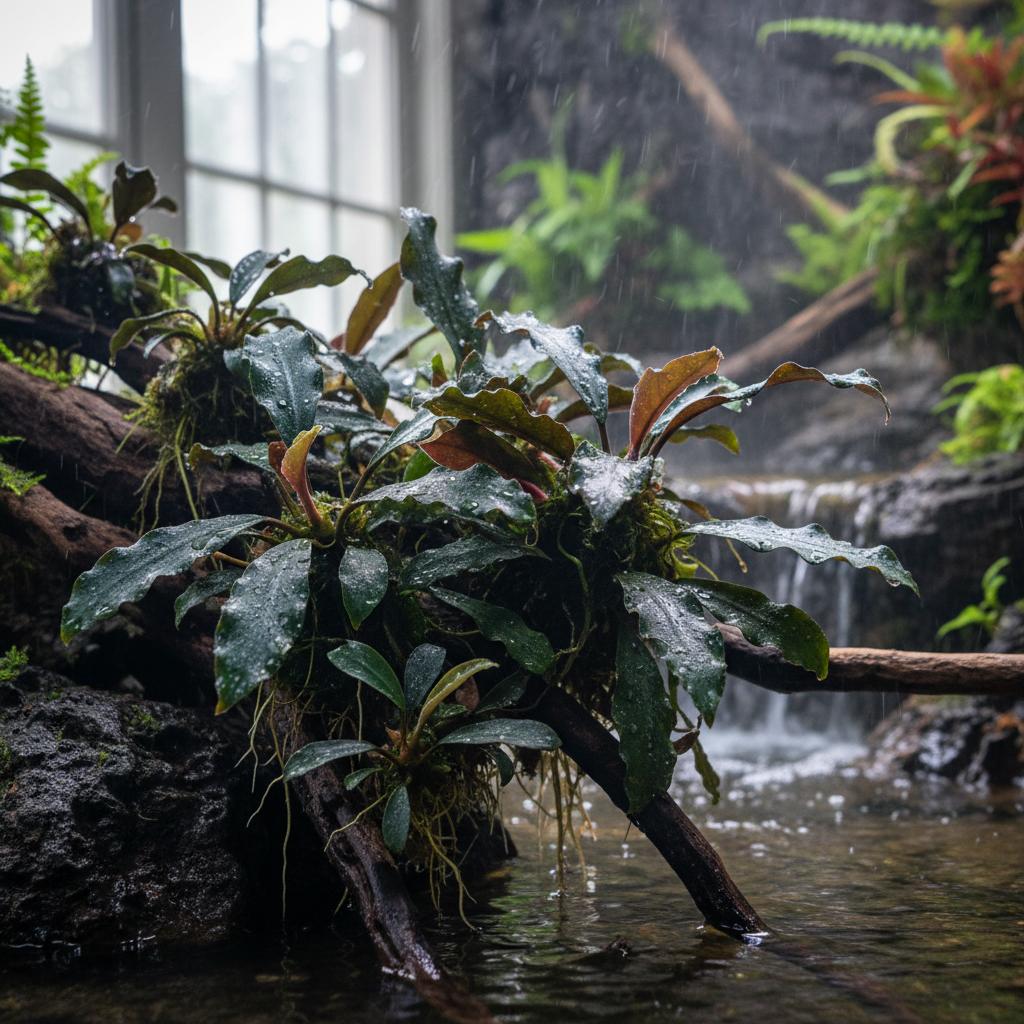
- Leaves: Dark green to reddish-brown, often with iridescent blue or purple hues and distinct white dots (stomata/trichomes), margins sometimes undulate;
- Stem: Creeping rhizome that attaches firmly to rocks and driftwood;
- Flowers: Small aroid inflorescence featuring a white to pinkish spathe and spadix, capable of blooming while fully submerged;
- Roots: Strong, clinging adventitious roots adapted for anchoring in fast-flowing water.
Care Guide
Watering
Maintain stable aquatic parameters or mist daily if grown emersed.
Fertilization
Apply liquid aquarium fertilizer to the water column.. Benefits from micro-nutrient dosing in the water column, especially iron for coloration.
Aquarium Change Water:If growing emersed in a terrarium, use the nutrient-rich water from your fish tank water changes to mist or water the plant; avoid any water treated with high salts or medications.Pruning
- Remove any leaves heavily covered in algae by cutting near the rhizome;
- Trim away melting or decaying leaves to prevent water fouling;
- Propagate by cleanly cutting the rhizome, ensuring each new section has at least 3-4 leaves and healthy roots.
Toxicity
Warning: this plant may be toxic.
Pets & Humans
Pets: Toxic per ASPCA (Araceae family); contains insoluble calcium oxalates causing oral irritation and gastrointestinal upset.
Humans: Contains calcium oxalate crystals which can cause oral and gastrointestinal irritation if ingested.
Garden Uses & Culture
Culture: N/A
Usage: Highly prized in the Western aquascaping hobby for creating intricate underwater landscapes, often used as a foreground or midground epiphyte attached to hardscape.