 PlantFun
Plant Needs
Sunlight
Requires full sun for optimal blooming and compact growth.
Watering
Moderate water needs; highly drought-tolerant once established.
Temperature
Hardy to USDA zones 5-9; tolerates summer heat well but may die back to the ground in severe winters.
Characteristics
- Leaves: Lanceolate to ovate, opposite, 7-13 cm long, dark green above, white-tomentose beneath, with finely serrated margins;
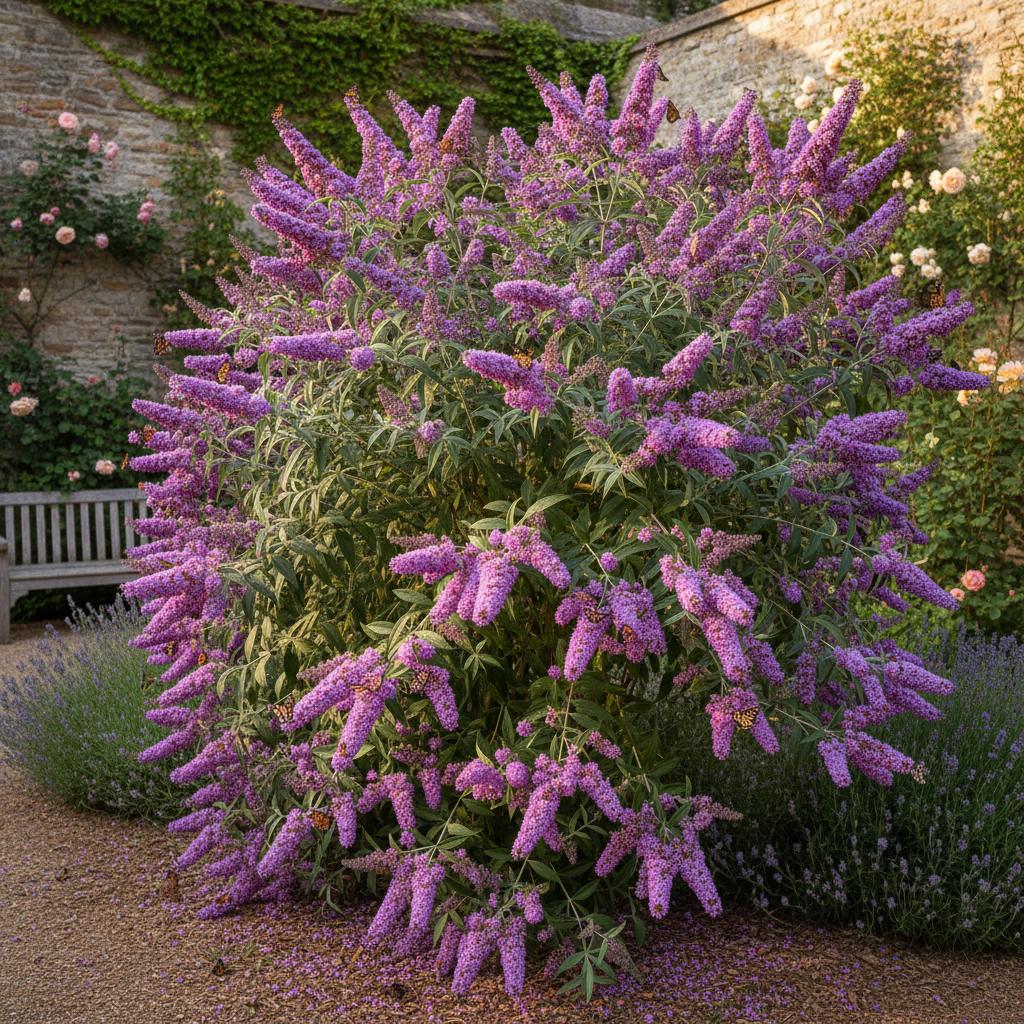
- Flowers: Dense, terminal panicles up to 30 cm long, individual flowers small, tubular, four-lobed, typically purple to lilac with an orange eye, highly fragrant;
- Stems: Young shoots are quadrangular and covered in white down; older bark is pale brown and deeply fissured.
Care Guide
Watering
Water deeply once a week during active growth and dry spells
Fertilization
Apply a light layer of compost or balanced organic fertilizer as new growth appears. Requires minimal fertilization; over-fertilizing can reduce bloom count.
Banana Peel Tea:Steep chopped banana peels in water for 24-48 hours. Dilute 1:1 with water and apply to the base to promote prolific blooming. Discard peels in compost to avoid attracting pests.Pruning
- Hard prune in late winter or early spring, cutting stems down to 30 cm (12 inches) above the ground, as it blooms on new wood;
- Deadhead spent flower panicles regularly during summer to encourage continuous blooming;
- Remove weak or crossing branches to maintain an open, vase-like structure;
- Prompt deadheading is crucial in regions where the plant is considered invasive to prevent seed dispersal.
Toxicity
Warning: this plant may be toxic.
Pets & Humans
Pets: Non-toxic to cats per ASPCA guidelines.
Humans: Generally recognized as safe and non-toxic to humans.
Garden Uses & Culture
Culture: In Western garden culture, it is deeply associated with the revival of nature and the transformation of the soul, owing to its magnetic ability to draw butterflies and bees into the summer garden.
Usage: Widely used in pollinator gardens, cottage gardens, mixed shrub borders, and as a fast-growing screening plant.