 PlantFun
Plant Needs
Characteristics
- Leaves: Lanceolate, grayish-green to dark green, opposite, 10-15 cm long, with finely serrate margins and whitish, tomentose undersides;
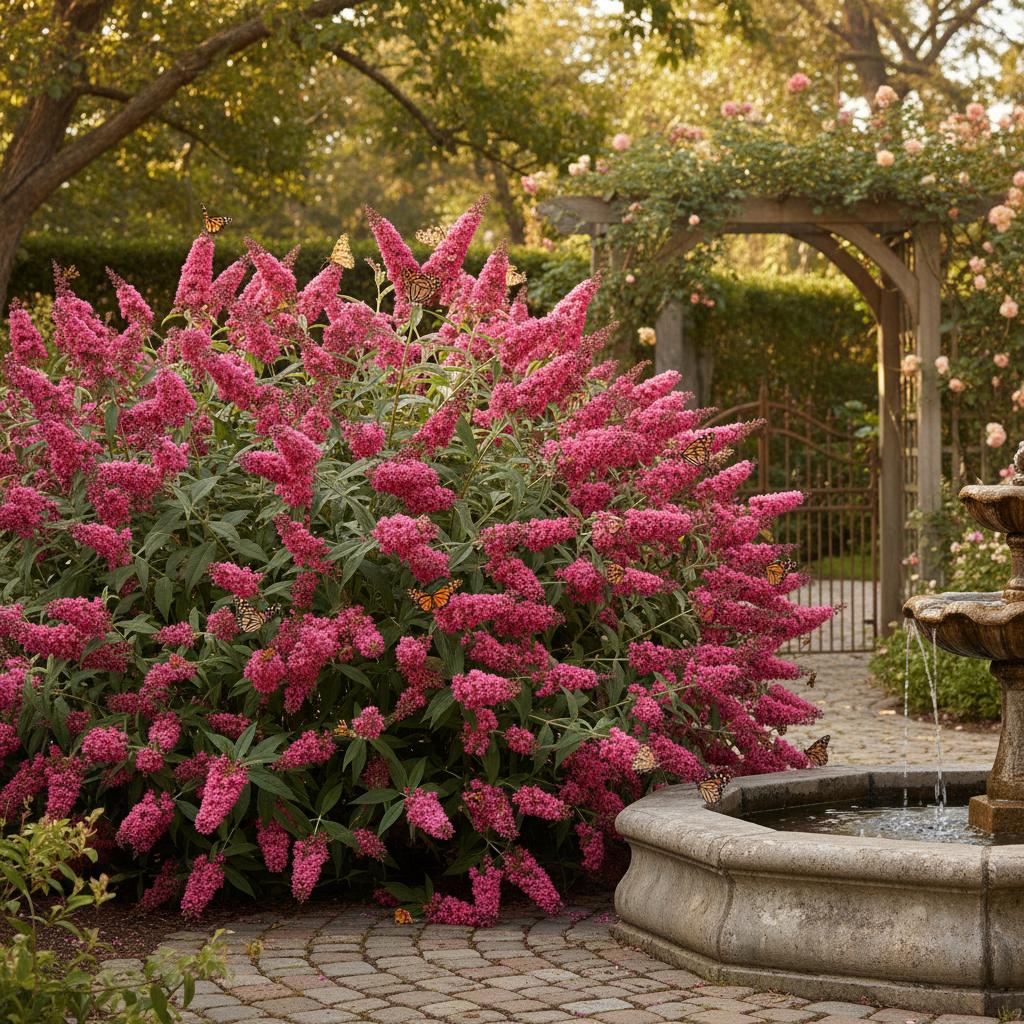
- Flowers: Dense, conical panicles (inflorescences) up to 25 cm long, composed of tiny, tubular, sangria-red to dark pinkish-red flowers with distinct orange throats;
- Stems: Arching, semi-woody, four-angled when young, developing a fissured grayish bark as they mature.
Care Guide
Water deeply once a week, increasing frequency only during extreme, prolonged heat or if grown in containers.
Apply a balanced, slow-release fertilizer or a layer of compost as new growth emerges in early spring.. Avoid over-fertilizing, as Buddleja thrives in relatively lean soils.
Banana Peel Tea:Steep chopped banana peels in water for 24-48 hours, dilute 1:1 with water, and pour around the base of the plant to support prolific blooming. Discard the solid peels in the compost to avoid attracting pests.- Late Winter/Early Spring Pruning: Cut the entire shrub back to 12-24 inches above the ground before new growth starts, as it blooms on new wood;
- Deadheading: Remove spent flower panicles regularly throughout the summer to encourage continuous blooming and prevent unwanted self-seeding;
- Thinning: Remove any dead, damaged, or crossing branches to maintain an open, airy shape and improve air circulation.
Toxicity
Warning: this plant may be toxic.
Pets: Non-toxic to cats per ASPCA guidelines.
Humans: Generally considered non-toxic to humans; contact with sap may cause minor skin irritation in highly sensitive individuals.
Garden Uses & Culture
Culture: In Western gardening, the butterfly bush is celebrated as a staple of the cottage garden and pollinator-friendly landscapes, symbolizing transformation, summer abundance, and the delicate balance of local ecosystems.
Usage: Excellent as a specimen plant, in mixed shrub borders, pollinator gardens, and large container plantings. Highly valued for attracting butterflies, bees, and hummingbirds.