 PlantFun
Plant Needs
Characteristics
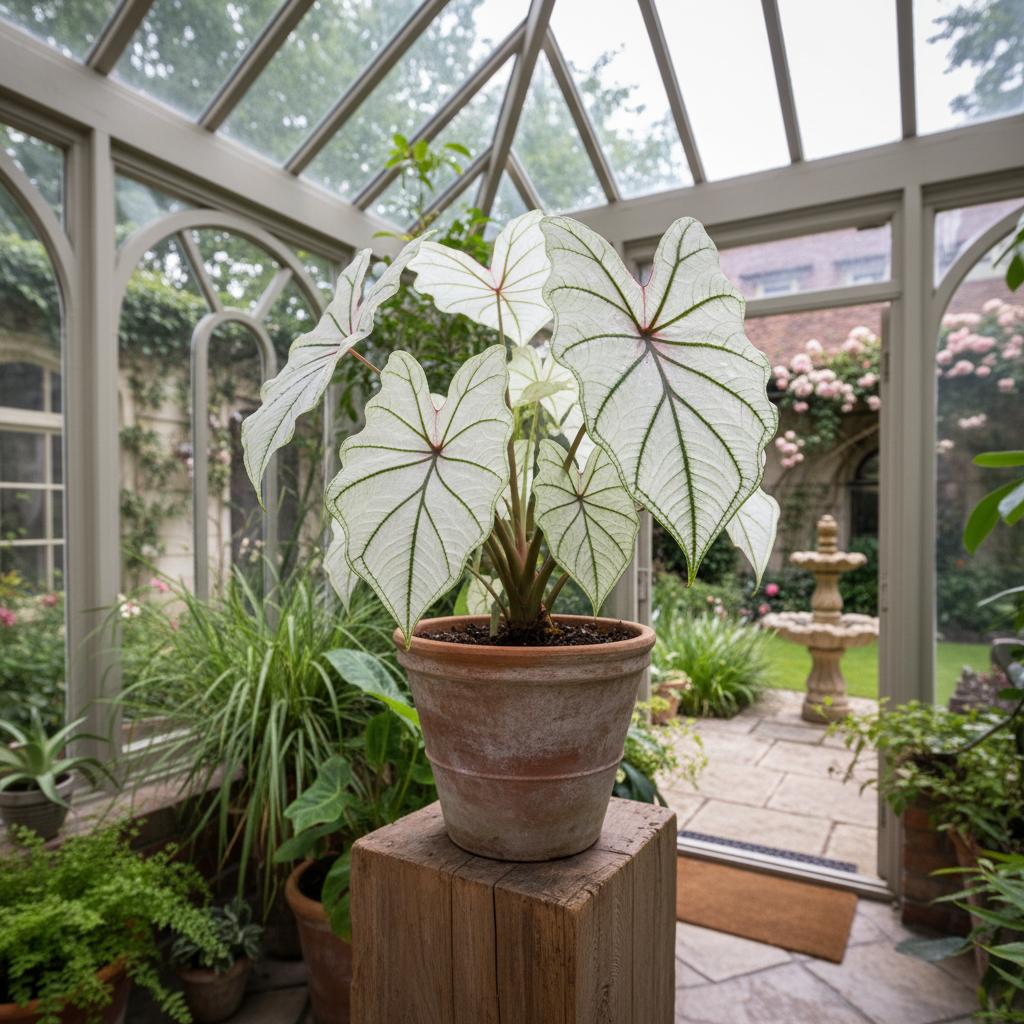
- Leaves: Large, sagittate (arrow-shaped) to cordate (heart-shaped), featuring a luminous creamy-white center, prominent white veins, and broad, contrasting dark green margins.
- Stems: Long, slender, fleshy petioles that emerge directly from the underground tuber, holding the leaves upright.
- Flowers: Inflorescence consists of a typical aroid spadix surrounded by a greenish-white spathe, often hidden beneath the dense foliage.
- Roots: Fleshy, starchy underground tubers used for energy storage during dormancy.
Care Guide
Water thoroughly when the top inch of soil feels dry, keeping the root zone evenly moist.
Begin fertilizing once new shoots emerge and leaves start to unfurl.. Feed regularly during the active growing season, but cease fertilization in late summer as the plant prepares for dormancy.
Banana Peel Tea:Soak chopped banana peels in water for 24-48 hours. Strain and dilute the liquid 1:1 with water. This provides potassium to support robust tuber health and vibrant foliage. Discard the solid peels in an outdoor compost bin to avoid attracting indoor pests.- Remove yellowing or dead leaves by cutting the petiole near the soil line to maintain a tidy appearance.
- Snip off any rare flower spathes if they appear, as they draw energy away from foliage production.
- Clear away all dead foliage once the plant enters its winter dormancy.
Toxicity
Warning: this plant may be toxic.
Pets: Toxic per ASPCA. Ingestion causes oral irritation, intense burning and irritation of the mouth, tongue, and lips, excessive drooling, vomiting, and difficulty swallowing.
Humans: Contains insoluble calcium oxalate crystals. Chewing or biting any part of the plant releases these crystals, causing intense pain and swelling of the mouth, tongue, and throat.
Garden Uses & Culture
Culture: In Victorian-era Europe and the Americas, Caladiums were highly prized conservatory plants, symbolizing exotic beauty and refined taste in shaded estate gardens.
Usage: Widely used as a dramatic foliage plant for shade borders, patio containers, hanging baskets, and as a seasonal indoor houseplant.