 PlantFun
Plant Needs
Characteristics
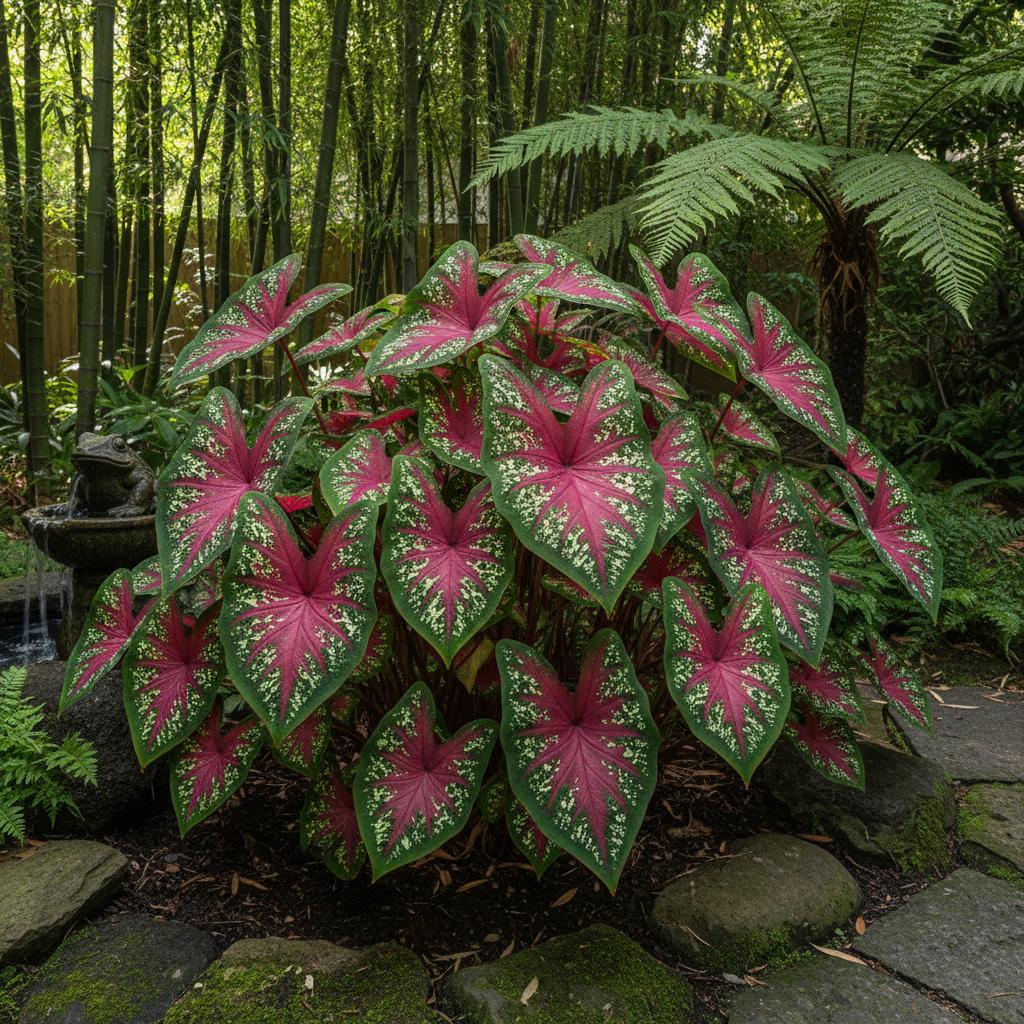
- Leaves: Large, paper-thin, heart-shaped (cordate) to lanceolate, featuring striking spots, splashes, and contrasting veins in red, pink, white, and green;
- Stems: Petioles are long, slender, fleshy, and attach directly to the underground tuber;
- Flowers: Inflorescence consists of a greenish-white spathe surrounding a spadix, often hidden by the dense foliage;
- Roots: Grows from a fleshy underground tuber.
Care Guide
Keep soil evenly moist, watering when the surface feels slightly dry to the touch.
Apply a balanced liquid fertilizer diluted to half strength to encourage foliage growth.. Fertilize only during the active growing season; stop feeding in late summer as the plant prepares for dormancy.
Banana Peel Tea:Steep chopped banana peels in water for 24-48 hours. Dilute 1:1 with water and apply to soil to boost tuber health and leaf color. Discard solids in compost to avoid attracting pests or mold.- Remove yellowing, drooping, or dead leaves at the base to maintain a tidy appearance and prevent fungal issues;
- Cut off any flower stalks (spathes) as soon as they appear to redirect the plant's energy back to foliage production;
- Before winter dormancy, trim back all withered foliage once it dies back naturally.
Toxicity
Warning: this plant may be toxic.
Pets: Toxic per ASPCA. Contains calcium oxalate crystals causing intense burning and irritation of the mouth, tongue, and lips.
Humans: Contains insoluble calcium oxalate crystals; chewing or biting causes severe oral irritation, swelling, and gastrointestinal upset.
Garden Uses & Culture
Culture: Popularized in Victorian Europe as a premier conservatory plant, prized for bringing exotic, jungle-like vibrancy to glasshouses and shaded estate gardens.
Usage: Grown primarily as an ornamental foliage plant for shaded garden beds, borders, containers, hanging baskets, and indoor displays.