 PlantFun
Plant Needs
Sunlight
Bright, indirect light; avoid direct sunlight.
Watering
Keep soil consistently moist but not waterlogged.
Temperature
Prefers warm temperatures and high humidity.
Characteristics
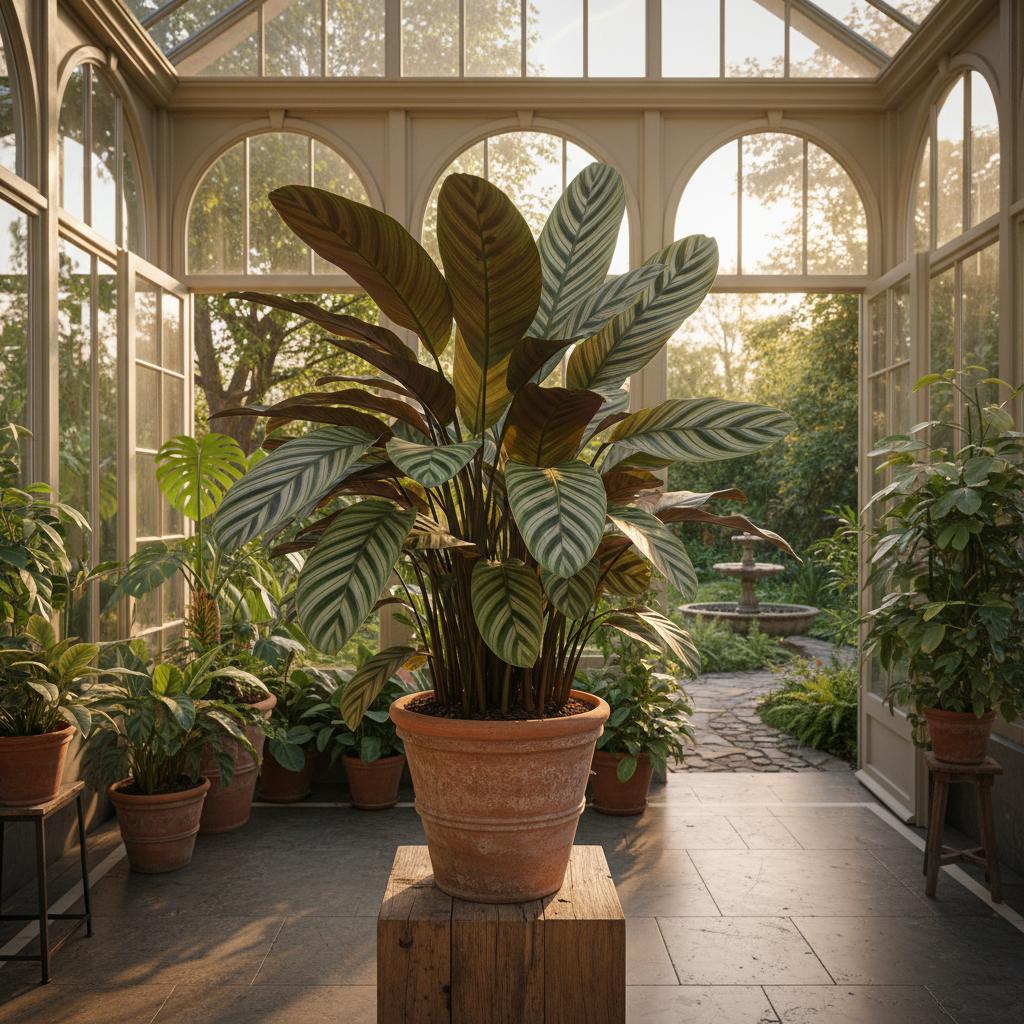
- Leaves: Pale green, ovate to elliptical leaves with striking dark green, fishbone-like banding on the adaxial surface and deep purple abaxial surface;
- Stems: Slender, wiry petioles that facilitate nyctinastic movement (folding at night);
- Flowers: Inconspicuous white flowers borne in small, spike-like inflorescences, though rarely seen in cultivation.
Care Guide
Watering
Water when the top inch of soil feels dry, keeping it evenly moist.
Fertilization
Apply a balanced, water-soluble fertilizer diluted to half strength.. Do not fertilize in winter when growth slows.
Banana Peel Tea:Soak chopped banana peels in water for 24 hours, strain, and use the liquid to water the plant. Avoid leaving raw peels on the soil to prevent fungus gnats.Pruning
- Remove yellow or brown leaves at the base using sterilized shears to encourage new growth;
- Trim crispy edges if humidity was too low, following the natural curve of the leaf;
- Wipe leaves regularly with a damp cloth to remove dust and deter pests.
Toxicity
Warning: this plant may be toxic.
Pets & Humans
Pets: Non-toxic to cats per ASPCA guidelines.
Humans: Non-toxic to humans; safe to handle.
Garden Uses & Culture
Culture: Named in honor of Roberto Burle Marx, the renowned Brazilian landscape architect who championed the use of native tropical flora in modern South American and international landscape design.
Usage: Cultivated primarily as an indoor ornamental foliage plant for its striking leaf patterns and air-purifying qualities.