 PlantFun
Plant Needs
Sunlight
Requires bright, indirect light; direct sunlight will scorch the leaves and fade their vibrant patterns.
Watering
Keep soil consistently moist but never waterlogged. Requires high ambient humidity (above 50%).
Temperature
Prefers warm indoor temperatures; highly sensitive to cold drafts and sudden temperature drops.
Characteristics
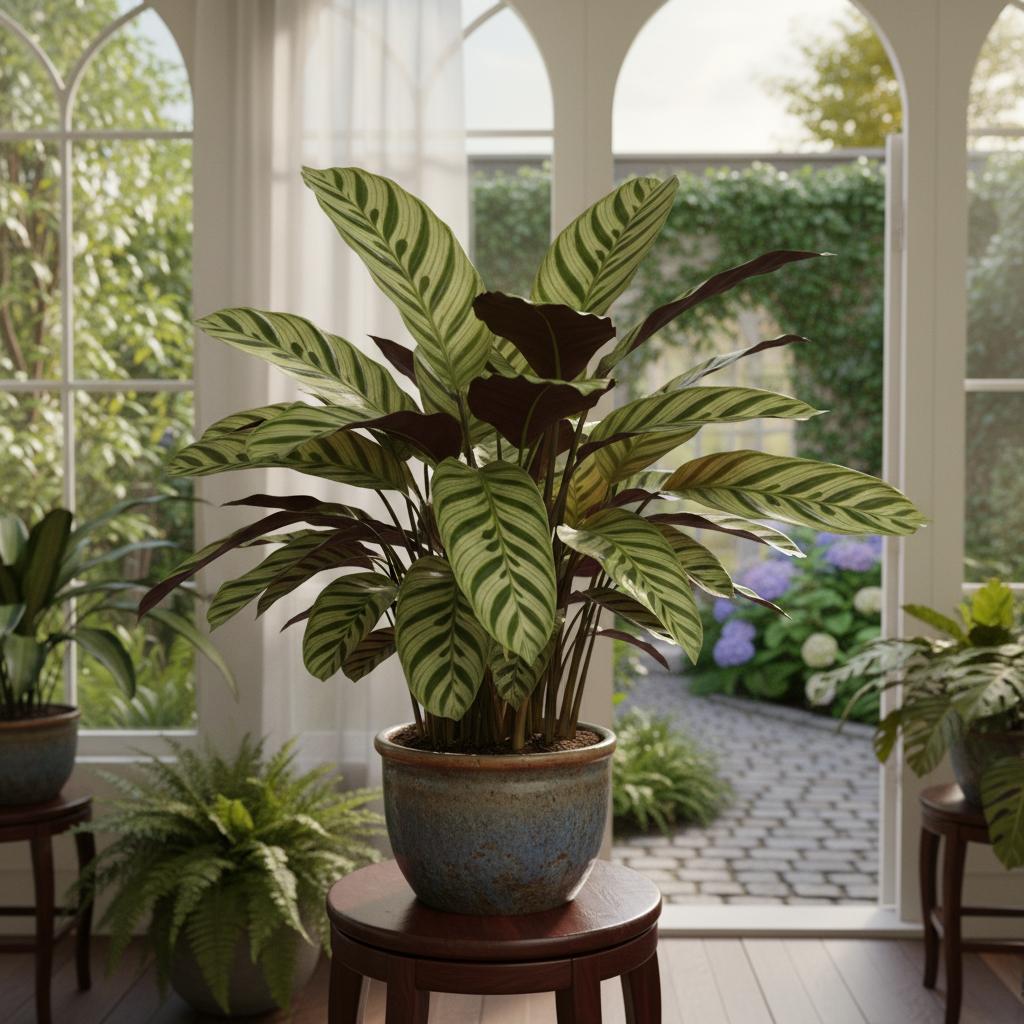
- Leaves: Elongated, lanceolate to ovate leaves featuring a pale silvery-green background with striking, dark green, alternating bands extending from the midrib;
- Stems: Slender, upright green petioles emerging from a basal underground rhizome, featuring a pulvinus joint at the leaf base;
- Flowers: Inconspicuous white tubular flowers arranged in small spikes, though rarely seen in indoor cultivation;
- Roots: Fibrous root system attached to fleshy rhizomes used for energy storage.
Care Guide
Watering
Water thoroughly when the top inch of soil feels dry, maintaining even moisture.
Fertilization
Apply a balanced, water-soluble houseplant fertilizer diluted to half strength.. Do not fertilize during the winter dormancy period to prevent root burn from salt buildup.
Banana Peel Tea:Soak chopped banana peels in water for 24-48 hours, strain, and use the liquid to water the plant. Avoid leaving solid peels on the soil surface to prevent fungus gnats and mold.Pruning
- Trim away any yellowed, browned, or dying leaves at the base of the petiole using sterilized shears;
- Wipe leaves regularly with a damp, soft cloth to remove dust and support optimal photosynthesis;
- Do not use commercial leaf shine products, as they can clog the plant's stomata.
Toxicity
Warning: this plant may be toxic.
Pets & Humans
Pets: Non-toxic to cats per ASPCA.
Humans: Non-toxic to humans.
Garden Uses & Culture
Culture: Popularized in Western interior design during the late 20th-century houseplant boom, cherished for its geometric patterns and the dynamic, soothing presence of its daily leaf movements.
Usage: Primarily grown as an indoor ornamental foliage plant, perfect for tabletops, plant stands, and humid environments like bright bathrooms or terrariums.