 PlantFun
Plant Needs
Sunlight
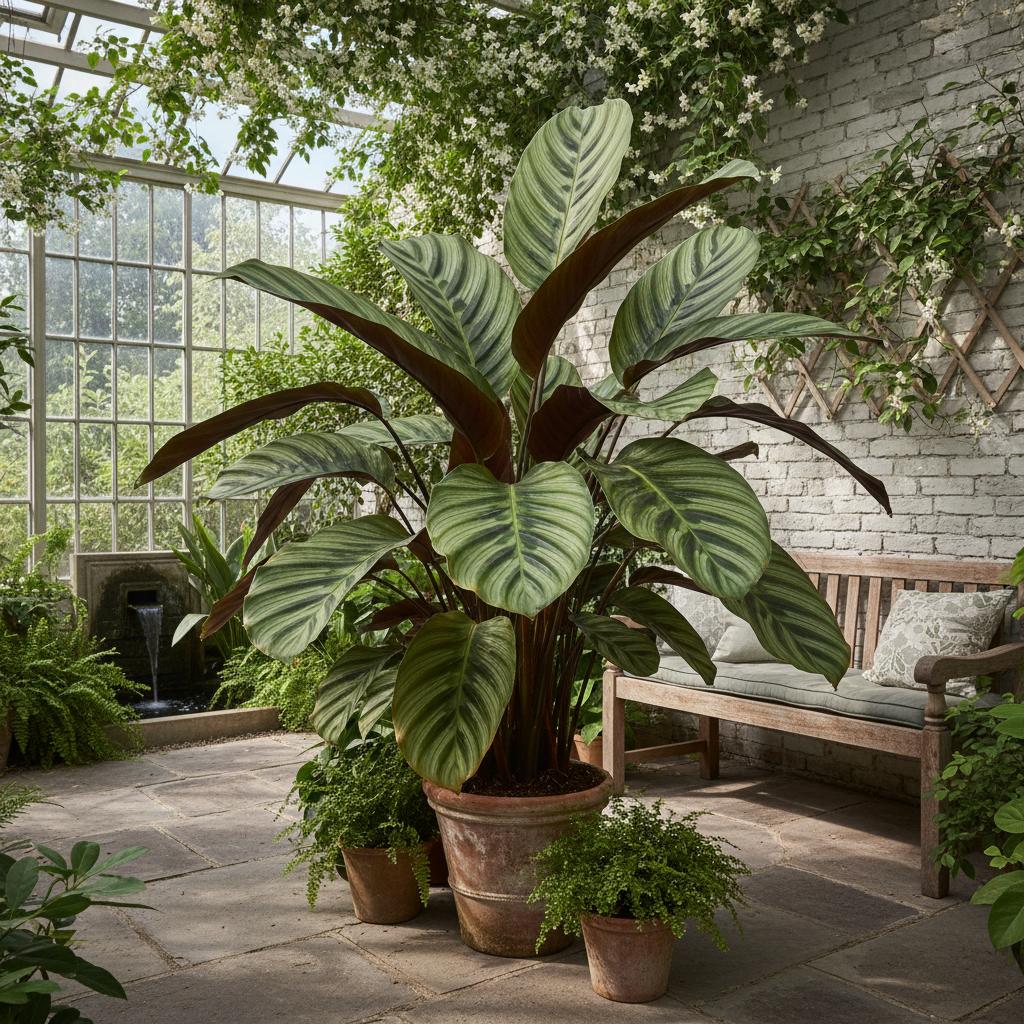
Requires bright, indirect light; direct sunlight will scorch the leaves and fade the patterns.
Watering
Keep soil consistently moist but not waterlogged; requires high ambient humidity.
Temperature
Prefers warm tropical temperatures; sensitive to cold drafts below 15°C.
Characteristics
- Leaves: Large, broadly ovate to elliptic, pale green background with striking, thick dark green bands extending from the midrib to the margins; undersides are typically pale green or slightly purplish.
- Stems: Short, clumping habit, arising directly from underground rhizomes.
- Flowers: Inflorescence is a short, inconspicuous spike with small white or pale purple flowers, largely hidden by the foliage.
Care Guide
Watering
Water thoroughly when the top inch of soil feels dry; maintain high humidity.
Fertilization
Apply a diluted, balanced liquid fertilizer.. Do not fertilize in winter when plant growth naturally slows down.
Banana Peel Tea:Soak chopped banana peels in a jar of water for 24-48 hours. Strain the liquid and dilute 1:1 with distilled water before applying to the soil. This provides gentle potassium for strong leaf development. Avoid leaving raw peels on the soil surface to prevent fungus gnats.Pruning
- Trim away any brown, crispy leaf edges using sterilized scissors, following the natural curve of the leaf.
- Remove entirely yellowed or dead leaves at the base of the stem to direct energy to new growth.
- Wipe leaves gently with a damp cloth to remove dust and support photosynthesis.
Toxicity
Warning: this plant may be toxic.
Pets & Humans
Pets: Non-toxic to cats per ASPCA guidelines.
Humans: Non-toxic to humans; safe to handle.
Garden Uses & Culture
Culture: In Victorian Europe, Calatheas were highly prized as exotic conservatory plants, symbolizing refined taste and the era's fascination with tropical botanical exploration.
Usage: - **Ornamental**: Highly valued as a decorative indoor potted plant for its striking foliage. - **Terrariums**: Smaller specimens are excellent for large terrariums due to their love for high humidity.