 PlantFun
Plant Needs
Characteristics
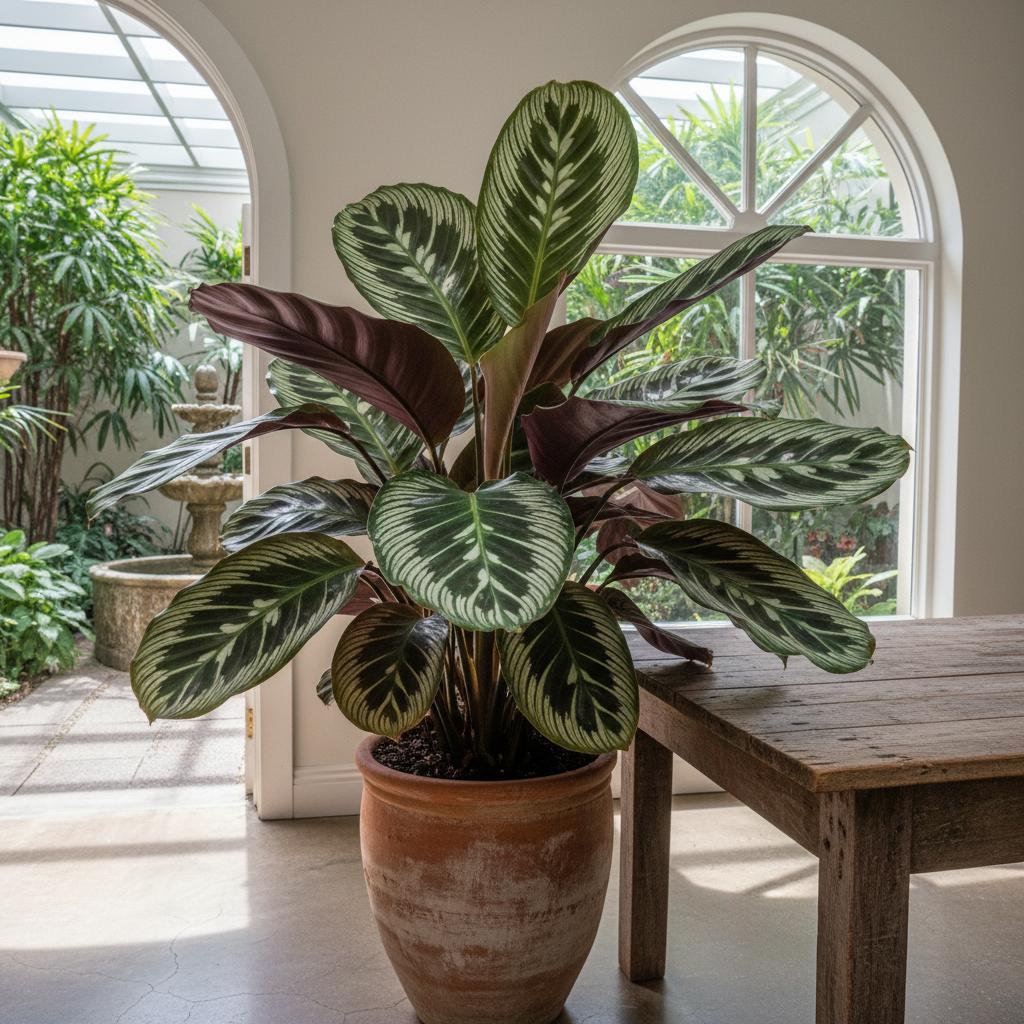
- Leaves: Large, ovate to lanceolate, dark green background adorned with dense, elegant white and pale pink longitudinal pinstripes; undersides are a striking deep maroon or purple.
- Stems: Long, slender, purplish-green petioles that emerge from a clumping basal rhizome.
- Habit: Clump-forming herbaceous perennial exhibiting nyctinasty, where leaves fold upward at night resembling praying hands.
- Flowers: Small, tubular white to pinkish flowers borne on short spikes, though highly uncommon in indoor cultivation.
Care Guide
Water thoroughly when the top inch of soil feels dry, maintaining high ambient humidity.
Apply a diluted, balanced liquid fertilizer to support active foliage growth.. Flush the soil periodically with pure water to remove any accumulated mineral salts.
Aquarium Water:Use old aquarium water during routine tank changes. It provides gentle, natural nutrients without the harsh chemical salts that cause severe leaf tip burn in sensitive Marantaceae plants. Ensure the water is at room temperature.- Sanitation: Trim away any entirely yellowed or dead leaves at the base of the stem using sterilized shears.
- Aesthetics: Brown, crispy leaf edges (often caused by low humidity or hard water) can be carefully trimmed along the natural curve of the leaf.
- Maintenance: Wipe leaves gently with a damp, soft cloth to remove dust and deter spider mites.
Toxicity
Warning: this plant may be toxic.
Pets: Non-toxic to cats per ASPCA guidelines.
Humans: Non-toxic to humans; safe to handle.
Garden Uses & Culture
Culture: In Western houseplant culture, prayer plants are often gifted as symbols of gratitude, new beginnings, and daily devotion, reflecting their rhythmic evening movements.
Usage: - **Ornamental**: Highly prized as a statement indoor foliage plant for its striking variegation. - **Air Purifying**: Contributes to indoor air quality improvement and adds significant humidity to the immediate environment.