 PlantFun
Plant Needs
Characteristics
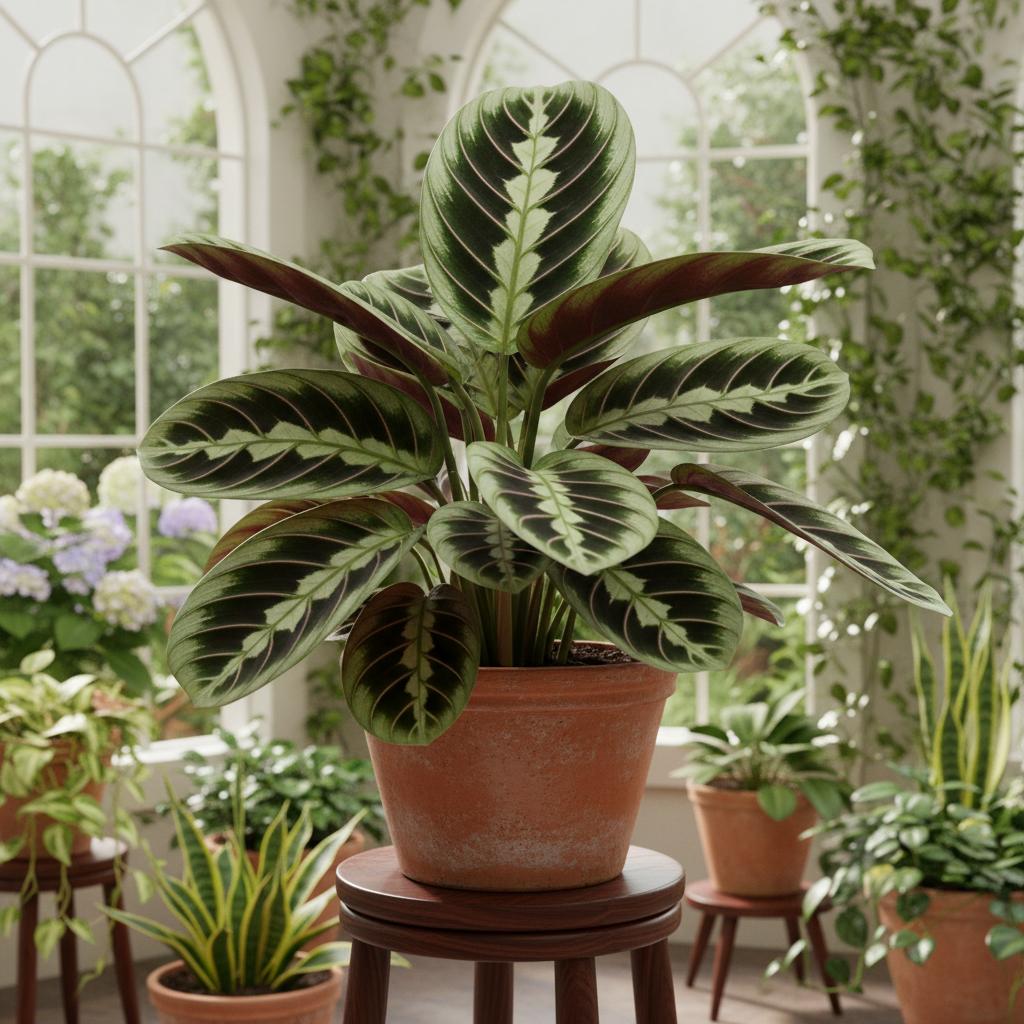
- Leaves: Large, elliptical, dark green leaves adorned with striking white to pinkish longitudinal pinstripes along the lateral veins; undersides are a deep, rich burgundy.
- Stems: Slender, upright, purplish-green petioles emerging directly from a basal rhizome.
- Flowers: Inconspicuous, small, tubular white or yellow flowers arranged in spike-like inflorescences (rarely seen in indoor cultivation).
- Habit: Clump-forming herbaceous perennial that exhibits nyctinasty, folding its leaves upward at night like hands in prayer.
Care Guide
Water thoroughly when the top inch of soil feels dry, maintaining even moisture.
Apply a diluted, balanced liquid fertilizer.. Feed only during the active growing season; over-fertilizing can cause salt build-up and leaf tip burn.
Banana Peel Tea:Soak chopped banana peels in distilled water for 24-48 hours. Strain the liquid and dilute 1:1 with fresh distilled water before applying to the soil. Avoid using tap water, as Calatheas are highly sensitive to chlorine and fluoride. Discard the solid peels in compost to prevent indoor pests.- Sanitation: Trim away any yellow, brown, or damaged leaves at the base of the petiole using sterilized shears.
- Edge Maintenance: If only the edges are brown due to low humidity, you can carefully trim along the brown edge, leaving a tiny margin of dead tissue to avoid cutting into healthy leaf cells.
- Rejuvenation: Remove older, faded outer leaves to direct the plant's energy toward producing vibrant new growth from the center.
Toxicity
Warning: this plant may be toxic.
Pets: Non-toxic to cats per ASPCA.
Humans: Non-toxic to humans; safe for daily contact.
Garden Uses & Culture
Culture: In Western houseplant culture, it is cherished as a "prayer plant" due to its nyctinastic movements, often symbolizing daily devotion, reflection, and the natural rhythms of life. It became highly sought after during the Victorian era's fascination with exotic tropical foliage.
Usage: Primarily cultivated as a premium indoor ornamental plant. Its striking foliage makes it a popular centerpiece for shaded patios, humid terrariums, and modern interior design.