 PlantFun
Plant Needs
Sunlight
Requires bright, indirect light. Direct sunlight will scorch the leaves and fade their vibrant colors.
Watering
Keep the soil consistently moist but never waterlogged. High ambient humidity (over 50%) is crucial.
Temperature
Prefers warm, stable temperatures; sensitive to cold drafts and sudden temperature drops.
Characteristics
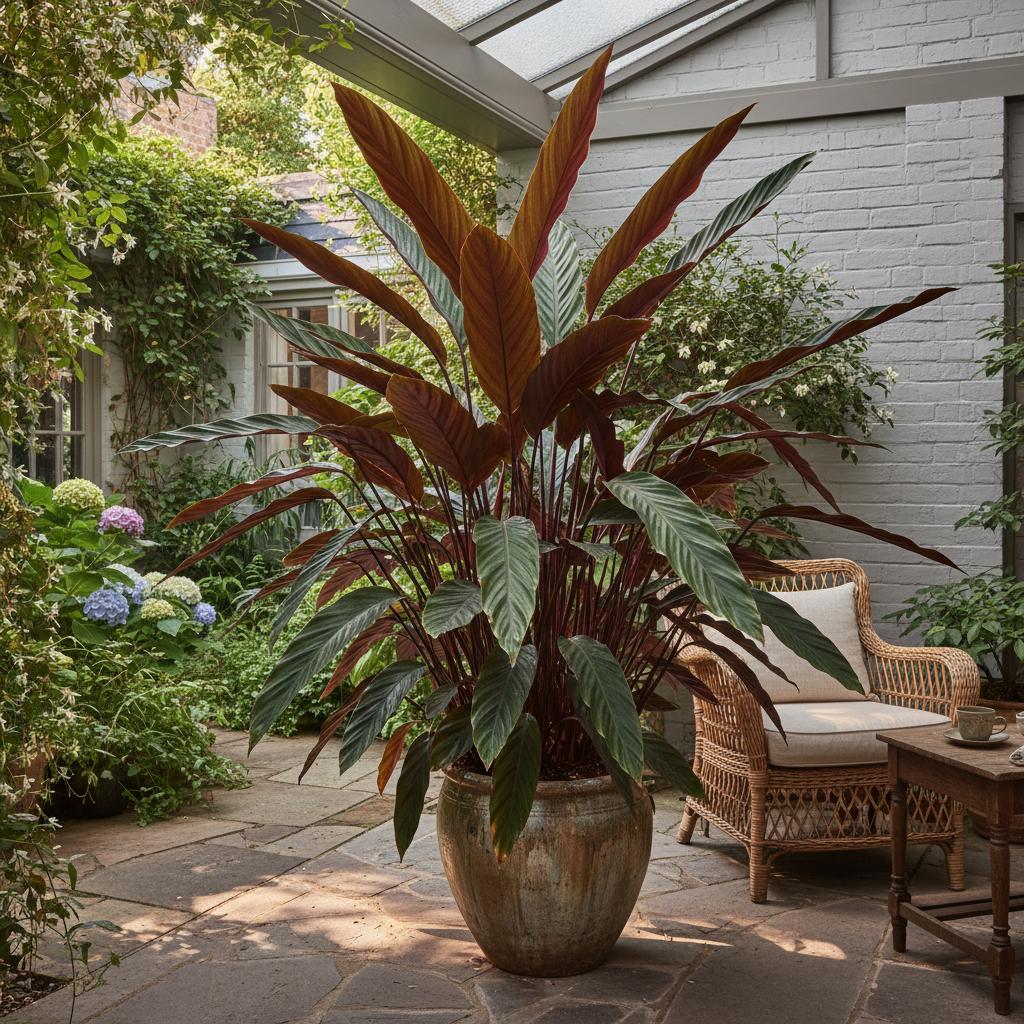
- Leaves: Elongated, lanceolate leaves with distinctly wavy (undulate) margins. The upper surface is green, while the underside is deep burgundy. Both sides are covered in fine, hair-like trichomes, giving a velvety texture;
- Stems: Long, slender, burgundy-colored petioles that are densely pubescent (fuzzy);
- Flowers: Small, inconspicuous yellow to pale orange tubular flowers emerging from spirally arranged bracts near the soil line (rarely seen in cultivation);
- Roots: Rhizomatous root system used for energy storage and spreading.
Care Guide
Watering
Water thoroughly when the top inch of soil feels dry to the touch.
Fertilization
Apply a diluted, balanced liquid houseplant fertilizer.. Do not fertilize during the winter months when the plant's growth naturally slows down.
Aquarium Water:Use dirty water from freshwater aquarium changes. It provides gentle, natural nitrogen without the risk of chemical burn. Ensure the water has no added salts or medications.Pruning
- Remove dead, brown, or yellowing leaves by cutting them at the base of the stem with sterilized shears;
- Trim away crispy leaf edges if necessary, following the natural shape of the leaf;
- Avoid heavy misting directly on the fuzzy leaves to prevent fungal or bacterial leaf spot; instead, use a humidifier.
Toxicity
Warning: this plant may be toxic.
Pets & Humans
Pets: Non-toxic to cats per ASPCA.
Humans: Non-toxic to humans. Safe to handle, though ingestion of large amounts of plant material may cause mild mechanical stomach upset.
Garden Uses & Culture
Culture: Highly valued in Western interior design for its pet-safe qualities and striking, textured foliage that adds a sensory, tactile element to modern indoor spaces.
Usage: - Indoor ornamental foliage plant; - Tropical terrarium or heated greenhouse understory specimen.