 PlantFun
Plant Needs
Sunlight
Requires bright, indirect light; direct sunlight will scorch the leaves and fade their colors.
Watering
Keep the soil consistently moist but not waterlogged. Highly sensitive to tap water chemicals (fluoride/chlorine); requires distilled or rainwater.
Temperature
Prefers warm, stable temperatures and high humidity (above 50%). Avoid cold drafts.
Characteristics
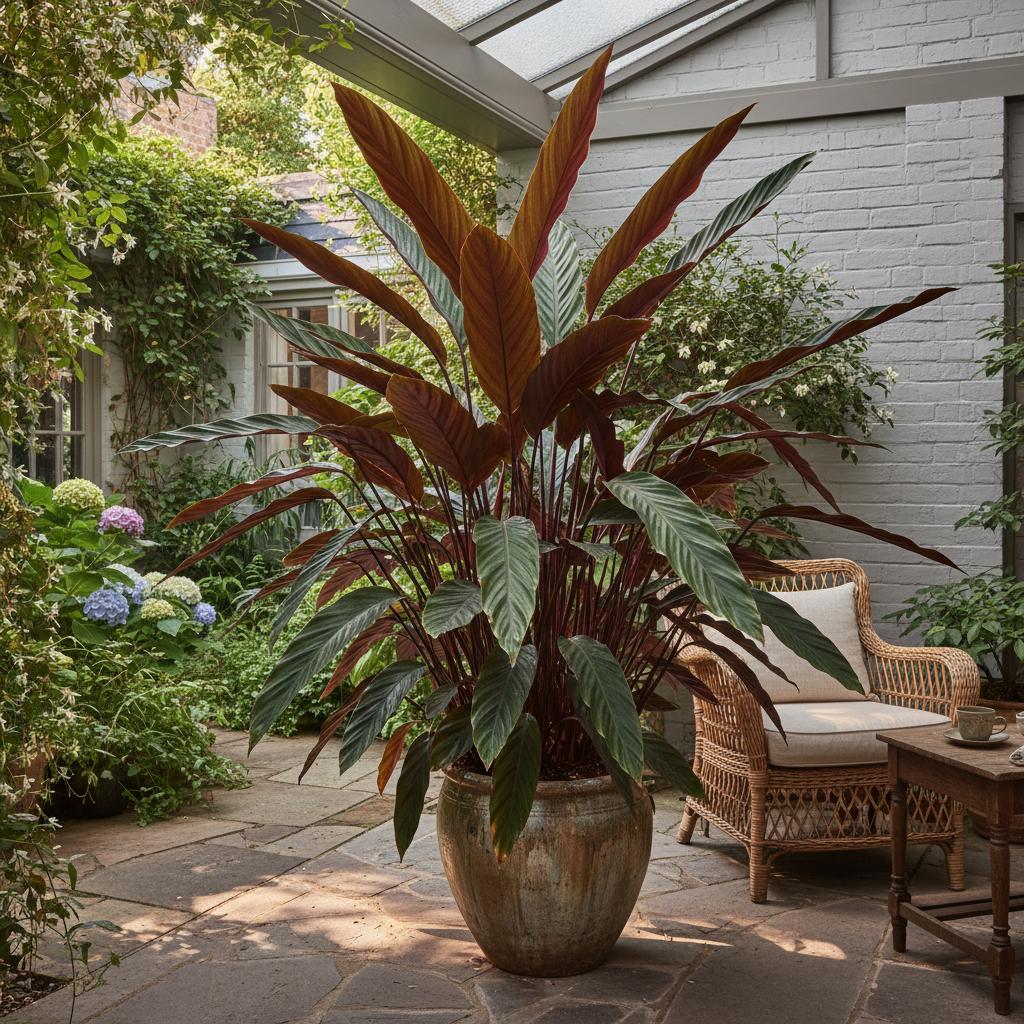
- Leaves: Elongated, lanceolate leaves with distinctly undulating (wavy) margins. The upper surface is semi-glossy green, while the underside is deep burgundy. Both sides are covered in fine, hair-like trichomes, giving a velvety texture;
- Stems: Long, slender, burgundy-colored petioles that are noticeably fuzzy;
- Flowers: Small, inconspicuous yellow flowers borne on short spikes near the soil line, though rarely seen in cultivation;
- Roots: Rhizomatous root system used for energy storage and spreading.
Care Guide
Watering
Water thoroughly when the top inch of soil feels dry, maintaining even moisture.
Fertilization
Apply a weak, diluted organic fertilizer.. Avoid over-fertilizing, which can burn the sensitive roots and cause leaf edge necrosis.
Aquarium Water:Use water from routine freshwater aquarium changes. It provides gentle, natural nutrients without the risk of chemical salt buildup that causes leaf tip burn in Calatheas. Ensure the water is at room temperature.Pruning
- Remove dead, yellowing, or crispy leaves by cutting them at the base of the stem with sterilized shears;
- Wipe leaves gently with a damp, soft cloth to remove dust, being careful not to damage the fine hairs;
- Do not use commercial leaf shine products, as they will damage the velvety trichomes.
Toxicity
Warning: this plant may be toxic.
Pets & Humans
Pets: Non-toxic to cats per ASPCA.
Humans: Non-toxic to humans.
Garden Uses & Culture
Culture: Highly prized in Western biophilic interior design for its pet-safe qualities, unique tactile texture, and dynamic movement, bringing a sense of the living rainforest into modern homes.
Usage: Indoor ornamental foliage plant, understory planting in large indoor atriums, and shaded greenhouse displays.