 PlantFun
Plant Needs
Sunlight
Prefers bright, indirect light; direct sunlight will scorch the leaves and fade the striking patterns.
Watering
Requires consistently moist soil; do not let the root ball dry out completely. High ambient humidity is essential.
Temperature
Thrives in warm household temperatures; avoid cold drafts and temperatures below 15°C.
Characteristics
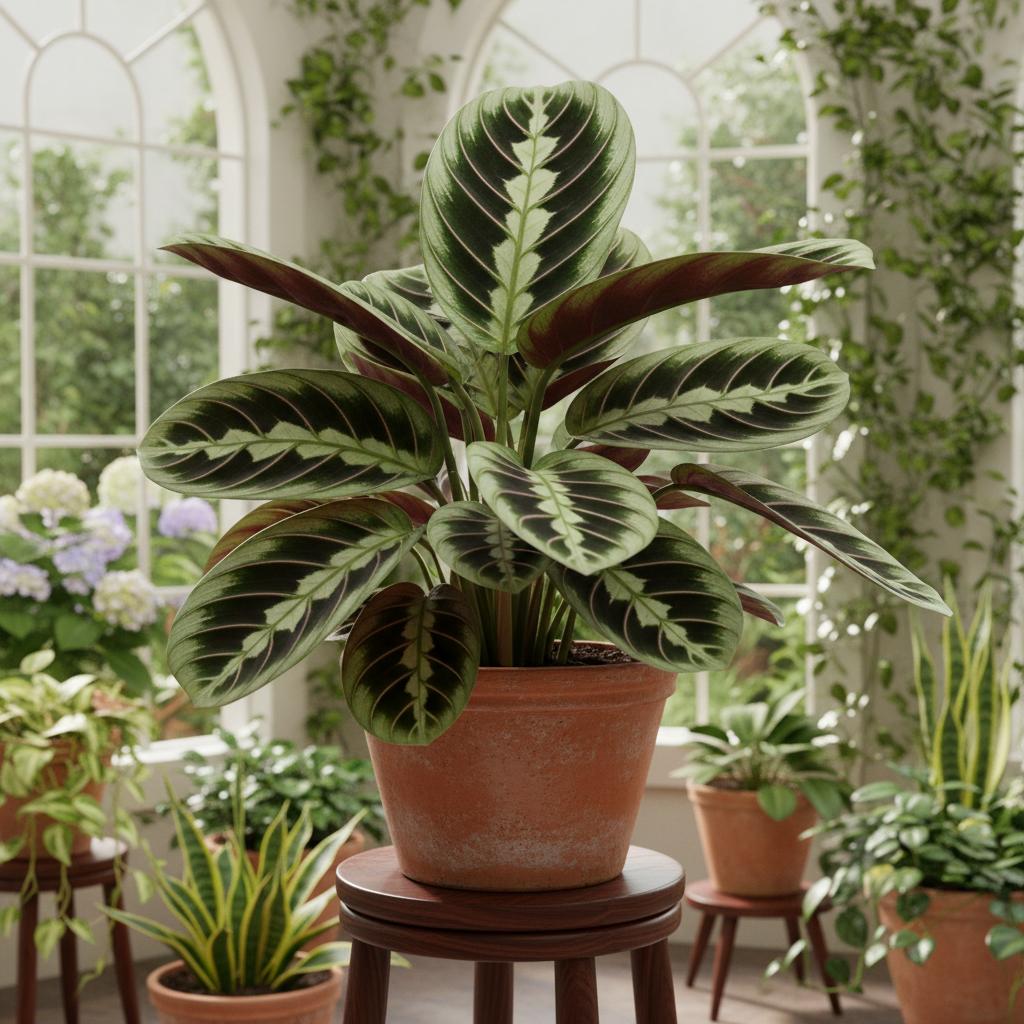
- Leaves: Large, ovate to lanceolate, dark green with striking white and pale pink longitudinal pinstripes; undersides are deep maroon to purple.
- Stems: Long, slender petioles emerging from a basal rhizome, featuring a specialized joint (pulvinus) that allows for daily movement.
- Flowers: Rarely produced indoors; small, tubular white or purplish flowers borne on short spikes in its natural habitat.
- Habit: Clump-forming, upright herbaceous perennial exhibiting nyctinasty (leaves fold upward at night).
Care Guide
Watering
Water thoroughly when the top inch of soil feels dry, keeping it evenly moist.
Fertilization
Apply a balanced liquid fertilizer diluted to half strength.. Do not fertilize in winter when growth naturally slows down.
Aquarium Water:Use dirty aquarium water during routine tank changes. It provides gentle, organic nutrients without the harsh chemical salts that cause leaf edge burn in sensitive prayer plants.Pruning
- Trim away any entirely yellow or brown leaves at the base of the stem using sterilized shears.
- Snip off crispy brown edges following the natural curve of the leaf if desired for aesthetics.
- Wipe leaves regularly with a damp cloth to remove dust and support photosynthesis.
Toxicity
Warning: this plant may be toxic.
Pets & Humans
Pets: Non-toxic to cats (per ASPCA).
Humans: Non-toxic to humans.
Garden Uses & Culture
Culture: Highly prized in Western interior design for its striking, painted-looking foliage and dynamic daily movements, bringing a sense of living energy and geometric elegance to indoor spaces.
Usage: - Indoor ornamental foliage plant. - Tropical greenhouse or conservatory specimen. - Natural air purifier for homes and offices.