 PlantFun
Plant Needs
Sunlight
Requires bright, indirect light; direct sunlight will quickly scorch the delicate leaves and flowers.
Watering
Keep the soil consistently moist but never waterlogged. High ambient humidity is preferred.
Temperature
Thrives in cool environments; struggles and declines rapidly in high heat or stuffy conditions.
Characteristics
- Leaves: Soft, pubescent, ovate to lanceolate, light green with distinctly crenate (scalloped) margins;
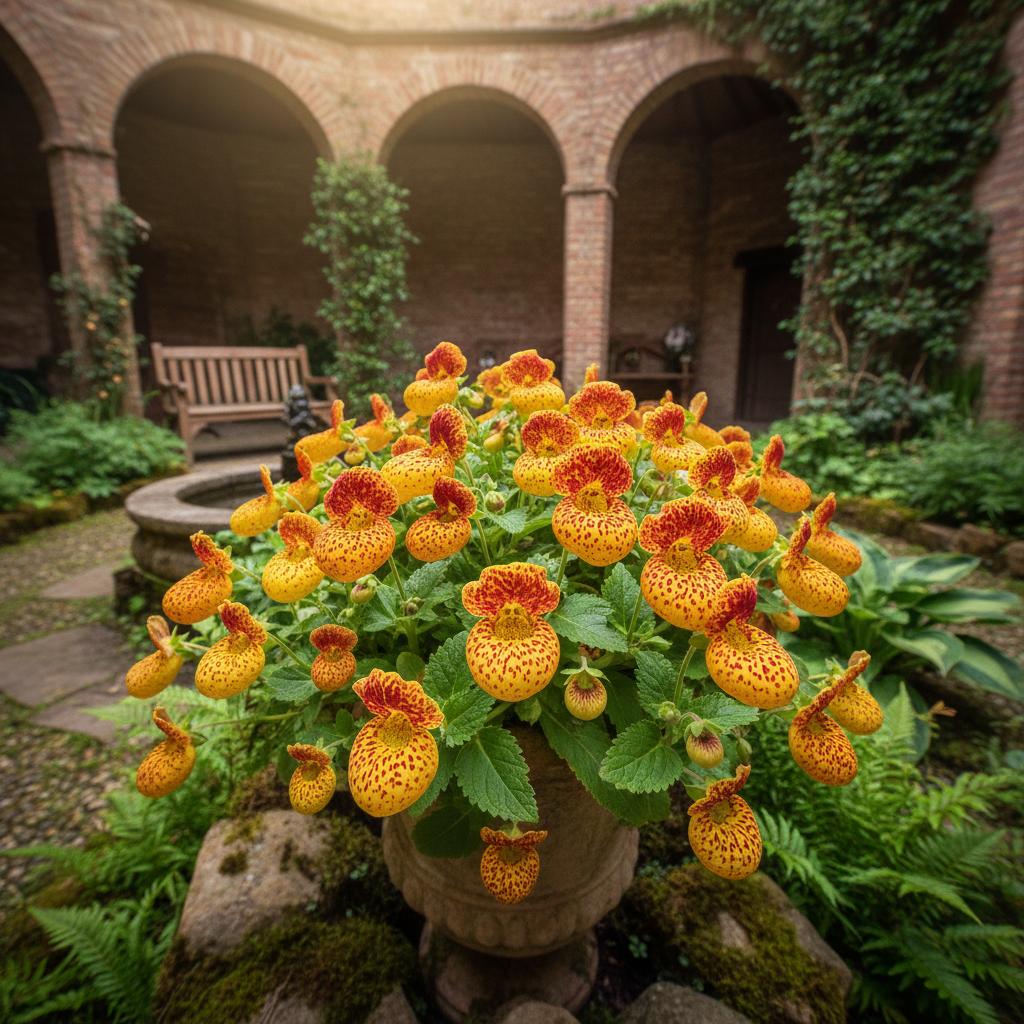
- Flowers: Bilabiate with a large, inflated, pouch-like lower lip, typically bright yellow, orange, or red, often heavily spotted or speckled with contrasting dark colors;
- Stem: Herbaceous, somewhat fragile, and covered in fine glandular hairs.
Care Guide
Watering
Water thoroughly when the soil surface feels just barely dry, avoiding getting water on the leaves.
Fertilization
Apply a weak, diluted fertilizer to encourage blooming.. Feed lightly during the active growth and blooming phase.
Banana Peel Tea:Soak chopped banana peels in water for 24 hours, strain, and use the liquid to water the plant to support vibrant flower development. Avoid leaving peel residue on the soil surface to prevent mold and fungus gnats.Pruning
- Remove spent flower pouches promptly to maintain a tidy appearance and potentially extend the blooming period;
- Carefully trim away any yellowing or dead leaves at the base to improve air circulation;
- Avoid getting water on the fuzzy leaves to prevent botrytis (gray mold).
Toxicity
Warning: this plant may be toxic.
Pets & Humans
Pets: Non-toxic to cats per ASPCA guidelines.
Humans: Non-toxic to humans.
Garden Uses & Culture
Culture: In Victorian floriography, its unique purse-like shape led to associations with hoarding wealth or keeping a secret.
Usage: Primarily cultivated as a highly decorative, temporary indoor blooming plant for spring displays and floral gifts.