 PlantFun
Plant Needs
Sunlight
Requires bright, indirect light; direct sunlight can scorch the delicate leaves and flowers.
Watering
Keep the soil consistently moist but never waterlogged. Avoid getting water on the fuzzy leaves to prevent rot.
Temperature
Thrives in cool temperatures and high humidity; struggles in heat above 20°C (68°F).
Characteristics
- Leaves: Soft, hairy, ovate to lanceolate, often wrinkled or deeply veined, forming a basal rosette;
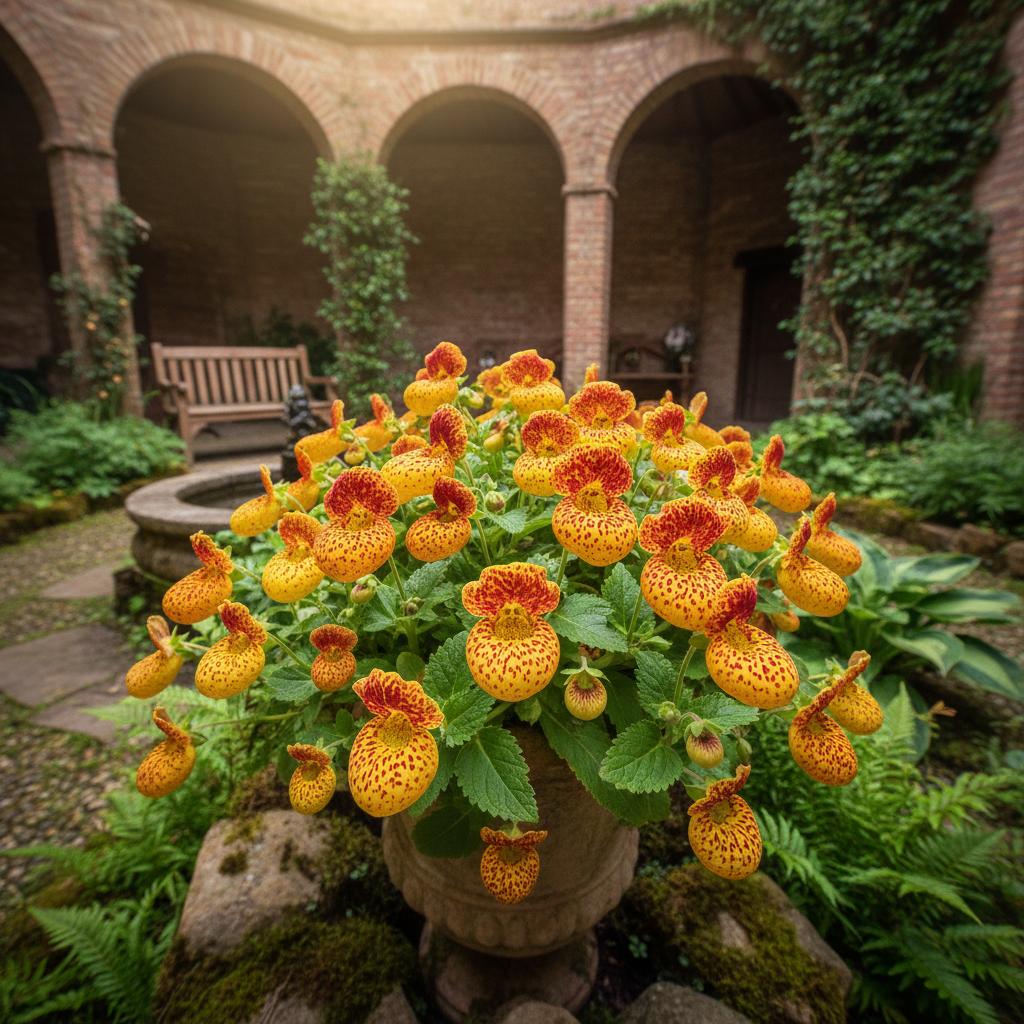
- Flowers: Distinctive bilabiate flowers with the lower lip strongly inflated into a pouch, brightly colored in yellow, orange, or red, often heavily spotted or speckled;
- Stems: Herbaceous, fleshy, and covered in fine pubescence.
Care Guide
Watering
Water thoroughly when the surface of the soil feels just barely dry. Maintain high humidity.
Fertilization
Apply a weak liquid fertilizer every two weeks while in bud and bloom.. Do not over-fertilize, as this can cause leggy growth at the expense of flowers.
Banana Peel Tea:Steep chopped banana peels in water for 24-48 hours. Strain and dilute 1:1 with water to encourage blooming. Discard solids in compost to avoid fruit flies and odors.Pruning
- Remove spent flowers promptly to encourage any remaining buds to open;
- Trim away any yellowing or dead leaves at the base to improve air circulation;
- Generally requires no structural pruning as it is treated as a short-lived annual indoors.
Toxicity
Warning: this plant may be toxic.
Pets & Humans
Pets: Non-toxic to cats per ASPCA.
Humans: Generally considered non-toxic to humans, though ingestion is not recommended.
Garden Uses & Culture
Culture: In Victorian floriography, the pocketbook plant's purse-like shape led it to symbolize keeping a secret or hoarding wealth.
Usage: Popular as a colorful, temporary indoor potted plant for spring displays and cool greenhouse collections.