 PlantFun
Plant Needs
Sunlight
Requires bright, indirect light; direct sun will scorch the leaves and fade the patterns.
Watering
Keep the soil consistently moist but not waterlogged; highly sensitive to tap water chemicals (fluoride/chlorine).
Temperature
Prefers warm, stable temperatures and high humidity (above 60%).
Characteristics
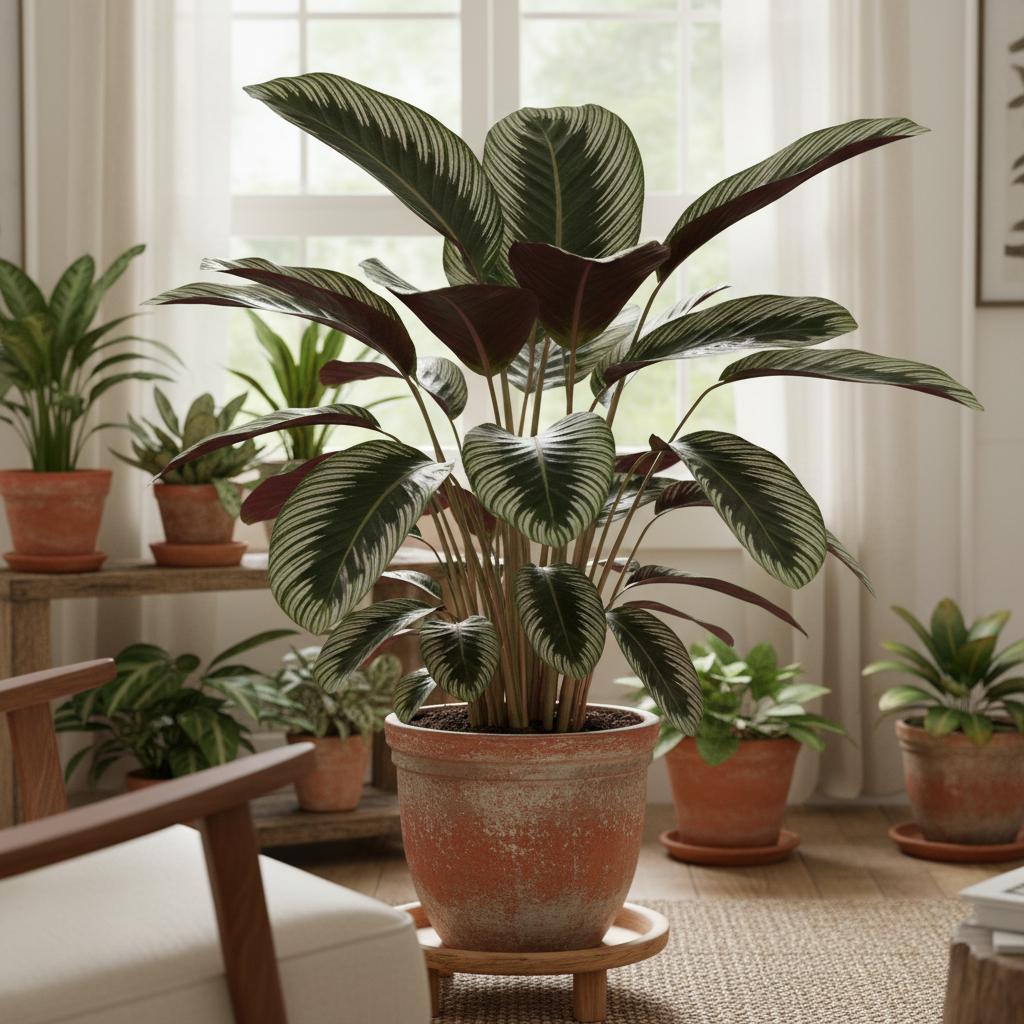
- Leaves: Large, ovate-lanceolate, dark green with striking white or pinkish pinstripes along the lateral veins, purplish-red underneath;
- Stems: Long, slender, upright petioles emerging from a basal rhizome;
- Flowers: Inconspicuous, tubular, borne on short spikes, though rarely seen in cultivation.
Care Guide
Watering
Water thoroughly when the top inch of soil feels dry, ensuring consistent moisture.
Fertilization
Apply a diluted, balanced liquid fertilizer.. Do not fertilize in winter when plant growth naturally slows down.
Banana Peel Tea:Soak chopped banana peels in water for 24-48 hours, strain, and dilute 1:1 with water. Use to promote strong roots and vibrant foliage. Avoid leaving peel chunks on soil to prevent fungus gnats.Pruning
- Sanitation: Trim away any yellowing, brown, or dead leaves at the base of the petiole using sterilized shears;
- Aesthetics: Carefully trim crispy brown edges following the natural curve of the leaf if humidity was too low;
- Maintenance: Wipe leaves regularly with a damp cloth to remove dust and deter spider mites.
Toxicity
Warning: this plant may be toxic.
Pets & Humans
Pets: Non-toxic to cats per ASPCA.
Humans: Considered non-toxic to humans.
Garden Uses & Culture
Culture: Highly prized in contemporary Western interior design for its striking architectural foliage, often featured in modern "urban jungle" aesthetics as a statement piece.
Usage: - **Ornamental**: Grown primarily for its highly decorative, patterned foliage; - **Indoor Air Quality**: Contributes to indoor air purification and increases local humidity.