 PlantFun
Plant Needs
Characteristics
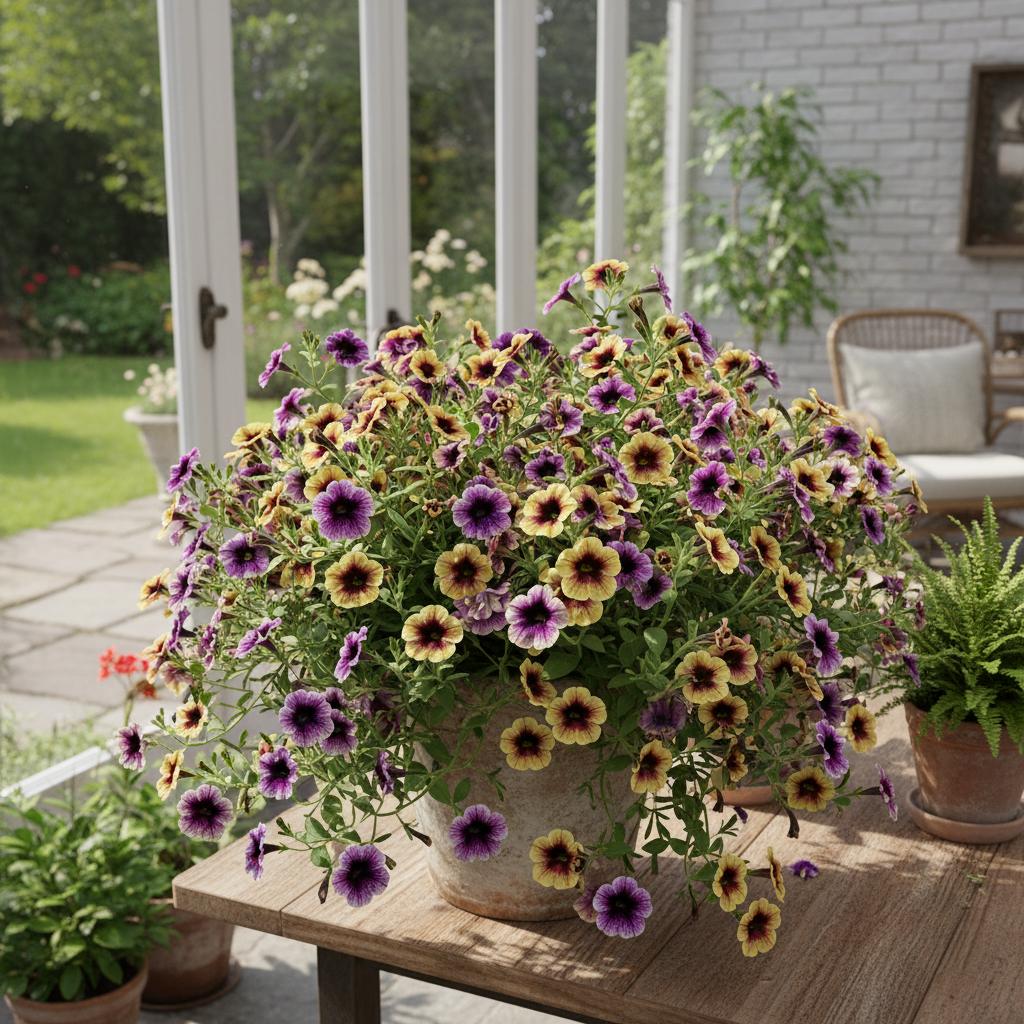
- Leaves: Small, oval to elliptic, 1-2 cm long, bright green, slightly sticky and pubescent;
- Flowers: Funnel-shaped or bell-like, resembling miniature petunias, 2-3 cm across, blooming profusely in shades of pink, yellow, red, blue, purple, and white;
- Stems: Trailing or cascading, highly branched, becoming slightly woody at the base as the plant matures.
Care Guide
Water thoroughly when the top inch of soil feels dry, which may be daily in hot weather or hanging baskets.
Begin applying a balanced liquid fertilizer to support new growth and initial blooming.. Requires frequent feeding during the growing season to maintain its prolific flower production.
Banana Peel Tea:Steep chopped banana peels in water for 24-48 hours, strain, and use the liquid to water the plants. This provides a gentle potassium boost to encourage continuous blooming. Discard the peels in compost to avoid attracting fruit flies.- Self-cleaning: No deadheading is required as the spent flowers naturally drop off;
- Mid-season trim: If the plant becomes leggy by mid-summer, trim back the stems by one-third to encourage branching and a fresh flush of blooms;
- Pinch back: Pinching young plants can promote a bushier, more compact growth habit.
Toxicity
Warning: this plant may be toxic.
Pets: Non-toxic to cats (closely related to Petunia, which is ASPCA non-toxic).
Humans: Generally considered non-toxic to humans.
Garden Uses & Culture
Culture: In Western container gardening, it has become a staple symbol of abundant summer joy and welcoming porches, often featured prominently in hanging baskets to greet guests.
Usage: Extensively used in hanging baskets, window boxes, mixed container gardens, and occasionally as a fast-growing ground cover in landscape beds.