 PlantFun
Plant Needs
Characteristics
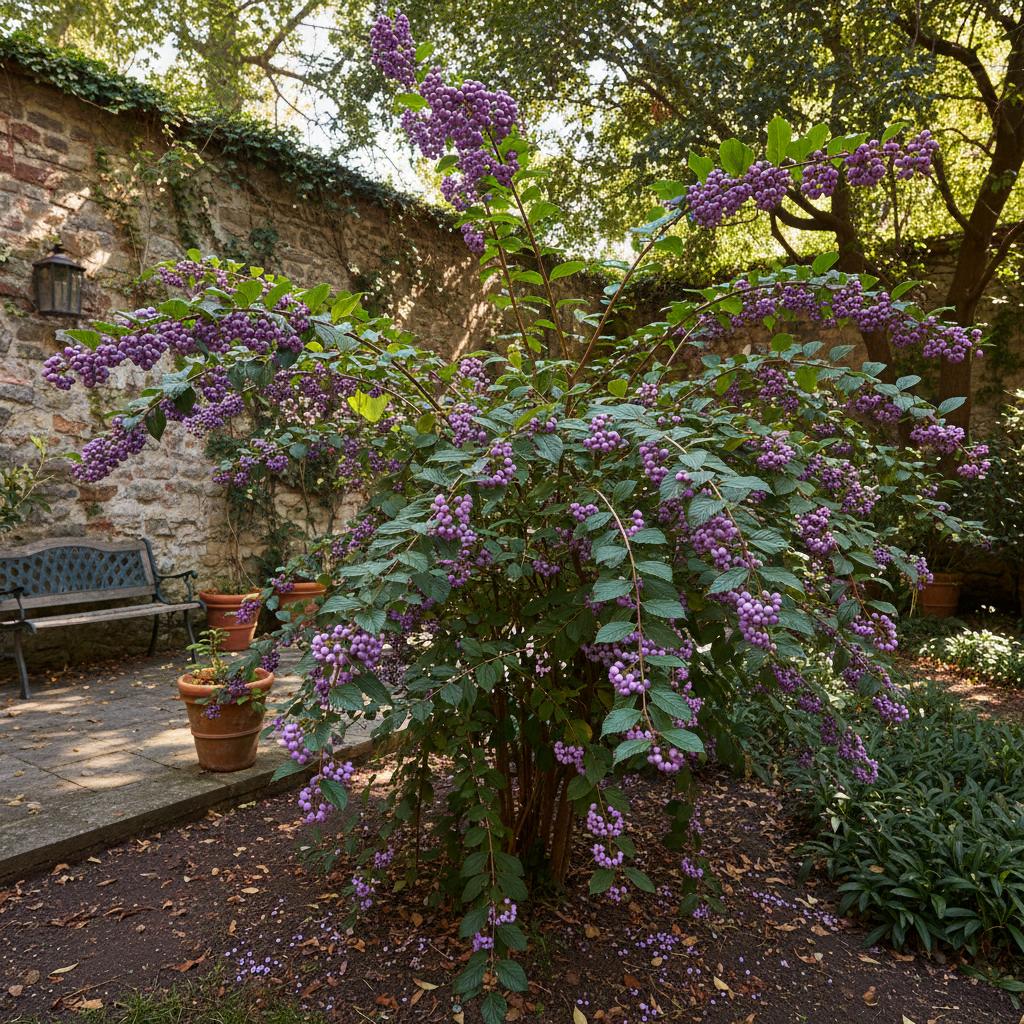
- Leaves: Opposite, elliptic to ovate, 6-15 cm long, margins serrate, densely covered with stellate hairs on the underside;
- Flowers: Small, pink to pale purple, borne in dense axillary cymes;
- Fruit: Globose drupes, 2-4 mm in diameter, turning brilliant metallic purple when mature, clustered tightly around the stems;
- Stems: Young branches are terete and densely covered with yellowish-brown stellate tomentum.
Care Guide
Water deeply when the top inch of soil feels dry to support active growth and flowering.
Apply a balanced organic layer of compost or mild fertilizer as new growth emerges.. Avoid excessive nitrogen, which promotes leafy growth at the expense of flowers and fruits.
Banana Peel Tea:Steep chopped banana peels in water for 24-48 hours. Dilute 1:1 with water and apply to the base to promote prolific fruiting. Discard solids in compost to avoid attracting pests.- Prune hard in late winter or early spring before new growth begins;
- Flowers and fruits form on new wood, so annual pruning encourages a better berry display;
- Remove dead, diseased, or crossing branches to improve air circulation;
- Can be cut back to 15-30 cm above the ground to rejuvenate older, leggy shrubs.
Toxicity
Warning: this plant may be toxic.
Pets: Non-toxic to cats; no severe adverse effects expected from minor nibbling.
Humans: Berries are generally considered non-toxic but are highly astringent and unpalatable.
Garden Uses & Culture
Culture: N/A
Usage: - **Ornamental**: Highly valued in autumn and winter landscapes for its striking purple berries; - **Wildlife**: Berries are a valuable late-season food source for various bird species; - **Floral Arrangements**: Cut branches with mature berries are popular in seasonal floral designs.