 PlantFun
Plant Needs
Characteristics
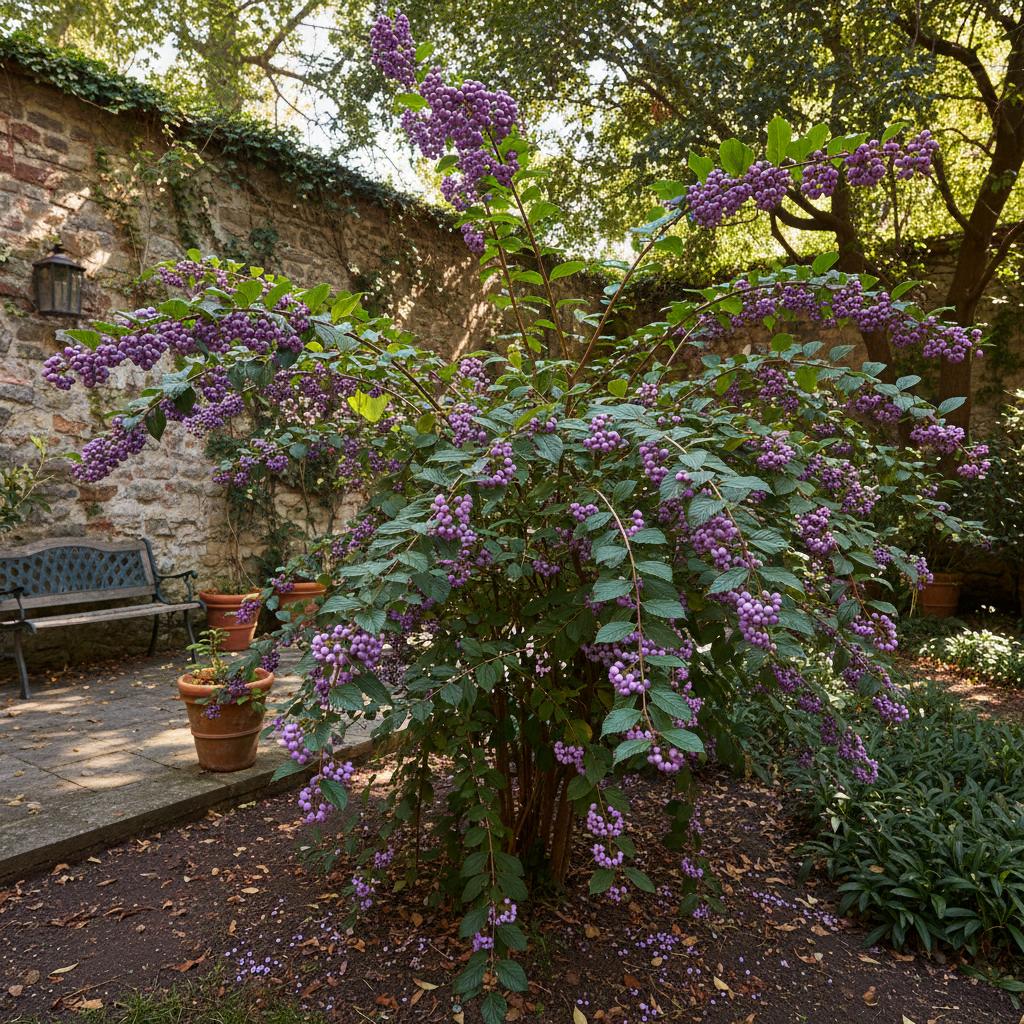
- Leaves: Opposite, elliptic to ovate, 5-12 cm long, with serrated margins, turning yellow or purple in autumn;
- Flowers: Small, pale pink to light purple, borne in axillary cymes;
- Fruit: Globose drupes, 2-3 mm across, brilliant metallic purple, clustered tightly around the stems;
- Stems: Slender, upright to arching, grayish-brown.
Care Guide
Water deeply when the top inch of soil feels dry to support active growth and flowering.
Apply a balanced, slow-release organic fertilizer as new growth emerges.. Fertilize sparingly; over-fertilization can reduce fruit yield.
Banana Peel Tea:Steep chopped banana peels in water for 24-48 hours. Use the strained liquid to water the base of the plant to encourage prolific blooming and vibrant berry production. Discard solids in compost.- Prune in late winter or early spring before new growth begins, as flowers and berries form on new wood;
- Cut back stems to 15-30 cm above the ground to maintain a compact shape and encourage vigorous new shoots;
- Remove any dead, diseased, or crossing branches to improve air circulation.
Toxicity
Warning: this plant may be toxic.
Pets: Non-toxic per ASPCA guidelines.
Humans: Berries are non-toxic but highly astringent and generally unpalatable raw.
Garden Uses & Culture
Culture: In Western landscaping, it is highly prized for its late-season ornamental value, providing a rare pop of metallic purple in autumn gardens and serving as a vital food source for overwintering birds.
Usage: - Ornamental shrub for mixed borders and woodland gardens; - Cut branches are popular in autumn floral arrangements; - Wildlife gardens to attract birds and pollinators.