 PlantFun
Plant Needs
Sunlight
Requires full sun for optimal flowering and dense growth.
Watering
Drought-tolerant once established; water deeply once a week during dry spells.
Temperature
Tolerates moderate frost and high summer heat.
Characteristics
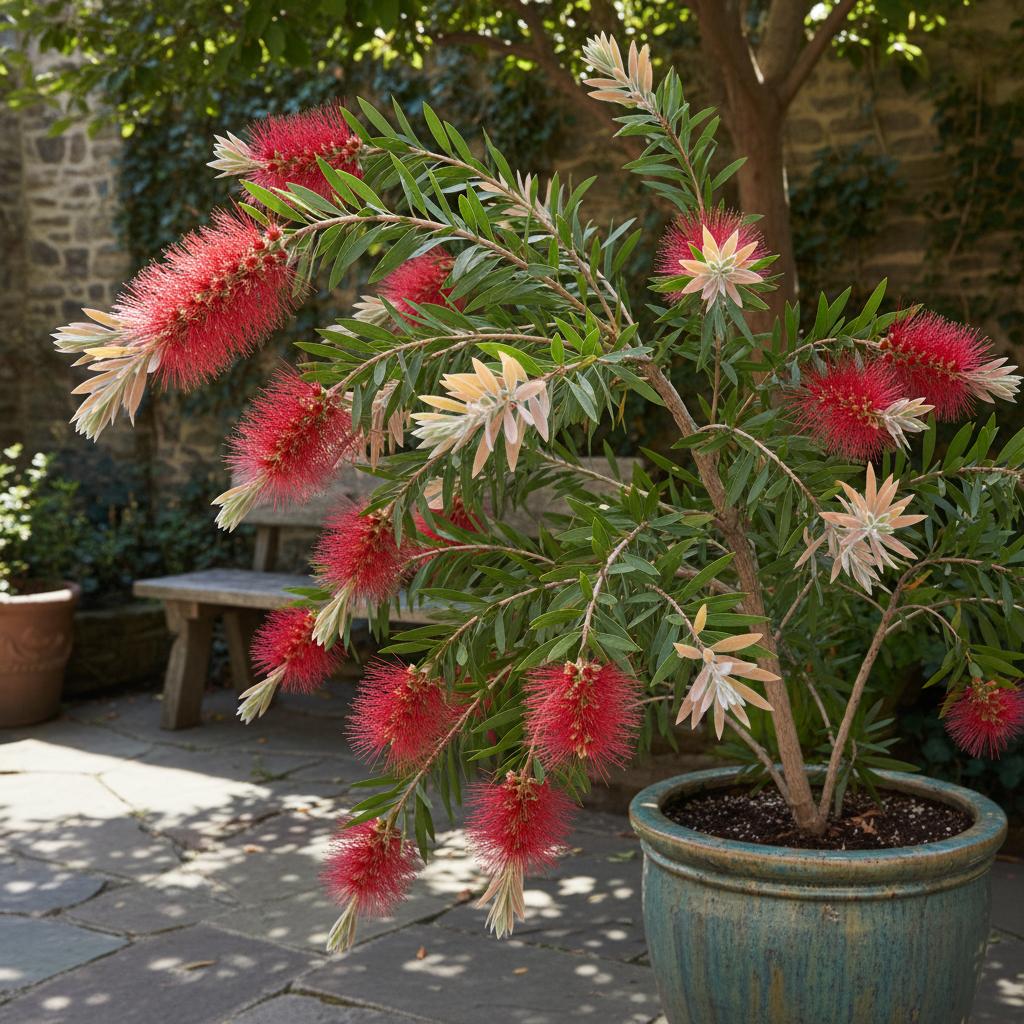
- Leaves: Narrow, lanceolate to linear, stiff, grey-green, with prominent oil glands;
- Flowers: Dense cylindrical spikes resembling a bottlebrush, featuring bright red to crimson stamens;
- Bark: Greyish-brown, becoming rough and slightly papery or fissured on older branches.
Care Guide
Watering
Water deeply when the top few inches of soil dry out.
Fertilization
Apply a low-phosphorus organic mulch or compost.. Native Australian plants are sensitive to phosphorus; feed sparingly.
Banana Peel Tea:Steep banana peels in water for 24-48 hours. Dilute 1:1 with water and apply to the base. Avoid high-phosphorus materials like eggshells or bone meal, as native Australian plants are highly sensitive to phosphorus.Pruning
- Prune lightly immediately after flowering to remove spent flower heads;
- Cut just behind the old flowers to encourage multiple new shoots;
- Avoid cutting into old, leafless wood as it may not regenerate well;
- Remove dead or crossing branches to maintain an open, healthy canopy.
Toxicity
Warning: this plant may be toxic.
Pets & Humans
Pets: Non-toxic to cats per ASPCA guidelines for Callistemon species.
Humans: Generally considered non-toxic and safe for humans.
Garden Uses & Culture
Culture: In Western landscaping, bottlebrushes are highly valued for their unique architectural form and their ability to attract nectar-feeding birds and pollinators to the garden.
Usage: - **Ornamental**: Excellent as a specimen plant, informal hedge, or screen; - **Ecological**: Highly effective at attracting bees, butterflies, and nectar-eating birds.