 PlantFun
Plant Needs
Characteristics
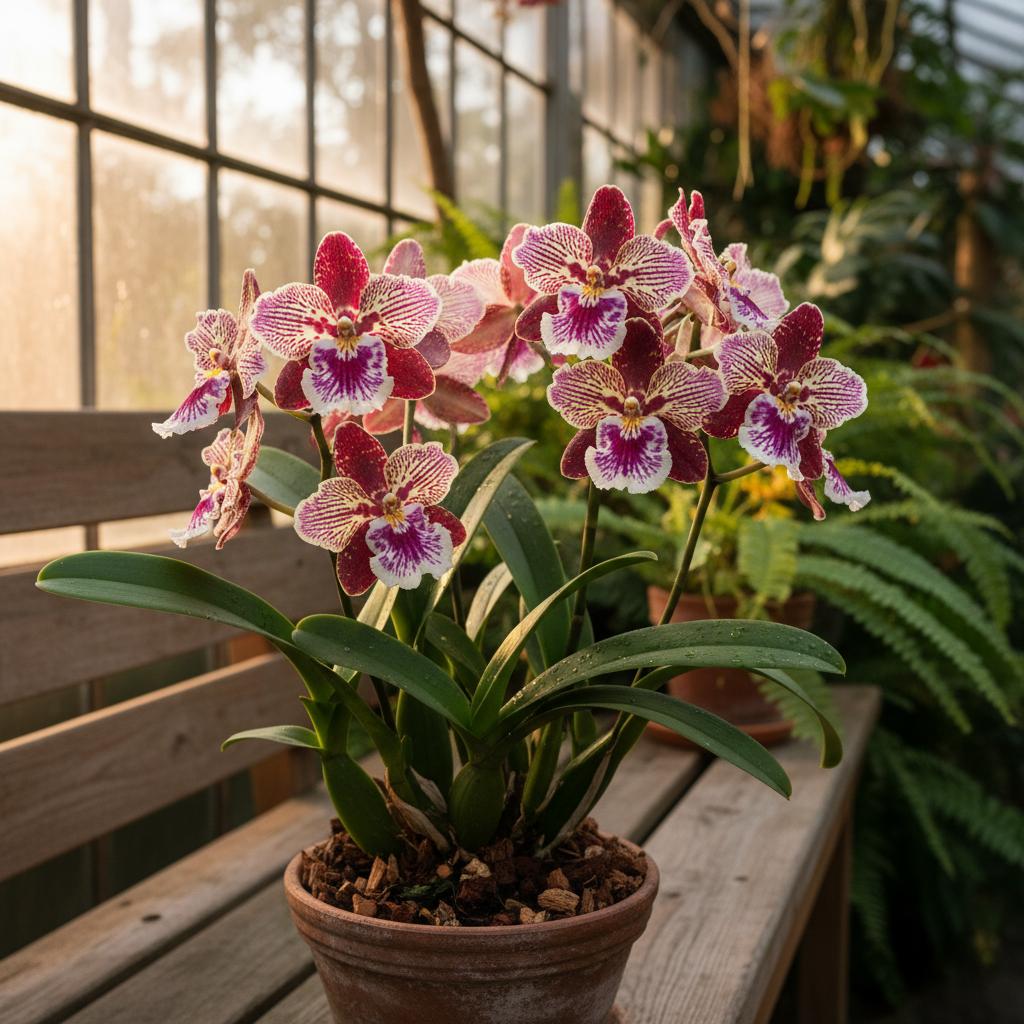
- Leaves: Long, strap-like, medium green leaves emerging from the apex and base of pseudobulbs;
- Flowers: Highly variable, often star-shaped with striking patterns of red, maroon, yellow, white, and pink, featuring a prominent, ruffled lip;
- Pseudobulbs: Plump, oval to elongated pseudobulbs that store water and nutrients;
- Roots: Thick, fleshy epiphytic roots covered in silvery velamen.
Care Guide
Water thoroughly, allowing the water to flush through the pot, then let the medium nearly dry out.
Apply a balanced, water-soluble orchid fertilizer diluted to quarter strength.. Flush the pot with plain water once a month to prevent salt buildup.
Banana Peel Tea:Soak chopped banana peels in water for 24 hours, then strain and dilute the liquid 1:1 with fresh water. Use as a mild potassium boost during the growing season. Discard the solid peels in the compost; do not place raw peels in the orchid pot as they will cause mold and attract fungus gnats.- Cut the flower spike down to the base once all blooms have faded and the stem turns brown;
- Do not remove green, healthy pseudobulbs, even if they are leafless, as they store energy for the plant;
- Trim away dead, papery, or hollow roots during repotting using sterilized shears.
Toxicity
Warning: this plant may be toxic.
Pets: Non-toxic to cats per ASPCA guidelines for most Oncidium alliance orchids.
Humans: Generally considered non-toxic to humans.
Garden Uses & Culture
Culture: The original 'Cambria' (Vuylstekeara Cambria 'Plush') was bred by Charles Vuylsteke in Belgium in 1911. It became a massive commercial success in Europe, paving the way for the widespread indoor cultivation of intergeneric orchid hybrids.
Usage: - Highly valued as an indoor ornamental potted plant; - Frequently used in the floral industry for long-lasting cut flower arrangements.