 PlantFun
Plant Needs
Sunlight
Prefers partial shade or dappled sunlight, especially in warmer climates, to protect the blooms from scorching.
Watering
Requires consistently moist but well-drained soil; does not tolerate drought well.
Temperature
Highly cold-hardy, thriving in temperate climates and woodland conditions.
Characteristics
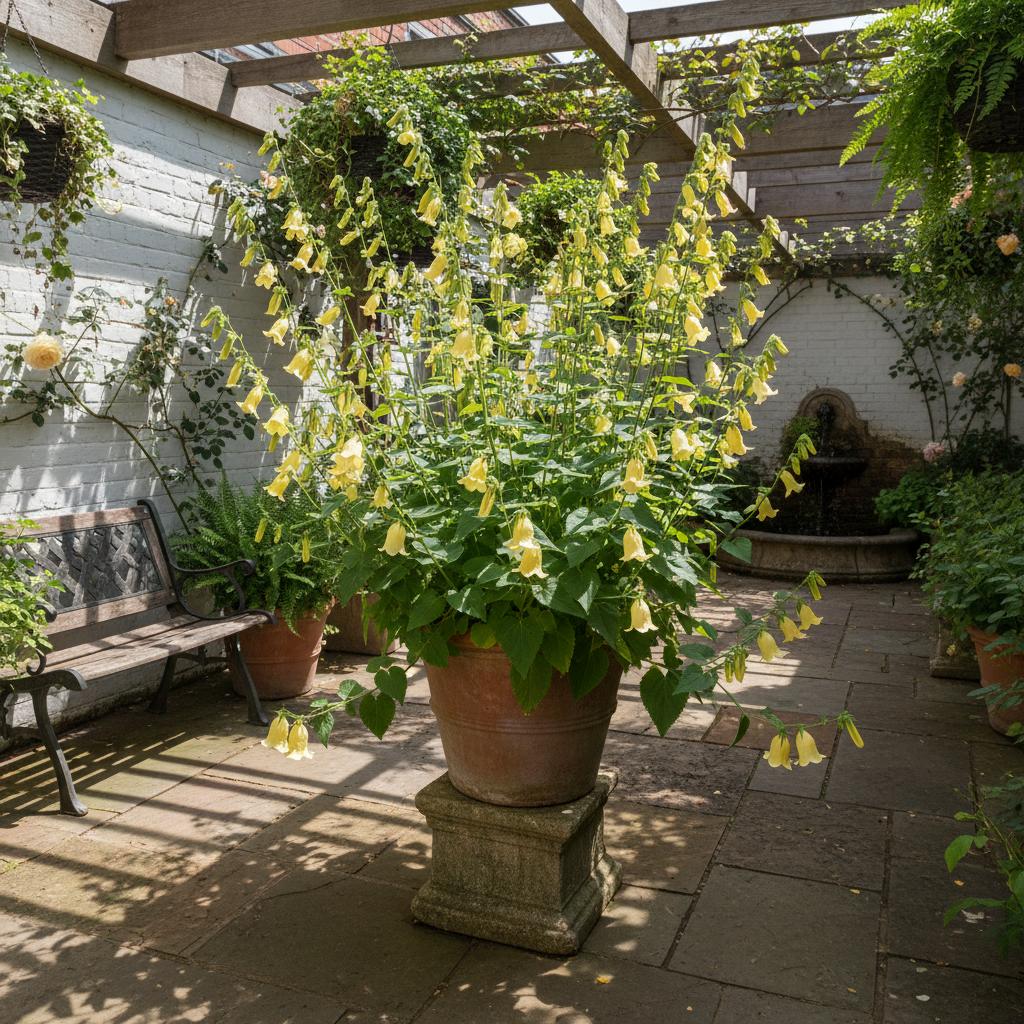
- Leaves: Ovate to lanceolate, coarsely serrated, dark green, up to 15 cm long, with lower leaves being stalked and upper leaves sessile;
- Flowers: Large, bell-shaped (campanulate) blooms, typically borne in terminal racemes. The 'lutea' variety features unusual pale yellow to yellowish-white petals;
- Stem: Erect, sturdy, unbranched, often tinged with pale green and slightly hairy.
Care Guide
Watering
Keep soil evenly moist but not waterlogged during the active growing and blooming season.
Fertilization
Apply a balanced organic fertilizer as new growth appears in early spring.. Avoid over-fertilizing, which can cause excessive foliage growth at the expense of flowers.
Banana Peel Tea:Steep chopped banana peels in water for 24-48 hours. Dilute 1:1 with water and apply to the base to support blooming. Discard peels in compost to avoid attracting pests.Pruning
- Deadhead spent flowers to encourage a tidy appearance and prevent unwanted self-seeding;
- Cut back stems to the base in late autumn after the foliage dies back;
- Divide clumps every 3-5 years in early spring to maintain plant vigor.
Toxicity
Warning: this plant may be toxic.
Pets & Humans
Pets: Non-toxic to cats per ASPCA guidelines.
Humans: Non-toxic to humans; leaves and shoots of many Campanula species are historically considered edible.
Garden Uses & Culture
Culture: In European folklore, bellflowers are often associated with fairies and are said to ring to summon them to woodland gatherings.
Usage: Excellent for woodland gardens, cottage gardens, shaded borders, and as a tall backdrop in perennial beds.