 PlantFun
Plant Needs
Characteristics
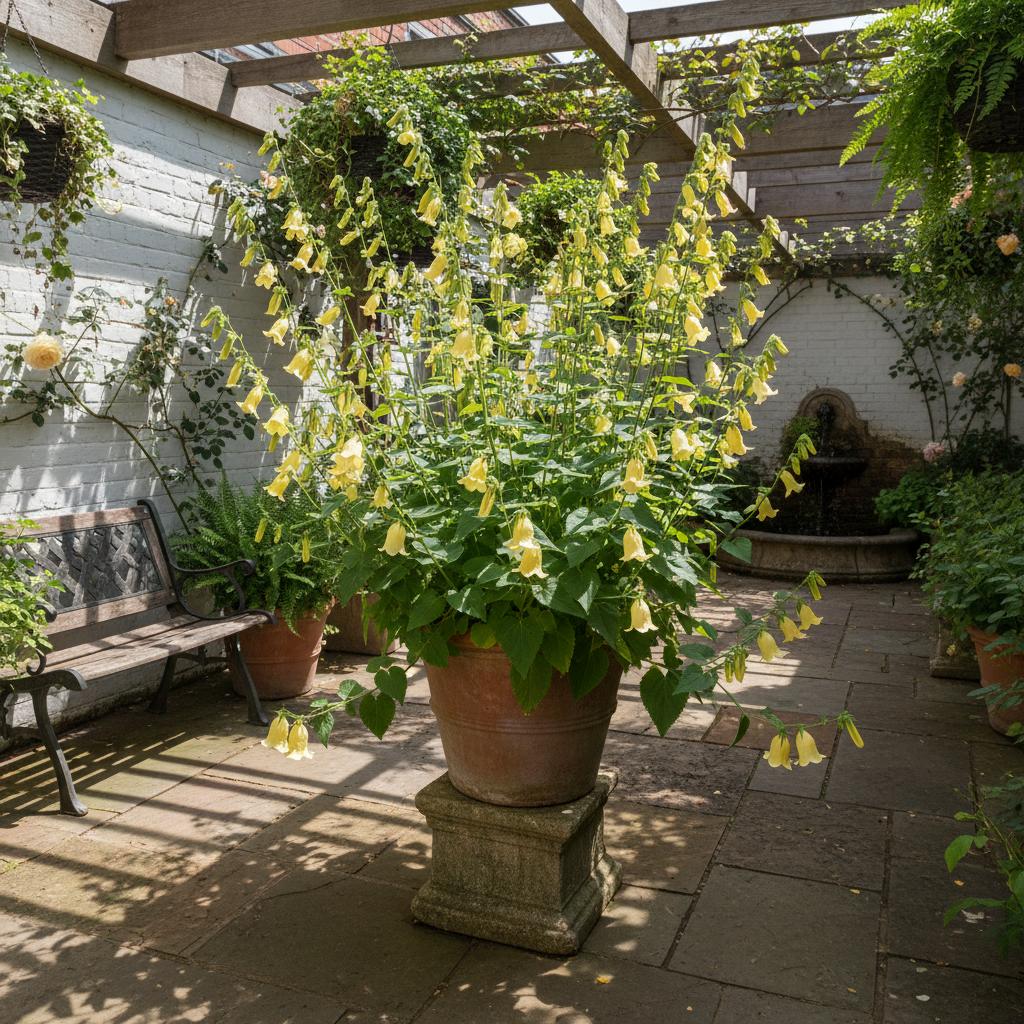
- Leaves: Basal leaves are petiolate and cordate to ovate; stem leaves are narrower, lanceolate with serrate or crenate margins.
- Flowers: Nodding, tubular-campanulate (bell-shaped), pale creamy-yellow to whitish (ochroleucous), arranged in loose racemes.
- Stem: Slender, erect to ascending, often sparsely pubescent or glabrous.
- Roots: Fibrous root system, sometimes with a creeping rhizome adapted to rocky soils.
Care Guide
Water regularly to keep the soil lightly moist during the active growing and blooming phase.
Apply a light, balanced organic fertilizer as new growth emerges.. Avoid over-fertilizing, which can lead to excessive foliage growth at the expense of flowers.
Banana Peel Tea:Steep chopped banana peels in water for 24-48 hours. Dilute 1:1 with water and apply to the base to encourage healthy bell-shaped blooms. Discard solids in compost to avoid attracting pests.- Deadheading: Remove spent flowers regularly to encourage prolonged blooming and prevent self-seeding.
- Autumn Cleanup: Cut back the dead foliage to the basal rosette in late autumn or early winter.
- Division: Divide overcrowded clumps every 3-4 years in early spring to maintain plant vigor.
Toxicity
Warning: this plant may be toxic.
Pets: Non-toxic to cats per ASPCA guidelines for the Campanula genus.
Humans: Non-toxic to humans; no adverse effects reported from handling or accidental ingestion.
Garden Uses & Culture
Culture: In Western floriography, bellflowers generally symbolize unwavering love, gratitude, and constancy. They are often associated with fairy folklore in European traditions, where the bells are said to ring to call fairies to gatherings.
Usage: - **Ornamental**: Excellent for rock gardens, alpine houses, border fronts, and cottage gardens. - **Landscaping**: Used as a delicate accent plant in gravel gardens due to its drought tolerance once established.