 PlantFun
Plant Needs
Characteristics
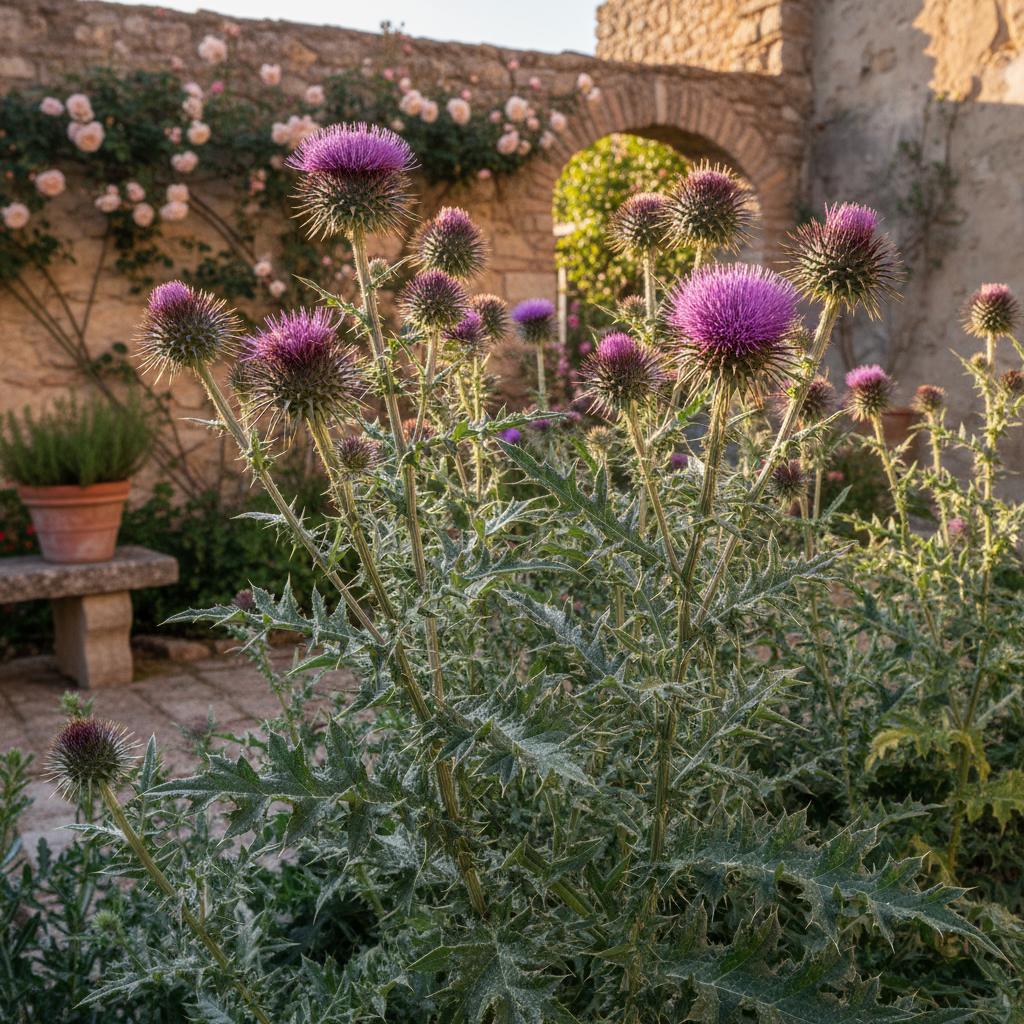
- Leaves: Deeply lobed, pinnatifid, with strong spiny margins, green and slightly cobwebby-hairy on the surface;
- Flowers: Solitary or clustered capitula (flower heads), featuring purplish-pink tubular florets surrounded by sharp, spiny involucral bracts;
- Stem: Erect, winged with spiny margins, branching primarily in the upper sections;
- Roots: Develops a strong taproot to anchor in rocky or poor soils.
Care Guide
Water moderately during early growth, allowing the soil to dry out completely between waterings.
Apply a light layer of compost only if the soil is extremely depleted.. Thrives in poor soils; excess nitrogen will cause weak, floppy growth.
Banana Peel Tea:Soak chopped banana peels in a jar of water for 24-48 hours. Strain and use the liquid to water the base of the plant to support blooming. Discard the solid peels in an outdoor compost bin to avoid attracting pests.- Deadheading: Cut off spent flower heads before they go to seed to prevent aggressive, unwanted self-seeding;
- Clearance: Cut the entire plant down to the base in late autumn after it completes its biennial life cycle;
- Safety: Always wear thick, puncture-resistant leather gloves and long sleeves when pruning to protect against sharp spines.
Toxicity
Warning: this plant may be toxic.
Pets: Non-toxic per ASPCA guidelines for the Asteraceae thistle family, though spines may cause physical injury if chewed.
Humans: Non-toxic, but sharp spines can cause mechanical injury or skin irritation upon contact.
Garden Uses & Culture
Culture: Thistles hold a strong place in European folklore, often symbolizing resilience, defiance, and protection due to their formidable spiny armor.
Usage: - **Ecological**: An excellent nectar source that attracts bees, butterflies, and other beneficial pollinators; - **Ornamental**: Used in xeriscaping, alpine gardens, and wild meadow designs for architectural interest.