 PlantFun
Plant Needs
Sunlight
Requires bright, indirect light; early morning sun is beneficial, but protect from harsh midday rays to prevent leaf scorch.
Watering
Water thoroughly when the potting medium approaches dryness; ensure excellent drainage to prevent root rot.
Temperature
Prefers intermediate to warm temperatures, with a slight nighttime drop to initiate blooming.
Characteristics
- Leaves: Leathery, oblong to elliptic, typically 15-25 cm long, arising singly from the apex of pseudobulbs;
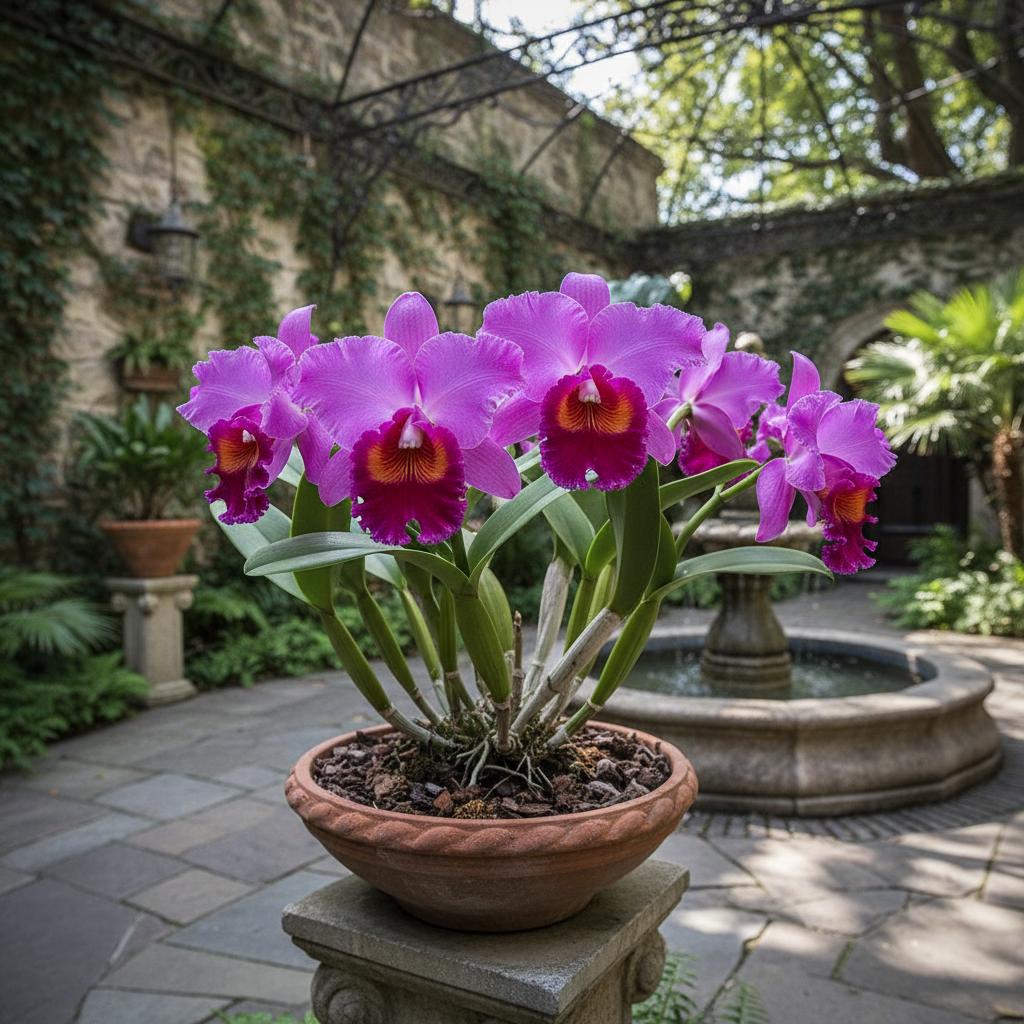
- Flowers: Large and showy, 10-15 cm across, featuring broad rose-lilac petals, a ruffled magenta lip (labellum) with a yellow throat, and a strong, sweet fragrance;
- Stem: Swollen, clavate (club-shaped) pseudobulbs that store water and nutrients, covered by papery sheaths when young;
- Roots: Thick, fleshy aerial roots covered in a spongy, silvery-white velamen layer adapted for rapid water absorption.
Care Guide
Watering
Water thoroughly once a week, allowing the medium to almost dry out between waterings.
Fertilization
Apply a balanced, water-soluble orchid fertilizer weekly at quarter strength.. Fertilize weakly, weekly during active growth phases.
Banana Peel Tea:Soak chopped banana peels in water for 24 hours, strain, and dilute 1:1 with water. Use to water the orchid bark to promote blooming. Avoid leaving solid peels in the pot to prevent mold and pests.Pruning
- Remove spent flower spikes at the base using sterilized shears;
- Trim dead, hollow, or mushy roots during repotting;
- Do not cut healthy, green pseudobulbs even if they are leafless, as they store energy for the plant.
Toxicity
Warning: this plant may be toxic.
Pets & Humans
Pets: Non-toxic to cats per ASPCA.
Humans: Non-toxic to humans.
Garden Uses & Culture
Culture: Popularized in 19th-century Europe as the ultimate symbol of luxury and refinement, it became the quintessential "corsage orchid" worn by women at formal events and dances.
Usage: - Highly prized ornamental houseplant and greenhouse specimen; - Historically significant as a premium cut flower for corsages and wedding bouquets; - Foundational parent for thousands of complex orchid hybrids.