 PlantFun
Plant Needs
Characteristics
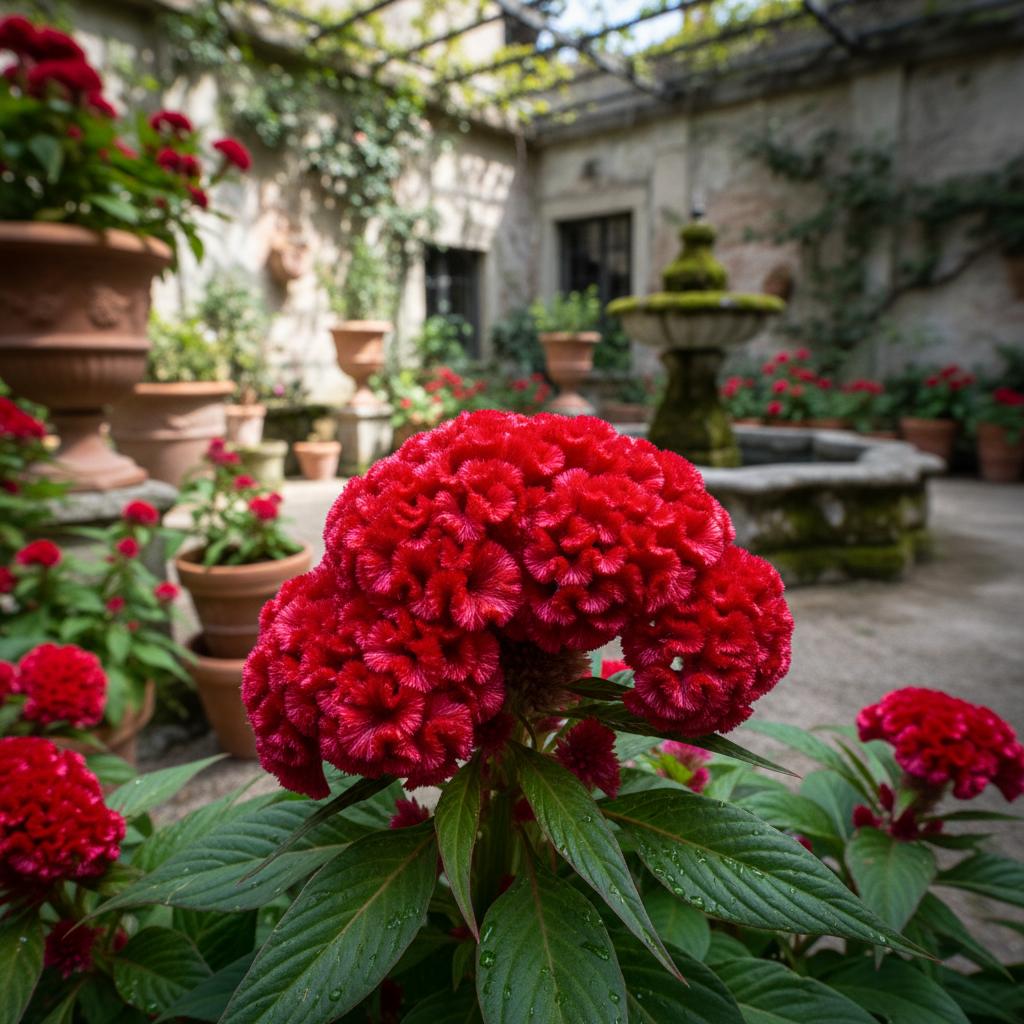
- Leaves: Ovate to lanceolate, alternate arrangement, bright green to bronze-red with prominent venation, margins entire.
- Flowers: Dense, feathery, plume-like inflorescences composed of hundreds of tiny flowers; the 'Twisted Red' variety features bright crimson-red plumes with slightly curled or twisted tips.
- Stem: Erect, fleshy, strongly ribbed, often tinged with red or pink, branching freely.
Care Guide
Water deeply when the top inch of soil feels dry, typically 2-3 times a week during hot spells.
Apply a balanced organic fertilizer to encourage strong root and foliage growth.. Avoid excessive nitrogen, which promotes leafy growth at the expense of flowers.
Banana Peel Tea:Steep chopped banana peels in water for 24-48 hours. Strain and use the liquid to water the base of the plant to boost bloom size and color. Discard solids in compost to avoid attracting pests.- Deadheading: Remove spent or faded flower plumes to encourage the plant to produce new side shoots and extend the blooming season.
- Pinching: Pinch back the center stem of young plants to promote a bushier habit and more flower heads.
- Air Circulation: Thin out overly dense foliage to improve airflow and prevent powdery mildew.
Toxicity
Warning: this plant may be toxic.
Pets: Non-toxic per ASPCA guidelines.
Humans: Non-toxic; the leaves and young flowers of many Celosia species are traditionally consumed as cooked vegetables.
Garden Uses & Culture
Culture: In Victorian flower language, the Celosia represents humor, warmth, and silliness, often gifted to bring cheer and lightheartedness to the recipient.
Usage: Excellent as a bedding plant, border edging, or in containers. The flowers are highly prized in floristry for both fresh arrangements and dried floral crafts, as they retain their vibrant color when dried.