 PlantFun
Plant Needs
Sunlight
Requires full, direct sunlight to produce the most vibrant flower colors and compact growth.
Watering
Moderate watering; allow the top inch of soil to dry out between waterings to prevent root rot.
Temperature
Thrives in warm weather and is highly sensitive to frost and cold drafts.
Characteristics
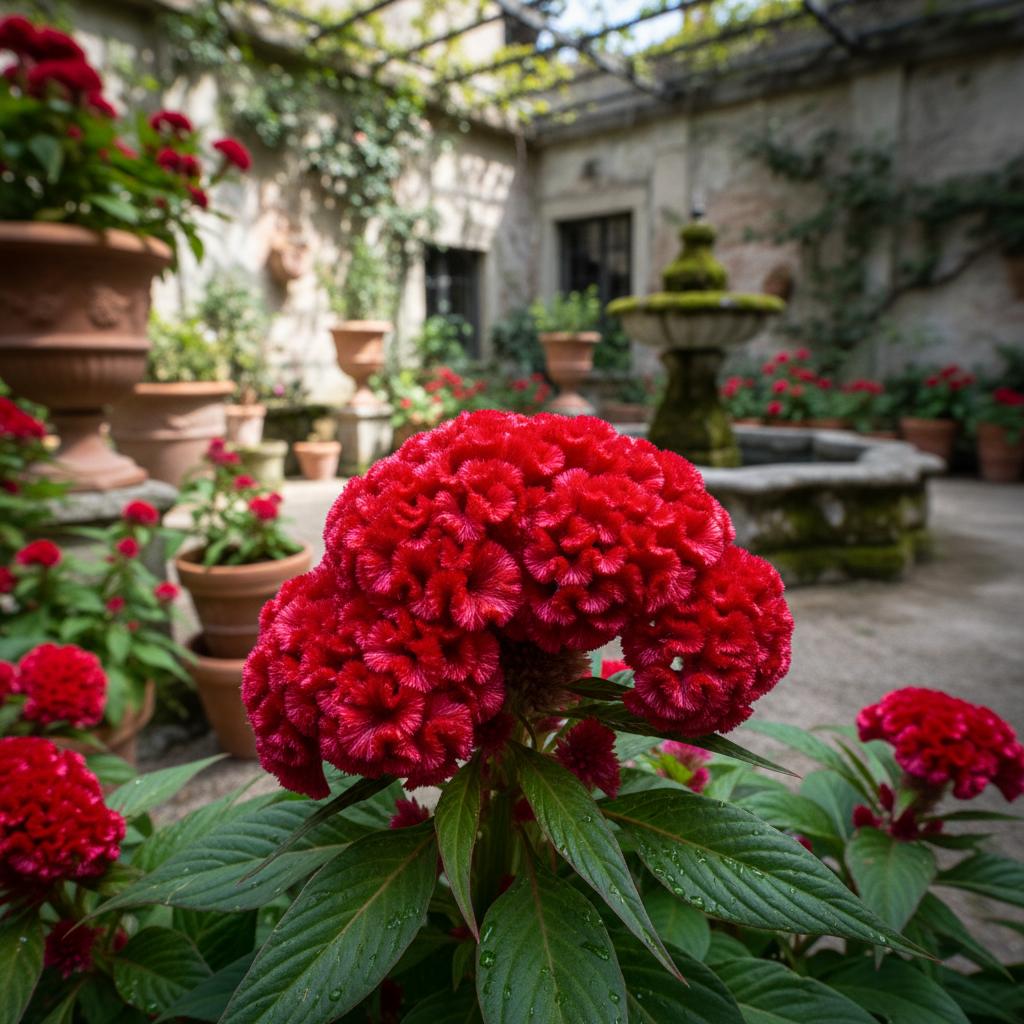
- Leaves: Alternate, lanceolate to ovate, green often tinged with red or purple, with prominent venation;
- Flowers: Dense, convoluted, velvety inflorescence forming a wavy, brain-like or rooster-comb crest, vibrant deep red color;
- Stem: Erect, fleshy, often ribbed, green to reddish, sparsely branched.
Care Guide
Watering
Water deeply 2-3 times a week depending on heat and rainfall
Fertilization
Apply a balanced organic fertilizer to encourage leafy growth. Feed regularly during the active growing and blooming season.
Banana Peel Tea:Soak chopped banana peels in water for 24-48 hours, strain, and use the liquid to water the base of the plant to boost vibrant red blooms. Discard solid peels in compost to avoid attracting pests.Pruning
- Pinching: Pinch back young plants early in the season to encourage branching and more flower heads;
- Deadheading: Remove spent or fading blooms to redirect energy into new growth and prolong the flowering period;
- Air Circulation: Thin out overly dense foliage at the base to improve airflow and prevent powdery mildew.
Toxicity
Warning: this plant may be toxic.
Pets & Humans
Pets: Non-toxic to cats per ASPCA.
Humans: Non-toxic to humans.
Garden Uses & Culture
Culture: In Victorian flower language, the Celosia represents humor, warmth, and silliness due to its highly unusual, brightly colored, and somewhat comical appearance.
Usage: Widely used as a striking bedding plant, in container gardens, and as an exceptional cut flower that retains its vibrant red color perfectly when dried.