 PlantFun
Plant Needs
Characteristics
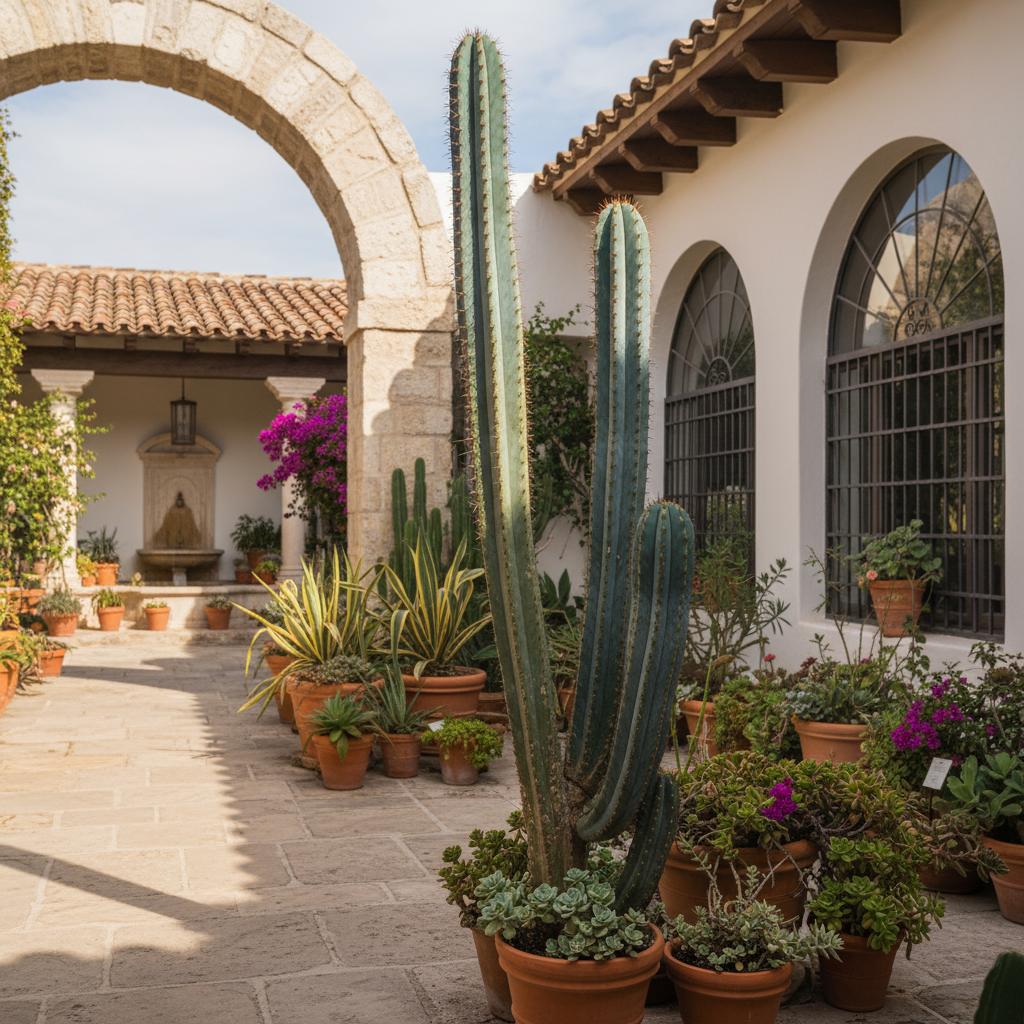
- Stems: Columnar, erect, and branching, blue-green to dark green, typically featuring 6 (sometimes 4-7) prominent, thin ribs.
- Spines: Areoles bear small, sharp, brown to black spines, though older stems may become nearly spineless.
- Flowers: Large, solitary, nocturnal, up to 20-25 cm long, funnel-shaped with white inner petals and reddish-purple outer tepals.
- Fruit: Ovoid, pale red to pinkish, edible, containing numerous small black seeds embedded in white pulp.
Care Guide
Water deeply but infrequently, allowing the soil to dry out entirely between waterings.
Apply a diluted, low-nitrogen cactus fertilizer once at the start of the growing season.. Fertilization recommendations description
Banana Peel Tea:Soak chopped banana peels in water for 48 hours. Strain and dilute 1:1 with water. Provides potassium for strong cellular growth and blooming. Avoid leaving solid peels on soil to prevent pests.- Prune only to remove dead, diseased, or damaged stems.
- Use heavy leather gloves and sterilized, sharp tools to prevent infection and injury.
- Healthy cuttings can be allowed to callus for several days in a dry, shaded spot and replanted for propagation.
Toxicity
Warning: this plant may be toxic.
Pets: Non-toxic per ASPCA guidelines for most true cacti, but poses a risk of mechanical injury from spines.
Humans: No chemical toxicity; fruits are edible, but spines can cause mechanical injury.
Garden Uses & Culture
Culture: In Western horticulture, large columnar cacti like Cereus are iconic symbols of desert landscaping and mid-century modern architectural garden design, often planted as striking vertical focal points.
Usage: Used extensively in ornamental landscaping, as barrier hedging in warm climates, and occasionally cultivated for its edible fruits.