 PlantFun
Plant Needs
Characteristics
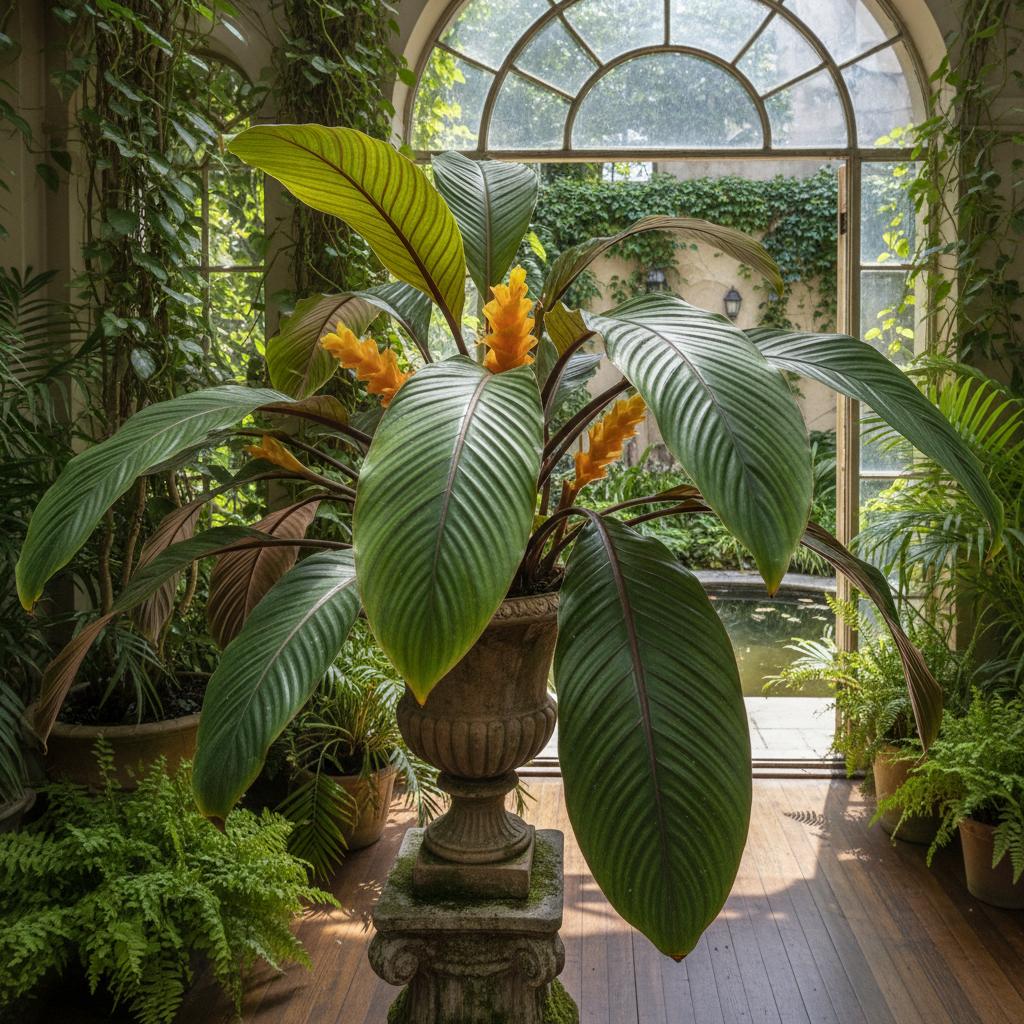
- Leaves: Simple, alternate, fleshy, dark green, ovate to lanceolate with acuminate (cuspidate) tips, arranged in a distinct spiral pattern along the stem;
- Flowers: Bright orange, cone-like terminal inflorescences, blooming one or two at a time, featuring a large, delicate petaloid labellum;
- Stems: Fleshy, spiraling stems arising from vigorous underground rhizomes.
Care Guide
Water thoroughly when the top inch of soil feels dry, keeping the root zone consistently moist.
Apply a balanced liquid fertilizer to support new foliage and rhizome growth.. Dilute fertilizer to half-strength to prevent root burn.
Banana Peel Tea:Steep chopped banana peels in water for 24-48 hours, strain, and use the liquid to water the plant. This provides a gentle potassium boost to support the bright orange flowers. Discard the peels in compost to avoid attracting fruit flies.- Remove spent flower heads to maintain a tidy appearance;
- Cut back dead or yellowing stems all the way to the base to encourage new shoots from the rhizome;
- Prune away any damaged foliage to improve air circulation.
Toxicity
Warning: this plant may be toxic.
Pets: Non-toxic to cats; no known toxic principles.
Humans: Generally considered non-toxic to humans; leaves are sometimes consumed, though medical supervision is advised for any ingestion.
Garden Uses & Culture
Culture: In Western tropical landscaping, such as in Florida and the Caribbean, it is prized as a striking ornamental for its geometric spiral growth and vibrant orange blooms, often used to create lush, jungle-like garden borders.
Usage: - Ornamental landscaping in tropical and subtropical regions; - Grown as a striking container plant or houseplant in cooler, temperate zones; - Valued in botanical collections for its unique spiraling phyllotaxy.