 PlantFun
Plant Needs
Characteristics
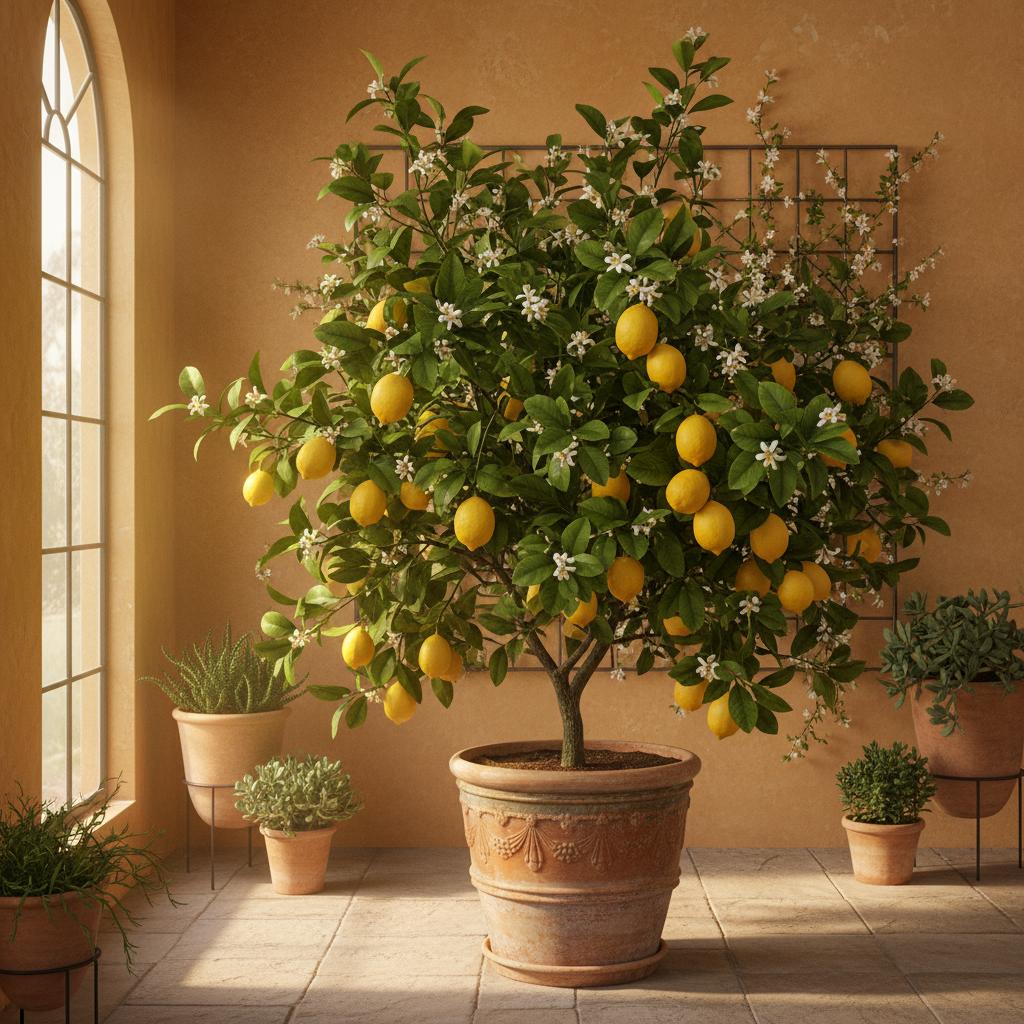
- Leaves: Evergreen, glossy, dark green, ovate to elliptical, 5-10 cm long;
- Flowers: White with purple-tinged bases, highly fragrant, 5-petaled, borne singly or in small clusters;
- Fruit: Rounder than true lemons, thin yellow-orange rind, dark yellow pulp, less acidic and sweeter than standard lemons;
- Stems: Branches are spreading, nearly thornless or bearing small, flexible thorns.
Care Guide
Water deeply and thoroughly, allowing the topsoil to dry out between waterings.
Apply a nitrogen-rich citrus fertilizer to support new growth and blooms.. Citrus trees are heavy feeders; use a fertilizer with micronutrients like iron and zinc.
Coffee Ground & Eggshell Mix:Mix used coffee grounds and crushed, rinsed eggshells into the topsoil. Coffee grounds provide gentle nitrogen and acidity, while eggshells offer calcium. Avoid thick layers of uncomposted grounds to prevent mold.- Prune in early spring before the main flush of new growth;
- Remove dead, diseased, or crossing branches to improve air circulation;
- Cut back overly long water sprouts to maintain a compact, rounded shape;
- Thin out excess fruit if the tree is heavily burdened to prevent branch breakage.
Toxicity
Warning: this plant may be toxic.
Pets: Toxic per ASPCA due to essential oils and psoralens in leaves and peels.
Humans: No special toxic symptoms; fruit is edible and widely consumed.
Garden Uses & Culture
Culture: Introduced to the United States in 1908 by agricultural explorer Frank N. Meyer, it became a beloved staple in Californian cuisine and a symbol of sunny, Mediterranean-style courtyard gardens.
Usage: Widely used in culinary applications for its sweet, floral juice and zest; also grown as a highly ornamental patio or indoor container tree.