 PlantFun
Plant Needs
Sunlight
Requires full, direct sunlight for optimal fruit production and foliage color.
Watering
Water deeply when the top 2 to 3 inches of soil feel dry, ensuring excellent drainage.
Temperature
Thrives in warm climates; must be protected from frost and freezing temperatures.
Characteristics
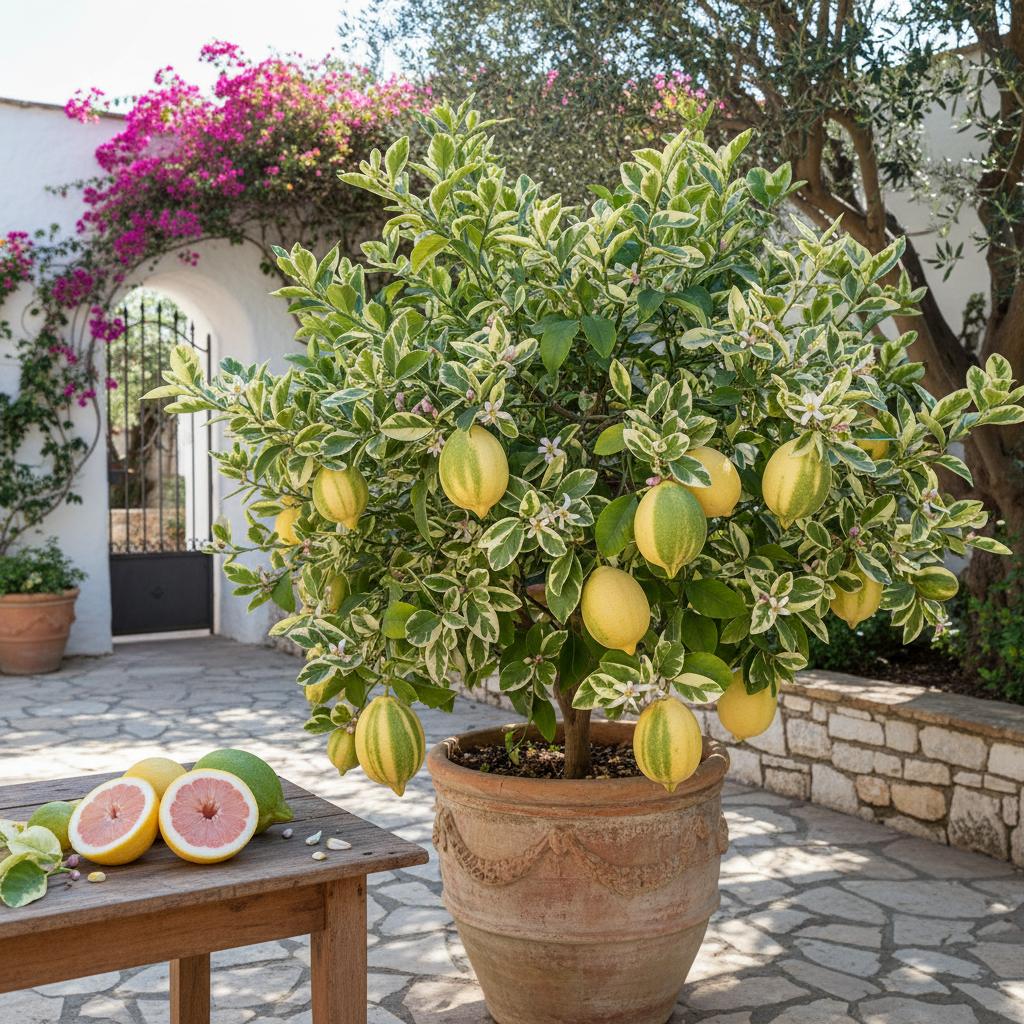
- Leaves: Ovate to elliptical, striking variegation of green and creamy yellow, with a distinct citrus scent when crushed;
- Flowers: Solitary or in small clusters, petals white above and purplish-pink beneath, highly fragrant;
- Fruit: Striped green and yellow when immature, fading to solid yellow when ripe, with distinctive pale pink flesh;
- Stems: Young shoots and new growth exhibit a prominent purplish-pink hue.
Care Guide
Watering
Water deeply once a week, allowing the soil to dry out slightly between waterings.
Fertilization
Apply a nitrogen-rich citrus fertilizer as new growth appears.. Citrus trees are heavy feeders and require regular micronutrients like iron and zinc.
Coffee Grounds and Eggshells:Mix used coffee grounds and finely crushed eggshells into the topsoil. Coffee grounds provide gentle nitrogen and slight acidity, while eggshells offer calcium. Avoid applying too thickly to prevent mold.Pruning
- Prune in late winter or early spring before the main flush of new growth;
- Remove any dead, diseased, or crossing branches to improve air circulation;
- Pinch back vigorous shoots to encourage a bushier, more compact shape;
- Remove any suckers growing from below the graft union immediately.
Toxicity
Warning: this plant may be toxic.
Pets & Humans
Pets: Toxic to cats per ASPCA due to essential oils (limonene, linalool) and psoralens.
Humans: Fruits are edible and safe; leaves and peels contain essential oils but are generally non-toxic to humans.
Garden Uses & Culture
Culture: A symbol of sunny Californian orchards and mid-century agricultural innovation, bringing a touch of Mediterranean flair to Western gardens.
Usage: Ornamental landscaping, container gardening, and culinary use (pink lemonade, garnishes, baking).