 PlantFun
Plant Needs
Sunlight
Prefers bright, indirect light; avoid harsh direct afternoon sun which can scorch the foliage.
Watering
Keep the soil evenly moist but not soggy; requires high ambient humidity to thrive.
Temperature
Thrives in warm household temperatures; protect from cold drafts below 15°C.
Characteristics
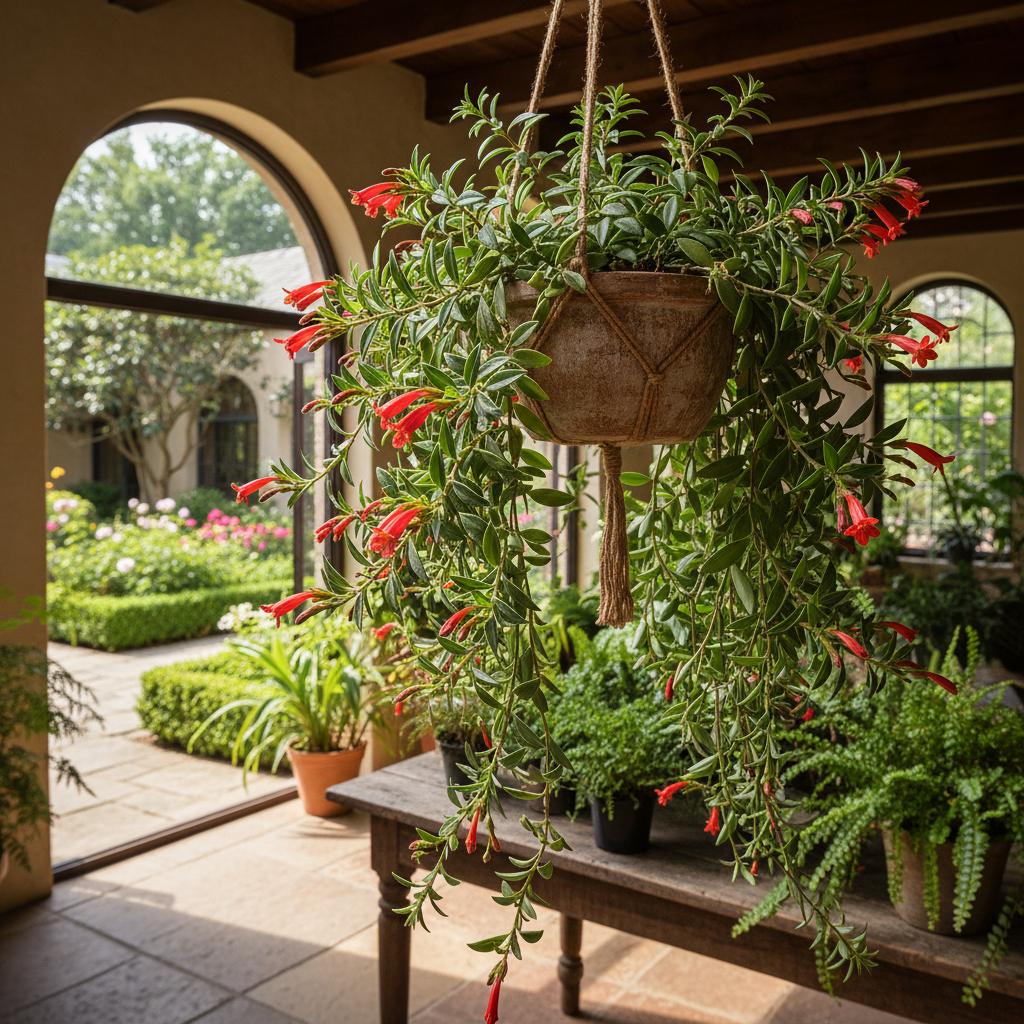
- Leaves: Linear to lanceolate, narrow, 3-5 cm long, dark green, glossy, and arranged oppositely along the stems;
- Flowers: Tubular, bilabiate (two-lipped), bright pink to rose-pink, covered in fine pubescence, emerging solitary from leaf axils;
- Stems: Trailing or cascading, slender, reddish-brown when young, becoming somewhat woody at the base with age.
Care Guide
Watering
Water thoroughly when the top inch of soil feels dry, maintaining consistent moisture.
Fertilization
Apply a diluted, balanced liquid fertilizer to support new growth.. Fertilize only when the soil is moist to prevent root burn.
Banana Peel Tea:Steep chopped banana peels in water for 24-48 hours, strain, and dilute 1:1 with water. Use to promote blooming. Discard solids in compost to avoid fruit flies and odors.Pruning
- Pinch back the growing tips of young stems to encourage branching and a bushier plant;
- Prune away leggy or bare stems in early spring to rejuvenate growth;
- Remove spent flowers to maintain a tidy appearance and prevent fungal issues.
Toxicity
Warning: this plant may be toxic.
Pets & Humans
Pets: Non-toxic to cats per ASPCA guidelines.
Humans: Generally considered non-toxic to humans.
Garden Uses & Culture
Culture: Popularized in Western horticulture during the mid-20th century as a classic hanging basket plant for conservatories and bright indoor windows, prized for its unique floral display.
Usage: Excellent for hanging baskets, tall pedestals, terrariums, and greenhouse cultivation where its trailing stems can be fully appreciated.