 PlantFun
Plant Needs
Characteristics
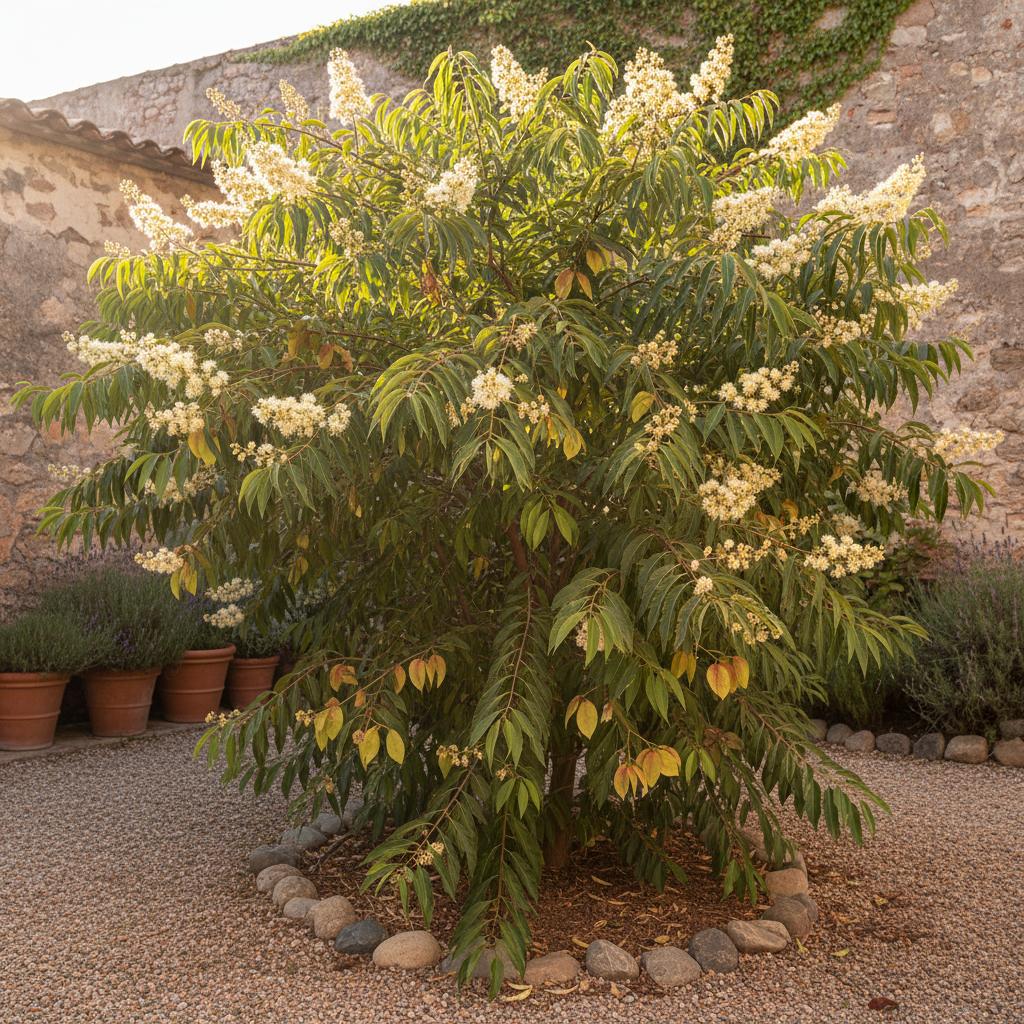
- Leaves: Opposite, simple, elliptic to obovate, covered in dense, soft, velvety hairs especially when young, turning reddish-purple in autumn;
- Flowers: Small, greenish-yellow to golden-yellow, strongly scented, borne in dense axillary spikes;
- Fruit: Four-winged samara, light brown to reddish-brown when mature, drying to a papery texture;
- Bark: Dark grey to brownish-black, deeply fissured and rough, often flaking in small blocks.
Care Guide
Water deeply once a week for young trees; mature trees rely mostly on rainfall.
Apply a layer of organic compost around the base at the start of the growing season.. This tree is adapted to nutrient-poor soils and generally does not require heavy fertilization.
Banana Peel Tea:Soak chopped banana peels in water for 24-48 hours. Dilute 1:1 with water and pour around the drip line of young trees to support root and flower development. Discard the solid peels in a compost bin to avoid attracting pests.- Prune in late winter while the tree is dormant;
- Remove any dead, diseased, or crossing branches to maintain a healthy framework;
- Raise the canopy by removing lower branches if a shade tree form is desired;
- Avoid heavy pruning, as it can ruin the natural, spreading shape of the tree.
Toxicity
Warning: this plant may be toxic.
Pets: No known toxicity to cats per ASPCA guidelines and general botanical records.
Humans: Generally considered non-toxic; parts are traditionally used in herbal preparations.
Garden Uses & Culture
Culture: N/A
Usage: - **Landscape**: Excellent shade tree for large gardens and parks, highly valued in xeriscaping; - **Wildlife**: Flowers attract bees, butterflies, and other pollinators, while the seeds are eaten by various bird species; - **Wood**: The hard, termite-resistant wood is historically used for fence posts and implements.