 PlantFun
Plant Needs
Characteristics
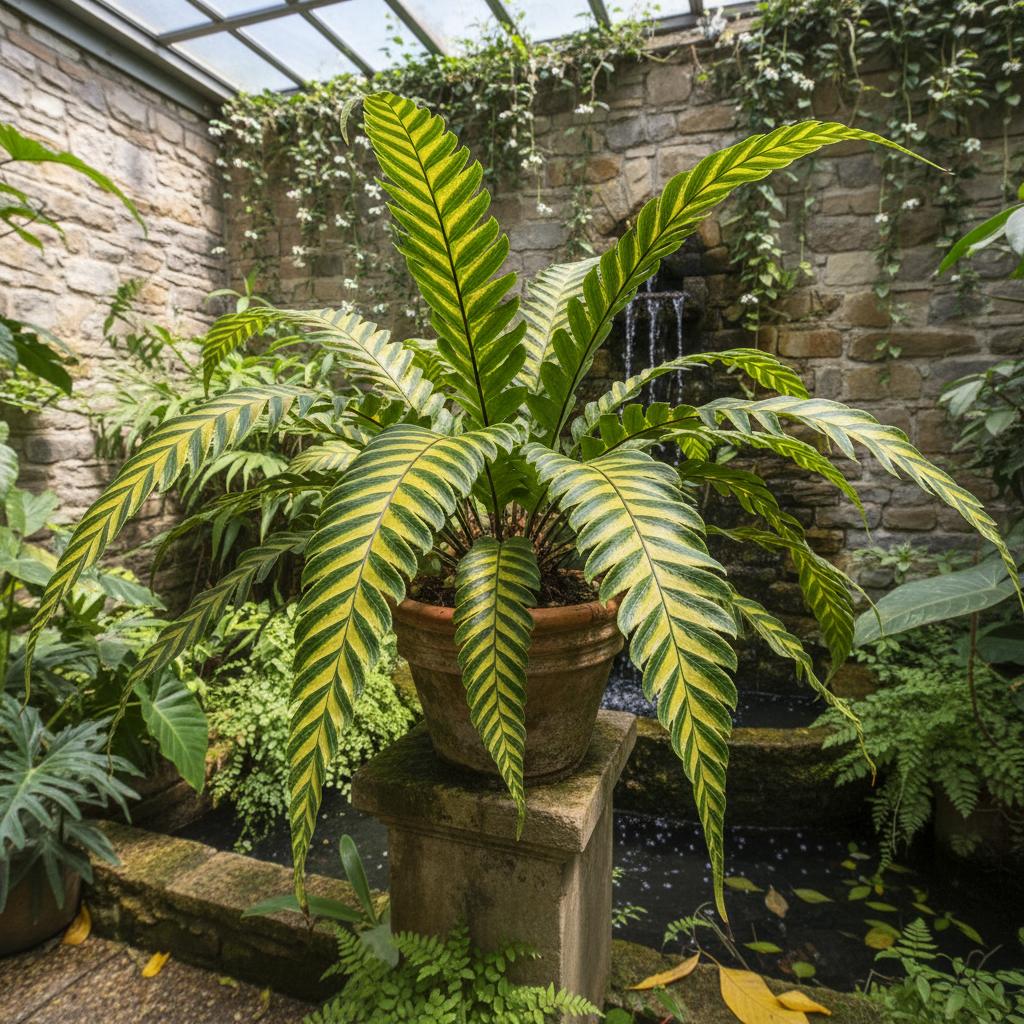
- Leaves: Broad, pinnate fronds resembling bamboo leaves, featuring striking horizontal yellow or chartreuse variegation across dark green pinnae;
- Stems: Arching, wiry, dark stipes (leaf stalks) emerging from a creeping rhizome;
- Spores: Sori are borne along the veins on the underside of the fertile fronds, lacking indusia.
Care Guide
Water thoroughly when the top inch of soil feels slightly dry, maintaining even moisture.
Apply a diluted, balanced liquid fertilizer to support new frond growth.. Ferns are sensitive to heavy fertilization; always apply at half or quarter strength.
Aquarium Water Fertilizer:Use dirty water from routine freshwater aquarium changes. It provides a gentle, low-dose source of nitrogen perfect for sensitive fern roots. Ensure the water has no added salts or medications.- Remove dead, browned, or damaged fronds at the base to improve airflow and appearance;
- Trim away any completely reverted (solid green) fronds if you wish to encourage variegated growth;
- Do not prune healthy green fronds, as they provide energy for the rhizome.
Toxicity
Warning: this plant may be toxic.
Pets: Non-toxic to cats per general fern safety guidelines, though ingestion may cause mild stomach upset.
Humans: No known toxicity; generally considered safe for humans.
Garden Uses & Culture
Culture: Highly prized in contemporary Western shade gardens and indoor plant collections for its striking, architectural variegation, fitting perfectly into the modern houseplant revival.
Usage: - **Ornamental**: Excellent as a statement houseplant, in terrariums, or as an understory accent in mild-climate shade gardens; - **Landscaping**: Used in woodland gardens to provide contrasting texture and color against darker foliage.